A functional coffee trailer layout connects brewing, refrigeration, washing, storage, and customer service in a practical working sequence. Start with your planned menu, then select commercial equipment and calculate the utilities required during simultaneous operation. Proper planning reduces crowded counters, unnecessary staff movement, and expensive layout changes after manufacturing has begun.
A coffee trailer serving espresso has different space requirements from one offering smoothies, iced drinks, and heated food. Each additional menu category affects equipment selection, ingredient storage, preparation space, and the number of available workstations. Before choosing appliances, document every drink or food item and identify how employees will prepare each individual order.
In a coffee trailer, espresso service requires space for grinding, extraction, milk storage, drink assembly, and cleaning between orders. Blended drinks add ice access, a blender station, ingredient refrigeration, and room for washing reusable preparation tools. Your food trailer business plan should connect the proposed menu with staffing, expected order volume, and operating costs.
The right coffee trailer size depends on staff movement, equipment dimensions, storage capacity, and customer service requirements. A focused beverage menu may fit within a smaller trailer, while additional food preparation requires more dedicated workspace. Golden State Trailers builds custom coffee trailers starting at 16 feet, with larger configurations available for more complex operations.
Do not choose trailer length from the espresso machine dimensions alone; account for sinks, shelving, refrigeration, and clearances. Consider how many employees will prepare orders simultaneously and whether their stations will overlap during busy periods. Compare coffee trailer layouts and customization options on our coffee food trailers page before selecting your preferred dimensions.
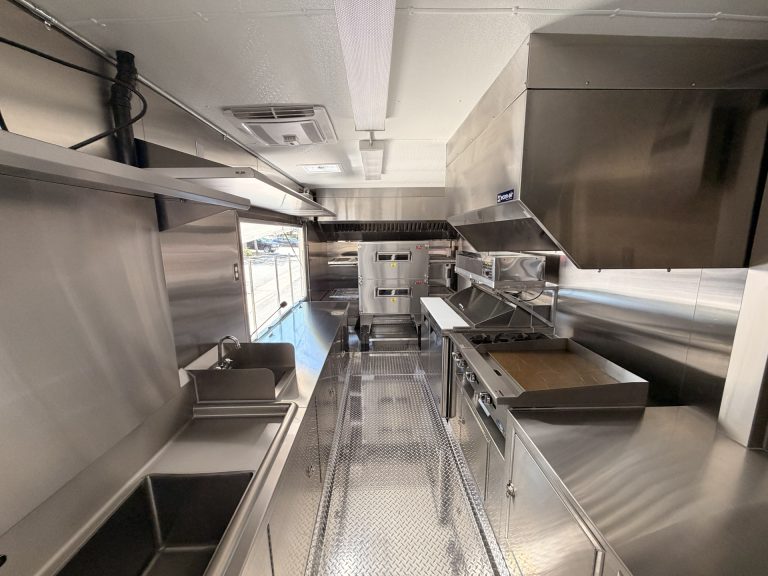
Place the grinder beside the espresso machine so baristas can prepare coffee without crossing the entire trailer. Locate refrigerated milk and frequently used supplies near the brewing station, leaving enough countertop space for drink assembly. Separately, position cups, lids, napkins, and order materials near the coffee trailer service window whenever possible.
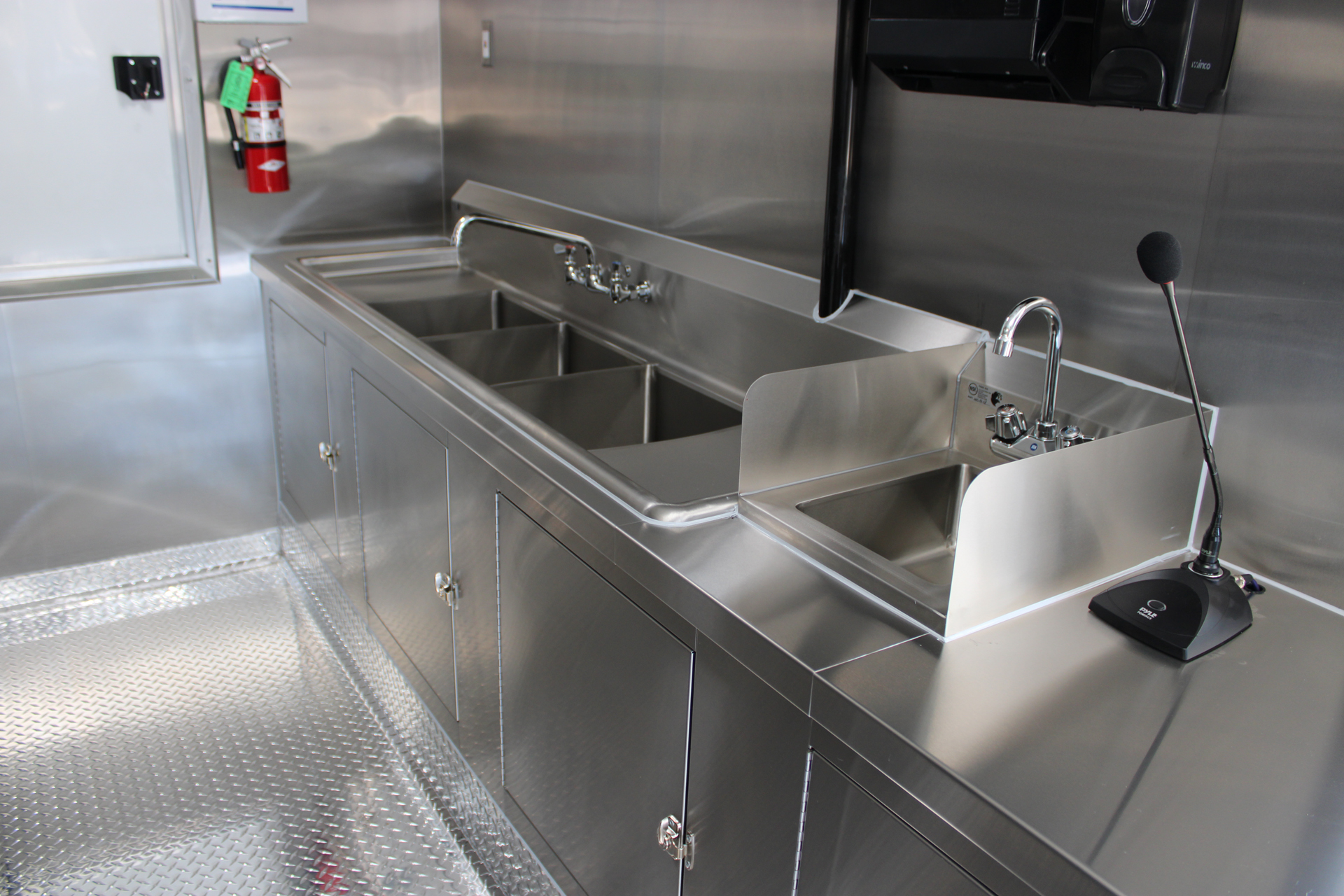
Cold beverage preparation needs convenient access to ice, refrigerated ingredients, and a surface for mixing or blending. Keep the handwashing sink unobstructed, and separate warewashing activities from areas used to finish customer orders. A coordinated coffee trailer interior allows different employees to complete tasks without competing for the same narrow workspace.
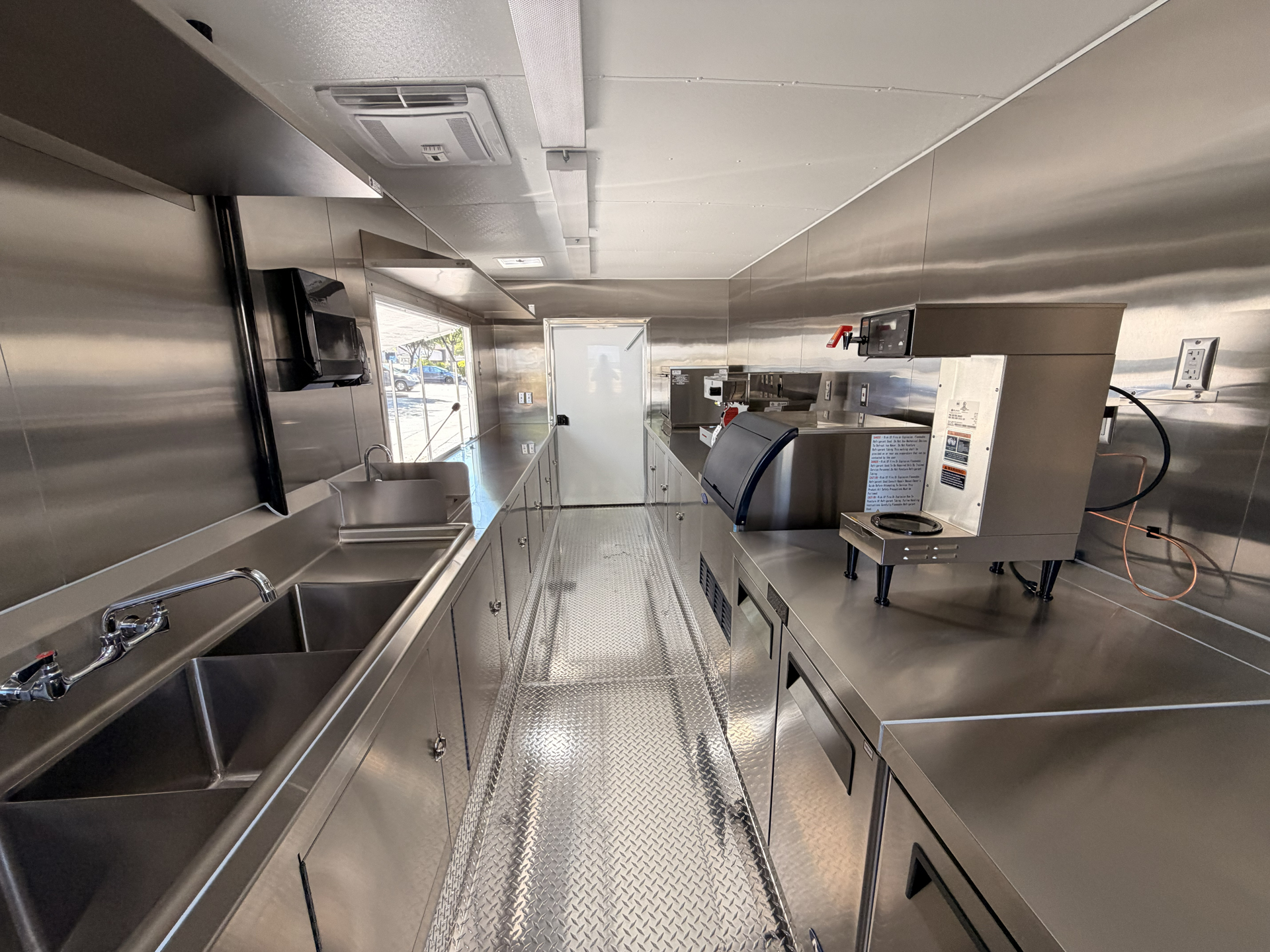
Essential coffee trailer equipment generally includes brewing appliances, refrigeration, sanitation facilities, and adequate counters for preparing drinks. Espresso-focused menus typically need a commercial espresso machine, coffee grinder, and dedicated space for storing milk and cups. Businesses offering brewed coffee, smoothies, or warmed food may require additional brewers, blenders, freezers, or ovens.
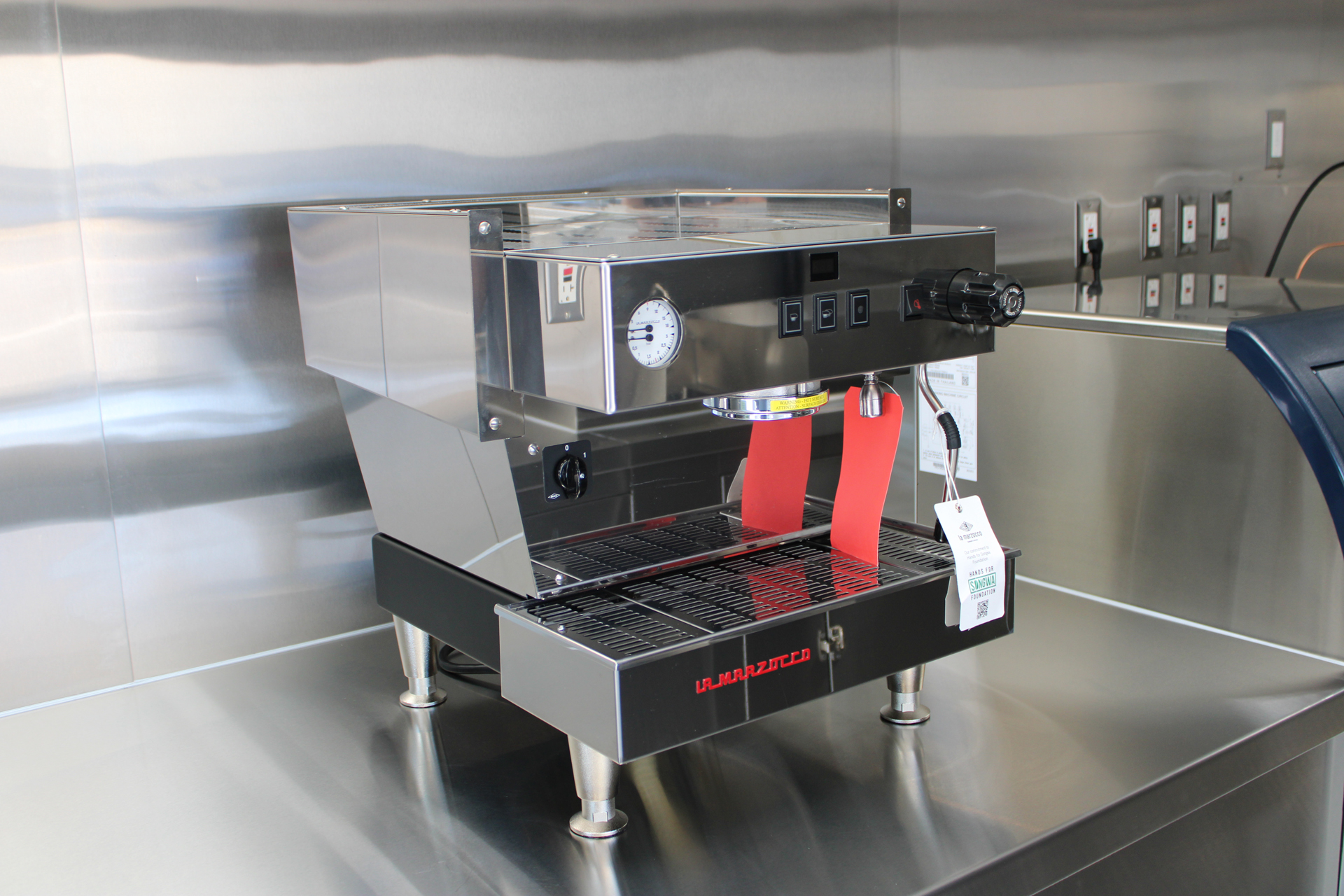
Select coffee trailer appliances based on dimensions, electrical specifications, daily workload, and cleaning requirements rather than appearance alone. Equipment from brands such as La Marzocco, Mazzer, Atosa, and Vitamix can support different specific commercial coffee preparation functions. For broader equipment-planning principles, read our food trailer equipment guide before finalizing the kitchen specification.
Undercounter refrigeration can keep milk and other temperature-controlled ingredients accessible while preserving valuable space along the service aisle. An ice maker needs an appropriate water connection, reliable drainage, maintenance access, and convenient proximity to the cold-drink station. Estimate coffee trailer storage needs from your menu and regular replenishment schedule instead of filling every available area with appliances.
Coffee beans, cups, syrups, and cleaning supplies should have assigned locations that prevent preparation counters from becoming cluttered. Place frequently used items within easy reach, while keeping chemicals separated from food and beverage storage areas. Any refrigerated ingredient inside a coffee trailer must be held at safe temperatures under applicable food safety regulations.
A coffee trailer must support several appliances operating together, not merely the power needs of individual machines. Espresso equipment, brewers, ice makers, refrigeration, blenders, and air conditioning can create substantial simultaneous electrical demand. Before construction, establish each appliance’s voltage, running load, startup requirements, and recommended circuit protection with qualified professionals.
A coffee trailer electrical layout should include suitably located outlets, dedicated circuits where required, and appropriate GFCI protection. If your operating location lacks shore power, evaluate generator capacity, ventilation, placement, and applicable local site restrictions. Allow space for equipment servicing and verify available electrical service before exploring configurations in our 3D Food Trailer Builder.
Every coffee trailer needs a dependable potable water supply and wastewater arrangement that support its approved menu. Espresso brewing, handwashing, ice production, and equipment cleaning can place different demands on the plumbing system. Calculate tank capacity using expected daily consumption, planned service duration, equipment specifications, and applicable local public health requirements.
Coffee trailer water filtration may help protect coffee equipment and maintain consistent beverage preparation when matched to manufacturer guidance. A dedicated handwashing sink is normally essential, while warewashing arrangements depend on specific local rules and operating procedures. Keep drainage, water heating, pump access, and cleaning clearances within the original coffee trailer floor plan.
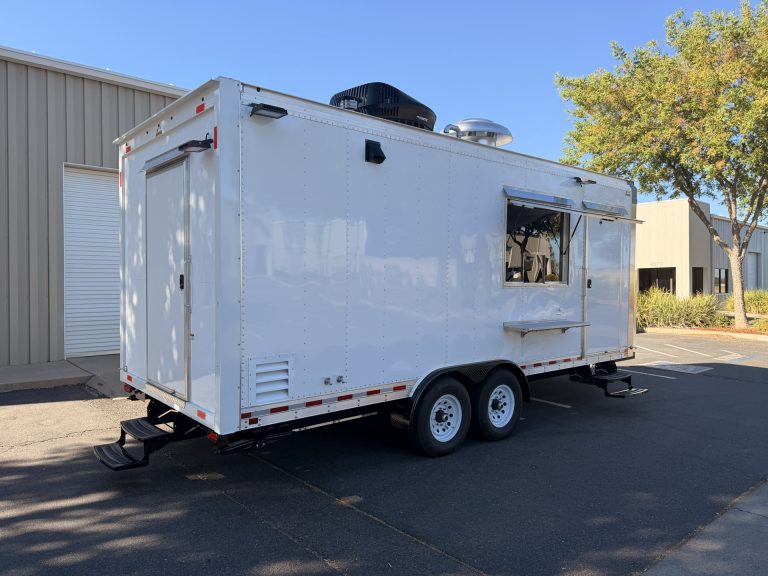
The coffee trailer service window should support receiving orders, preparing drinks, and handing completed purchases to customers with minimal interference. Arrange your interior so staff can communicate clearly without interrupting employees using the espresso or sanitation stations. Reserve nearby space for packaging, receipts, order management, and supplies needed at the final handoff point.
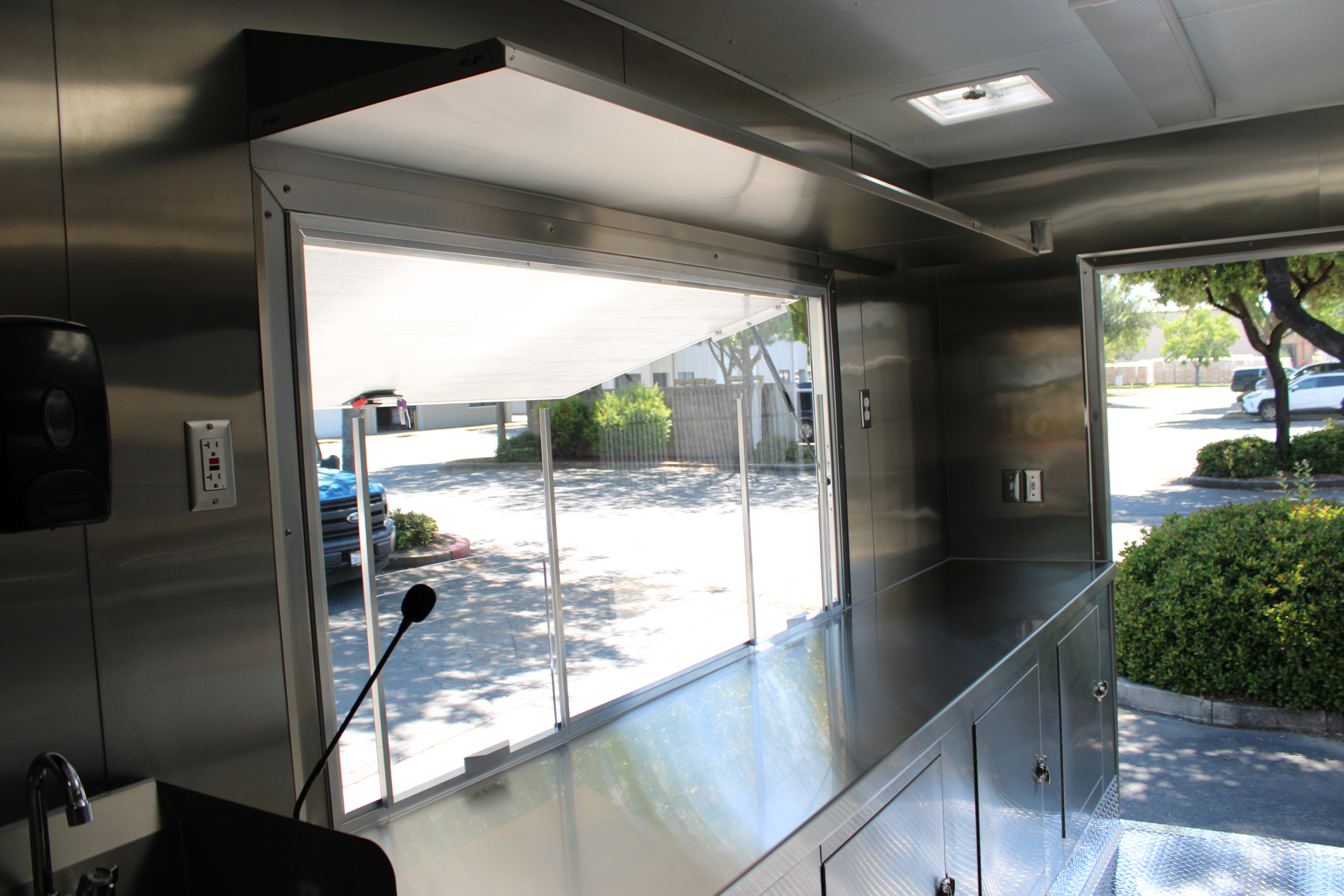
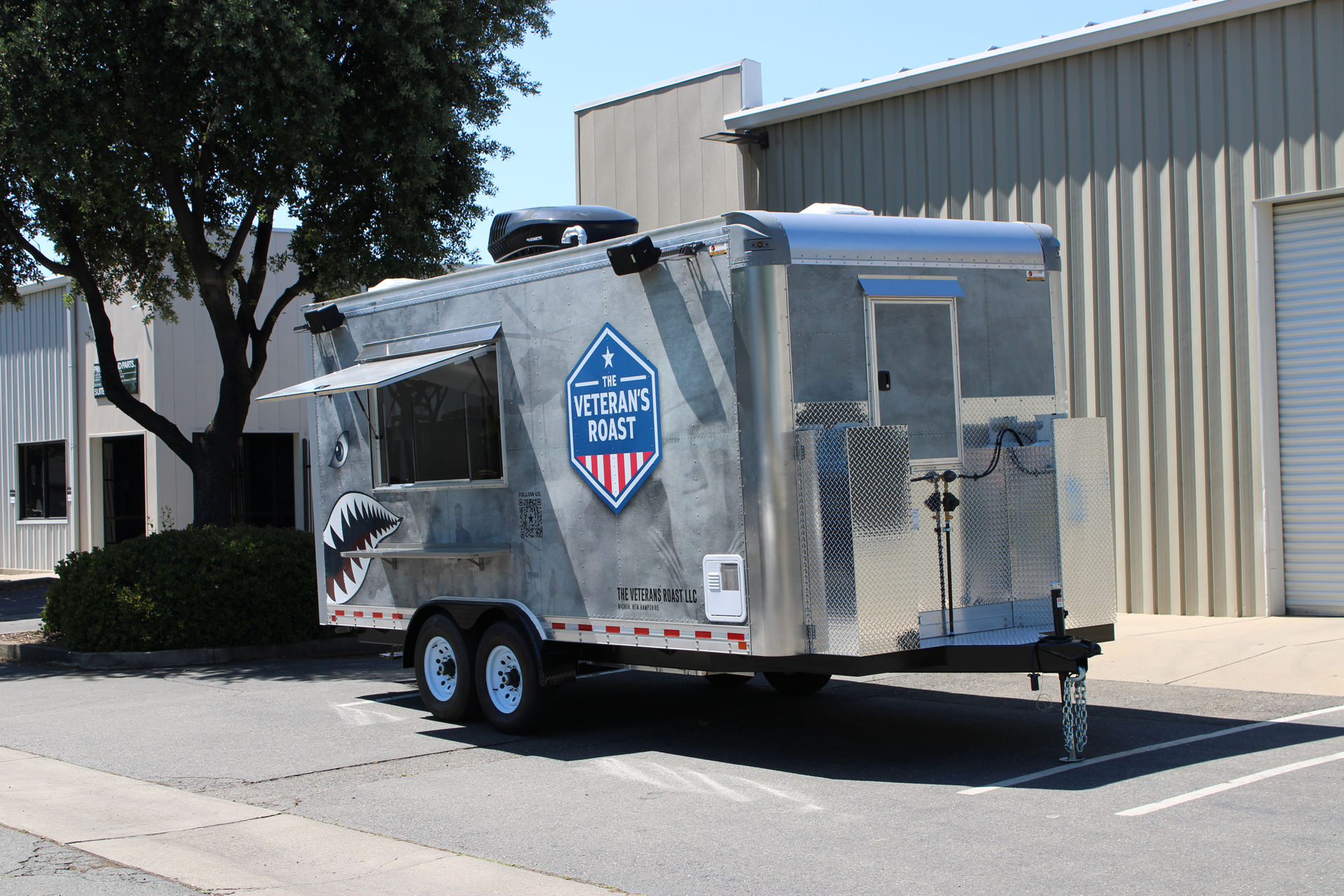
For coffee trailer service, a fold-out shelf can create useful customer-facing space when appropriate for the vending location. Window dimensions and placement should also account for accessibility, weather protection, and local operational requirements. Effective service flow depends on both counter placement and how employees divide responsibilities during busy periods.
Stainless steel counters and other appropriate washable surfaces support routine cleaning in commercial coffee trailer preparation areas. Floors and wall transitions should use materials and construction details accepted by the relevant health authority. Shelving must remain accessible, while equipment placement should allow staff to routinely clean behind and beneath appliances.
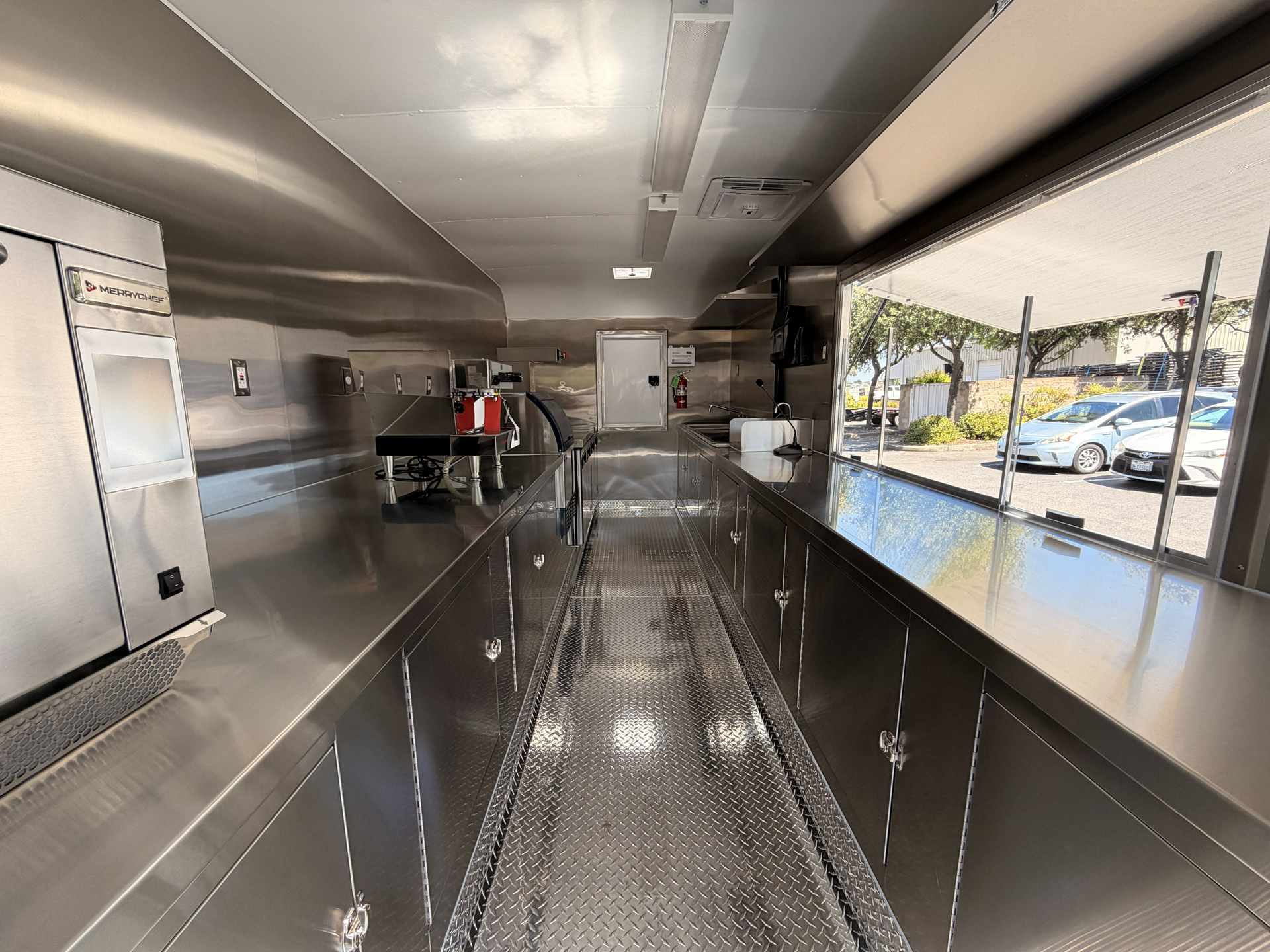
Air conditioning and ventilation in a coffee trailer should account for staff comfort and heat from installed equipment. A commercial exhaust hood is not automatically necessary for every beverage-only operation, because requirements depend on actual cooking processes. If your menu adds heated food, confirm whether the appliances trigger additional ventilation or fire suppression requirements.
Food trailer requirements vary by state, county, menu, equipment configuration, and the places where you intend to operate. Contact local health officials before manufacturing to verify sinks, water storage, equipment standards, and plan review procedures. Where applicable, obtain guidance from fire officials concerning coffee trailer electrical installations, propane equipment, ventilation, and operational approvals.
Requirements may differ substantially between jurisdictions, so prior approval in one area cannot guarantee acceptance somewhere else. Operators can consult our California food trailer permits and Oregon food trailer permits guides for state-specific starting points. Final approvals always depend on the responsible authorities and the details of the proposed commercial operation.
Overcrowding the brewing station can delay drink preparation when several employees need access to the same equipment. Poorly positioned refrigeration in a coffee trailer causes unnecessary movement, while limited counter space restricts staff during busy periods. Ignoring sanitation clearances or future equipment maintenance can make otherwise attractive layouts difficult to operate consistently.
Another costly coffee trailer layout mistake is choosing electrical service before calculating the load from all planned appliances. Poor planning may also leave insufficient water storage, limited cleaning access, or no convenient space for supplies. Review a detailed scaled floor plan with the equipment specifications before approving any custom coffee trailer for manufacturing.
The best coffee trailer layout matches the menu, team size, equipment, utilities, and expected daily service process. Golden State Trailers designs custom commercial food trailers with integrated attention to kitchen layout, sanitation, structural construction, and workflow. Our completed projects show different configurations, while our manufacturing standards explain the systems behind each build.
Use the 3D Food Trailer Builder to explore dimensions, equipment placement, and layout options before discussing your requirements. If you are ready to move forward, request a custom quote with your menu and operating location. Our team can review the intended configuration and discuss which specifications belong in your custom trailer.
The best coffee trailer layout keeps brewing, ingredient refrigeration, drink assembly, and customer handoff within an efficient sequence. Exact placement depends on your menu, equipment dimensions, employee count, and the required sanitation facilities.
Most coffee trailer setups need commercial brewing equipment, refrigeration, a potable water system, and appropriate washing facilities. Ice makers, blenders, coffee grinders, and cooking appliances depend on the drinks and foods being offered.
A 16-foot coffee trailer can suit a focused menu when equipment, storage, and staff requirements fit comfortably. Consider a larger configuration when multiple workers, extensive cold drinks, or food preparation require additional space.
Coffee trailer sink requirements depend on the operating jurisdiction, menu, equipment, and any approved offsite warewashing arrangements. Confirm the required handwashing and dishwashing facilities with your local health department before approving the design.
Coffee trailer power requirements depend on the combined electrical loads of espresso machines, brewers, refrigeration, ice makers, and additional equipment. A qualified professional should calculate simultaneous demand and specify suitable service, circuits, and generator capacity if needed.