Food trailer market research should answer one question before you invest: can this business attract enough paying customers? Examine local demand, competing food businesses, available locations, and realistic sales expectations before selecting your trailer.
The goal is not to prove that your favorite menu will succeed. It is to identify what customers need and whether your proposed operation can meet that demand.
Start by defining who will buy your food, when they will buy it, and why they might choose you. A target market for a food trailer should describe buying behavior, not only broad demographics.
For example, office workers may need fast weekday lunches. Event attendees might purchase during short service windows, while catering clients often book ahead. Each group has different expectations for price, portion size, ordering, and waiting time.
Write down your intended service hours, average purchase occasion, typical order, and likely customer budget. If the concept depends on repeat customers, determine how often those customers could realistically visit.
Avoid describing your audience as everyone who enjoys burgers, pizza, or coffee. A narrower customer definition produces more useful decisions about menus, locations, staffing, and kitchen capacity.
Use several types of evidence before deciding that a neighborhood needs another food business. Population figures can provide context, but they cannot show how many people will purchase your specific menu.
The U.S. Census Bureau’s Census Business Builder provides local demographic, economic, and business information. The U.S. Small Business Administration also recommends examining demand, market size, location, market saturation, and pricing.
Compare those findings with what you see locally. Identify offices, campuses, residential areas, shopping corridors, and permitted event venues relevant to your concept. Notice whether your customers are present during your intended service hours.
Speak with potential customers about their actual habits. Ask where they last purchased a similar meal, what they paid, and what made that option convenient. These answers are often more informative than asking whether they like your idea.
Online searches and social media discussions can reveal interests or complaints. However, likes and comments are not the same as completed purchases.
Direct competitors sell similar meals to the same audience. Indirect competitors satisfy the same eating occasion through a different product or service. A lunch trailer may compete with restaurants, grocery counters, cafeterias, and delivery options.
Visit competing businesses during their normal service periods. Record their menu categories, comparable prices, portion sizes, hours, locations, and apparent service speed. Check customer reviews for recurring praise or frustrations.
Observe both established businesses and newer operators. A long line may indicate strong demand, but it does not reveal profitability. Similarly, an empty location might reflect poor timing rather than a weak concept.
Look for a defensible difference, such as a better service window, a focused menu, convenient pickup, or an underserved meal period. A gap in available food choices is only an opportunity if customers actually want that option.
Your proposed selling locations determine which customers you can reach. Research locations before choosing a trailer length, especially if you plan to move between several sites.
Observe each potential site at the times you expect to operate. A busy street in the evening may have little lunchtime demand. Weekend festivals and weekday business districts also attract different purchasing behavior.
Study visibility, pedestrian access, room for customer lines, and nearby competition. Check whether the property owner or event organizer allows a food trailer, and whether local rules permit your planned service.
Evaluate the operational side as carefully as foot traffic. Consider trailer dimensions, towing access, setup time, employee restroom access, waste handling, water, power, and delivery routes. A location with strong demand may still be impractical for your operation.
Score each candidate from one to five in four categories: customer demand during service, legal and site access, competitive fit, and operational practicality. Keep notes explaining every score.
For example, a hypothetical site might score 16 out of 20. That number helps compare options; it does not guarantee sales. Legal permission and essential operating requirements remain mandatory regardless of the total.
Keep at least one alternative location or revenue channel in your plan. Changes in bookings, events, access agreements, and seasonal traffic can affect a mobile food business.
Food trailer concept validation should include some evidence of purchasing behavior, not only opinions. Where legally permitted, a licensed pop-up, catered event, or limited menu test can provide practical feedback before you order a trailer.
Record which items customers buy, how long orders take, what ingredients you use, and which steps slow service. Ask customers about price, portion size, ordering convenience, and products they would purchase again.
Run tests under conditions reasonably similar to your intended business. A private tasting may help refine recipes, but it will not reproduce a demanding lunch rush or an outdoor event.
Use the results to refine your menu. If the most popular items require different cooking methods, evaluate whether one compact kitchen can support them efficiently.
A market may have interested customers without supporting your proposed prices. Compare similar menu items and portion sizes, then calculate ingredient, packaging, payment, and other per-order costs.
Next, estimate daily costs that do not depend directly on each order. These may include labor, commissary use, insurance, site fees, financing, and allocated fixed expenses. Include reasonable owner compensation in your planning.
Consider a hypothetical example: an average order sells for $15, with $6 in variable costs. Each order contributes $9 toward daily fixed costs. If those costs total $500, approximately 56 orders are needed to cover them.
These numbers illustrate the calculation; they are not industry averages or a profit forecast. Your actual result depends on your complete expenses, opening days, sales mix, and service capacity.
Compare your required order count with observed customer traffic and your ability to prepare orders. Test conservative scenarios for quieter days, weather, and seasonal changes before committing capital.
Do not assume a food trailer can operate wherever customers gather. Regulations may vary by state, county, city, property type, event, and menu.
Before paying for a location or approving a build, contact the appropriate local health department and other relevant authorities. Ask which permits, plan reviews, fire approvals, commissary arrangements, and site restrictions apply.
Also confirm whether your planned location provides the access and facilities needed for your equipment and operations. An attractive site that cannot accommodate the trailer may force costly changes later.
Your research should lead to practical design decisions. Translate the most promising customer segment and service model into a written specification for the mobile kitchen.
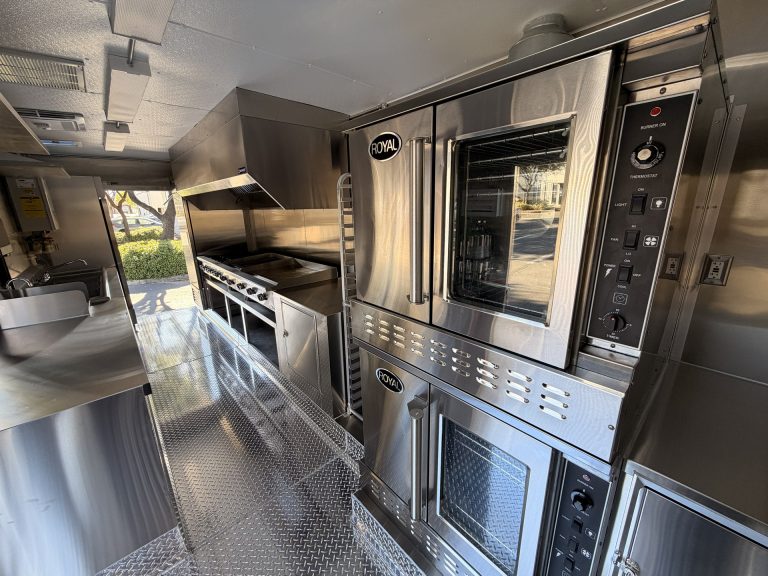
Record your core menu, expected peak orders, staffing, preparation steps, refrigeration needs, and storage volume. Include cooking and holding equipment, sinks, water, electrical needs, propane where applicable, and ventilation requirements.
The layout must support actual production, not simply hold a list of appliances. For example, high-volume short service windows may require a different assembly and handoff arrangement than scheduled catering.
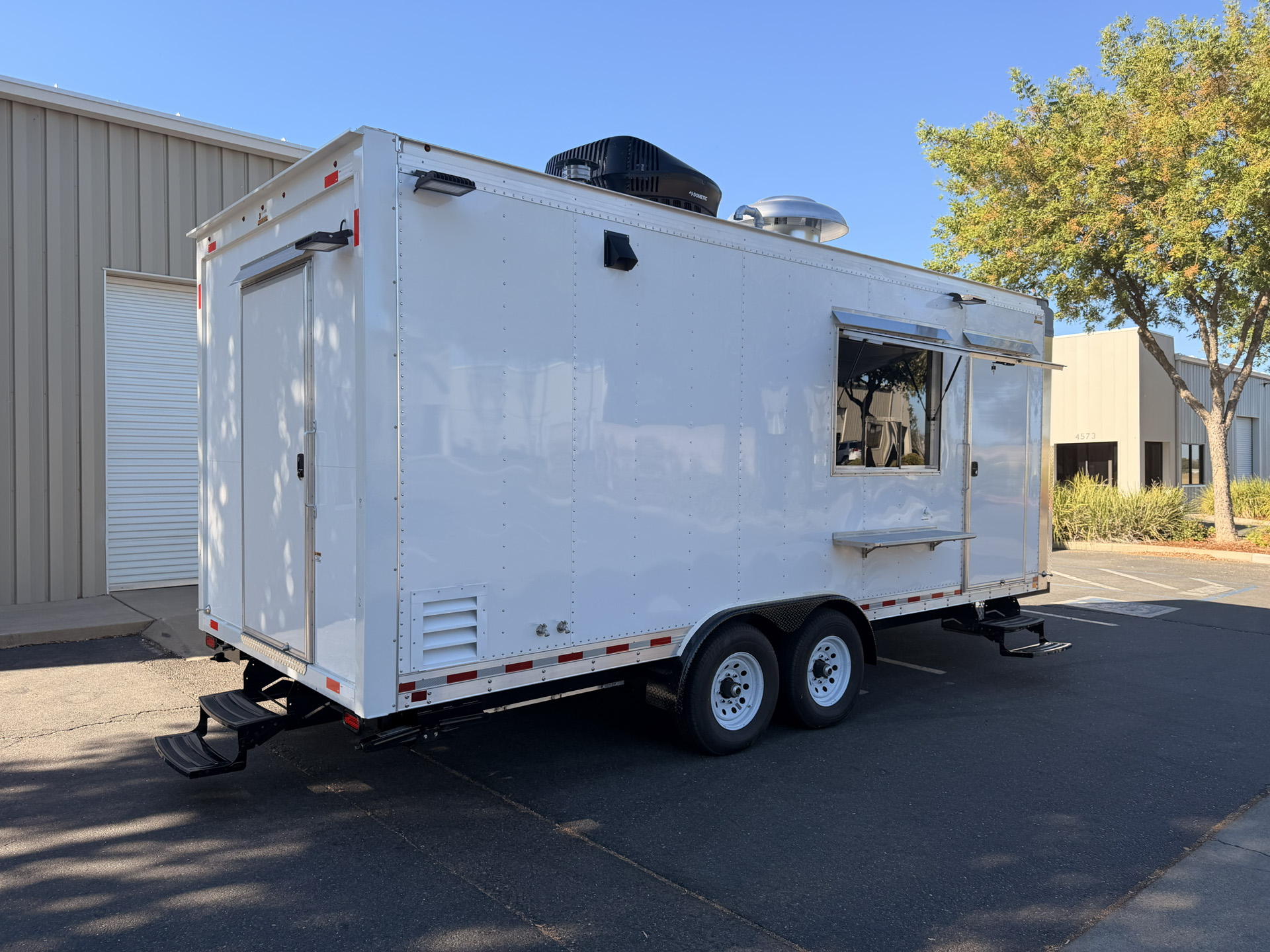
Golden State Trailers builds custom commercial food trailers. Its 3D Food Trailer Builder offers configurations from 16 to 30 feet, allowing you to explore equipment placement around your menu and workflow.
A preliminary configuration is a planning tool, not an automatic permit approval. Confirm the final equipment package and applicable requirements before manufacturing.
Avoid treating total foot traffic as guaranteed sales. Not everyone passing a location wants your cuisine, has time to stop, or can reach your serving window.
Do not judge demand from one busy weekend, a trending video, or a single successful competitor. The market should be evaluated across relevant times and conditions.
Another mistake is purchasing equipment before clarifying menu and volume. Cooking methods, service speed, refrigeration, and space needs may change once customer research is complete.
Combine customer interviews, competitor observations, location research, and small-scale sales tests. Then compare conservative projected orders with the volume your business needs to cover costs.
Yes. Customers compare meal options, not just vehicle types. Include restaurants, food trucks, other trailers, cafeterias, and convenient alternatives competing for the same purchase.
Not necessarily, but you need a realistic service plan. Confirm that your intended locations or event opportunities are available, permitted, and financially viable before making a purchase.
After establishing the menu, operating model, expected order volume, and applicable requirements. Those decisions determine equipment capacity, workstations, utilities, and necessary kitchen space.
Market research cannot eliminate uncertainty, but it can make your equipment and budget decisions more informed. Validate customers, demand, locations, pricing, and operations before finalizing your commercial kitchen.
Once you have a practical menu and service model, explore your options with the Golden State Trailers 3D Food Trailer Builder.