Opening a new food trailer in Oregon generally requires plan review, pre-operational inspection, licensing, and applicable fire approvals.
The exact Oregon food trailer requirements depend on your menu, equipment, county, and proposed operating location. There is no single permit covering every aspect of a custom commercial food trailer operation in Oregon.
Golden State Trailers considers applicable construction requirements while designing and manufacturing new commercial food trailers for Oregon customers.
Before opening your Oregon food trailer, confirm which approvals apply to your menu and operating location. Typical requirements for a newly manufactured commercial food trailer include the following permits, reviews, and employee certifications.
Additional Oregon food trailer permits may apply based on the jurisdiction, equipment specifications, and planned services. Contact the responsible authorities before ordering your custom trailer because construction changes can become expensive after fabrication.
Your first step is contacting the local county environmental health department where the new food trailer will operate.
Provide your proposed menu, preparation methods, cooking equipment, storage needs, and intended service locations for preliminary review. Oregon uses four mobile food unit classifications, and the approved class determines which food preparation activities are permitted.
Class IV permits full menus; Class III prohibits cooking or serving raw animal foods inside trailers. For example, a burger food trailer preparing raw meat generally needs the capabilities associated with Class IV.
Ask the county to confirm your classification before finalizing sinks, refrigeration, appliances, or the kitchen workflow.
New custom food trailers operating in Oregon generally undergo Mobile Food Unit Plan Review before manufacturing work begins.
The Oregon Health Authority directs applicants to their local public health authority for plan review and licensing. Your submission should include the menu, a scaled floor plan, equipment details, and proposed plumbing arrangements.
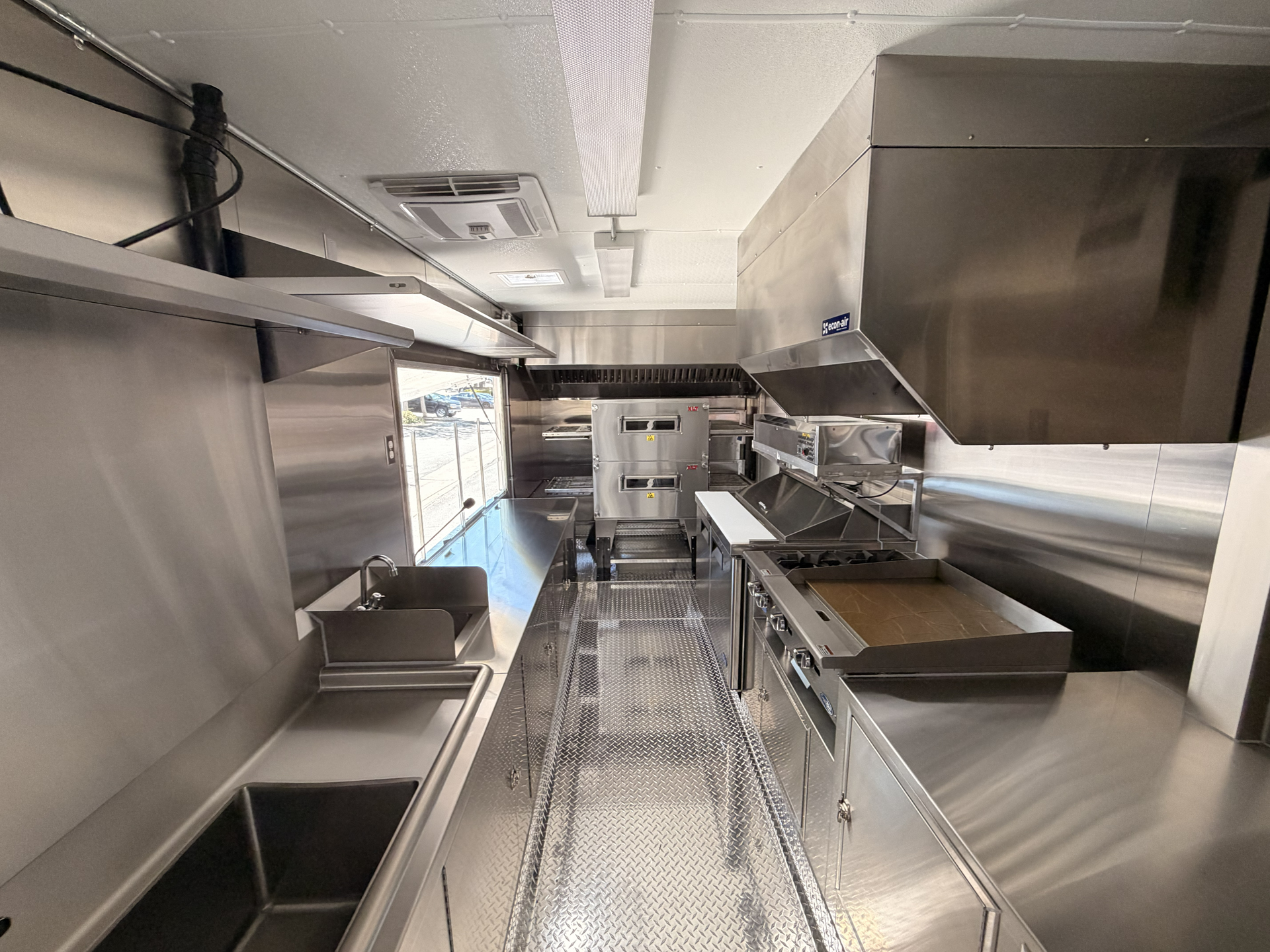
The proposed food trailer layout must identify handwashing facilities, warewashing equipment, refrigeration, cooking appliances, and onboard water storage. Include the freshwater and wastewater tank capacities, water heater specifications, and any ventilation or food preparation equipment.
Incomplete drawings or missing equipment specifications can delay county review and force changes to the food trailer’s layout. Confirm approval requirements before production, rather than relying on changes after the custom food trailer arrives.
After construction, a newly manufactured Oregon food trailer generally needs a pre-operational inspection before starting food service.
The inspector evaluates installed equipment, food storage, sanitation, handwashing, plumbing, and consistency with approved plans. Test refrigeration performance, hot water, wastewater handling, and other equipment before scheduling the food trailer inspection.
A manufacturer’s quality inspection cannot replace the county’s required review of the trailer’s intended operation. Final Environmental Health approval also depends on the operator’s proposed menu, handling practices, and supporting operational documentation.
A commercial food trailer in Oregon requires a Mobile Unit License from the responsible Local Public Health Authority.
Licensing procedures and associated fees vary by individual Oregon county, although statewide food safety rules remain applicable. The license must be displayed inside the food trailer, where it remains visible to the public.
These Oregon mobile food unit licenses expire on December 31, making annual renewal part of normal business operations.
Equipment choices should match the approved food trailer menu and the county’s applicable sanitation requirements.
Commercial refrigeration, food preparation surfaces, sinks, and storage must support safe handling throughout the intended service period. Choose commercial food trailer equipment that meets applicable sanitation standards, including NSF certification where required by local authorities.
For many cooking trailers, dedicated handwashing and warewashing facilities influence floor plans, plumbing, and available workspace. Some food trailer operations may use an approved commissary for preparation or storage that cannot occur onboard.
The correct freshwater and wastewater capacities depend on approved activities, sink arrangements, and anticipated operational demand. Golden State Trailers coordinates these systems during design instead of treating plumbing and equipment as separate decisions.
Fire safety requirements for Oregon food trailers depend on cooking methods, fuel sources, and the intended operating site.
Under the 2025 Oregon Fire Code, appliances producing smoke or grease-laden vapors require an appropriate Type I exhaust hood. Cooking lines may also require fire suppression, extinguishers, safe propane storage, and suitable electrical installations.
The Oregon fire checklist generally specifies five feet between food trailers and nearby buildings, vehicles, or other cooking operations. An Oregon food trailer using fryers or griddles may face different fire requirements than a beverage-only trailer.
Check whether your jurisdiction requires an operational fire permit, additional inspection, or approval before opening.
Oregon has no general statewide business license, but cities and counties may require separate local registration.
A food trailer’s county health license does not automatically authorize vending at every proposed site or event. Confirm parking, zoning, property permissions, and any site-specific business requirements with the responsible local authorities.
When your Oregon food trailer operates at several fixed locations, provide the required location information during licensing.
Oregon food service workers generally must obtain an approved Food Handler Card within 30 days of starting work.
According to the Oregon Health Authority, an approved card costs $10 and remains valid for three years. Cards from other states are not accepted, although qualifying food manager certification can meet this requirement.
Food handler certification concerns the people operating the trailer, not the physical food trailer construction or inspection.
Not necessarily, because Oregon may approve a self-contained food trailer without a separate commissary kitchen.
The trailer must support required food preparation, storage, dishwashing, temperature control, and sanitary waste disposal onboard. Whether a commissary is necessary depends on the approved menu, equipment capacity, and available daily operating procedures.
A food trailer relying on offsite preparation or storage may need an approved commissary or other authorized facility. Discuss commissary arrangements before construction because they can affect refrigeration, sinks, water tanks, and overall kitchen layout.
No, because statewide food sanitation rules operate alongside local business licensing, zoning, and fire approval requirements.
An Oregon food trailer approved for one operation should not automatically be considered authorized for every location. Changes to the approved menu or food trailer design may also require renewed review by the local health authority.
Confirm local requirements before moving service locations or adding equipment that changes the food trailer’s operation.
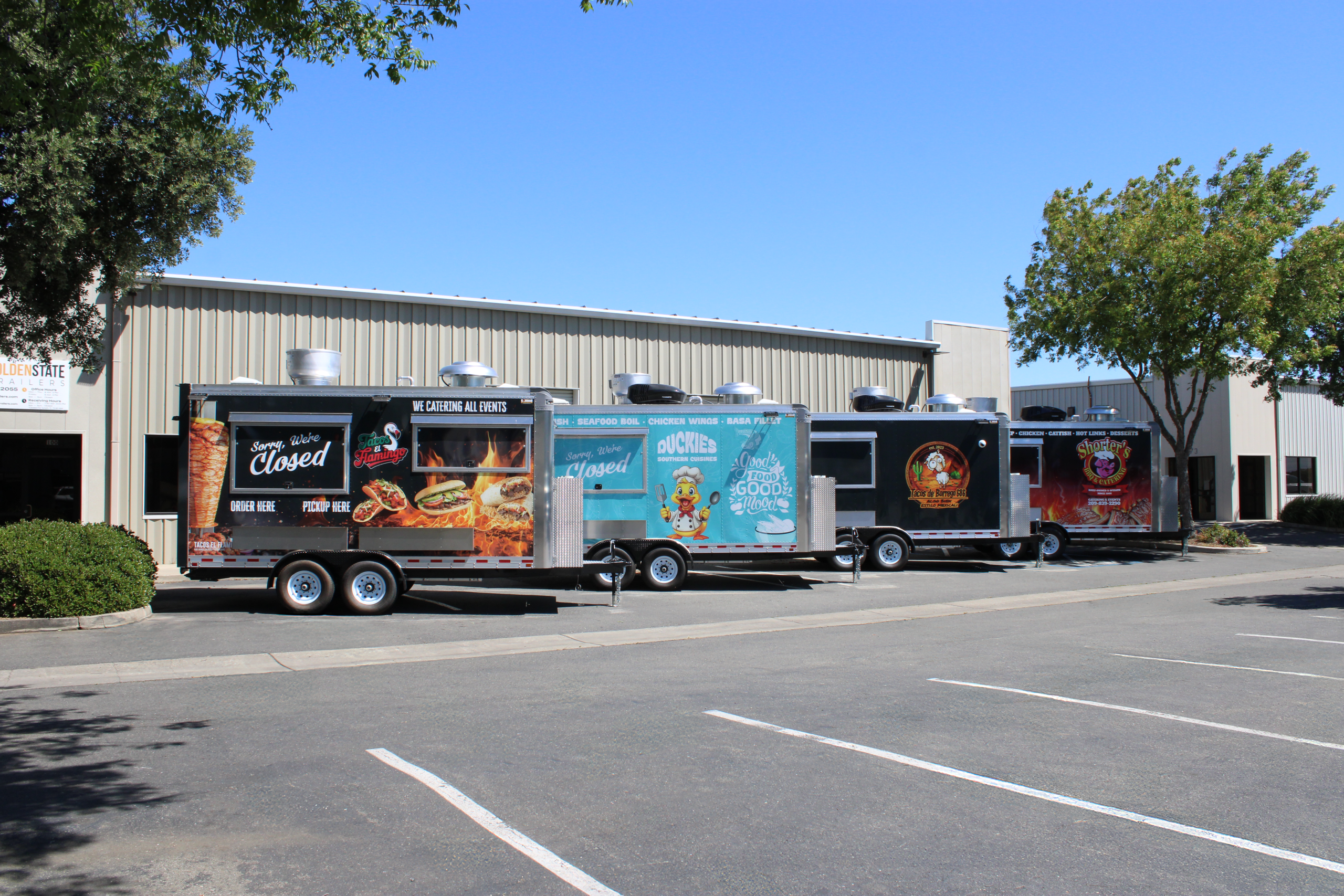
Golden State Trailers designs and manufactures new custom commercial food trailers at its in-house production facility in California.
Each food trailer is configured around the customer’s approved menu, cooking equipment, refrigeration, workflow, and utility needs. Our team considers applicable state and local construction standards when planning plumbing, ventilation, electrical systems, and sanitation features.
Where included in the project scope, we can support trailer documentation and preparation for local agency review. Final Oregon food trailer permits, licenses, and approvals remain the responsibility of the relevant government agencies.
For a new custom food trailer in Oregon, local plan review generally must happen before construction starts. Confirm the county’s submission process and required drawings before Golden State Trailers finalizes the production configuration.
You generally need a Mobile Unit License issued through the public health authority responsible for your Oregon operation. Additional local business licensing, fire approvals, or location permissions may apply depending on where you serve food.
No, because exhaust hood requirements depend on whether installed cooking appliances produce smoke or grease-laden vapors during service. Discuss your intended cooking equipment with the fire authority before selecting the food trailer’s ventilation system.
Yes, a self-contained food trailer may operate without a commissary when the regulatory authority approves its onboard capabilities. The final decision depends on whether all required preparation, cleaning, storage, and waste handling can occur safely.
Operating a food trailer in Oregon generally requires county health licensing, plan review, and a pre-operational inspection. Additional business, fire, and location approvals may apply depending on the operation.
Food trailer plan review and license fees vary by county, while local fire and business fees may differ. Request current estimates from the county health office and any city departments overseeing your proposed operating site.
Planning Oregon food trailer requirements before fabrication helps prevent costly equipment changes, inspection delays, and unnecessary rebuilding work.
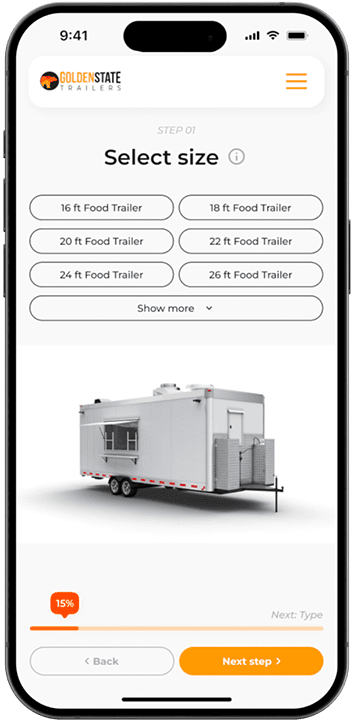
With Golden State Trailers, you can develop a custom layout around your menu, staff workflow, and commercial kitchen equipment. Explore the 3D Food Trailer Builder or request a custom quote to discuss your Oregon project.
This guide provides general information about Oregon food trailer permits and does not replace professional or regulatory advice.
Requirements may change and can vary by county, menu, equipment, trailer classification, and specific operating location. Before beginning construction or operation, confirm current requirements with the appropriate health, fire, licensing, and zoning authorities.