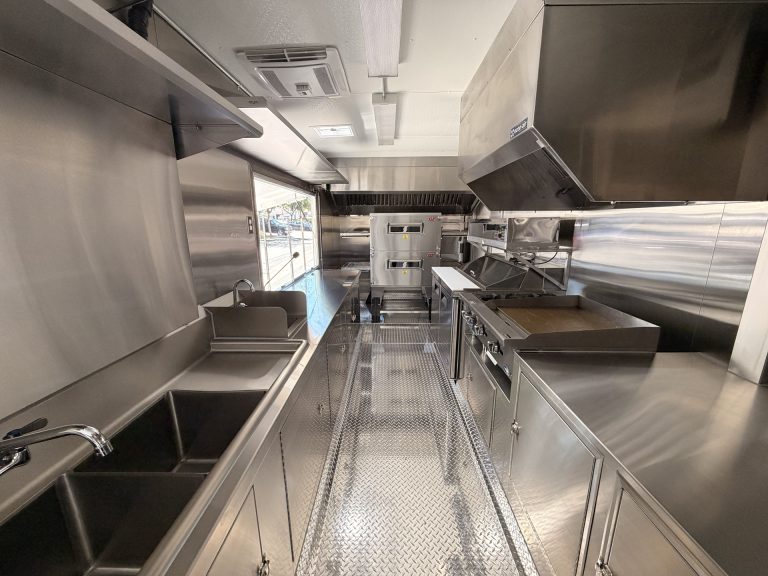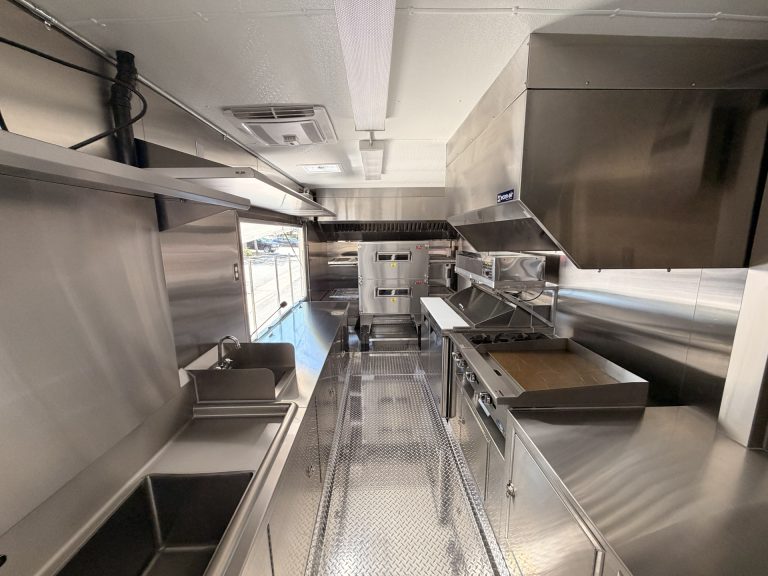
The strongest food trailer business ideas combine a focused menu, practical workflow, manageable equipment needs, and a service model suited to mobile operations. A concept may sound appealing, but it still needs to work efficiently inside a commercial food trailer during real service.
Menu complexity, cooking methods, refrigeration, storage, staffing, and service speed can all determine whether a concept fits mobile food service. Evaluating those factors early helps operators choose a food trailer concept that can function consistently instead of becoming difficult to operate.
The objective is not simply finding a popular food category. A successful concept should match the space, equipment, workflow, and customer experience the food trailer can realistically support.
A practical food trailer business idea should be easy to explain, operate, and repeat throughout normal service. Customers should understand the core offer quickly, while employees should be able to prepare orders without unnecessary production steps.
Focused menus often work well because they allow the commercial kitchen to be organized around a smaller number of repeatable processes. Fewer cooking methods can also simplify food trailer equipment, storage, preparation, and employee movement.
That does not mean every food trailer needs a tiny menu. The more important question is whether each menu item fits logically into the same production system.
If several products require completely different equipment and preparation methods, the kitchen can become difficult to coordinate. A strong food trailer concept keeps variety manageable while maintaining a clear operational structure.
Before selecting trailer length or kitchen equipment, define what the business will actually serve. Food trailer menu planning influences nearly every later decision involving layout, refrigeration, ventilation, utilities, storage, and workflow.
List the core products, ingredients, preparation steps, cooking methods, holding requirements, and final assembly process. This exercise makes it easier to understand what the commercial food trailer must support during service.
For example, a concept based primarily on griddle cooking creates different equipment needs than one focused on beverages. A bakery-style food trailer may depend more heavily on preparation and storage, while another operation requires intensive hot-food production.
The food should therefore define the kitchen rather than being forced into a previously selected trailer configuration.
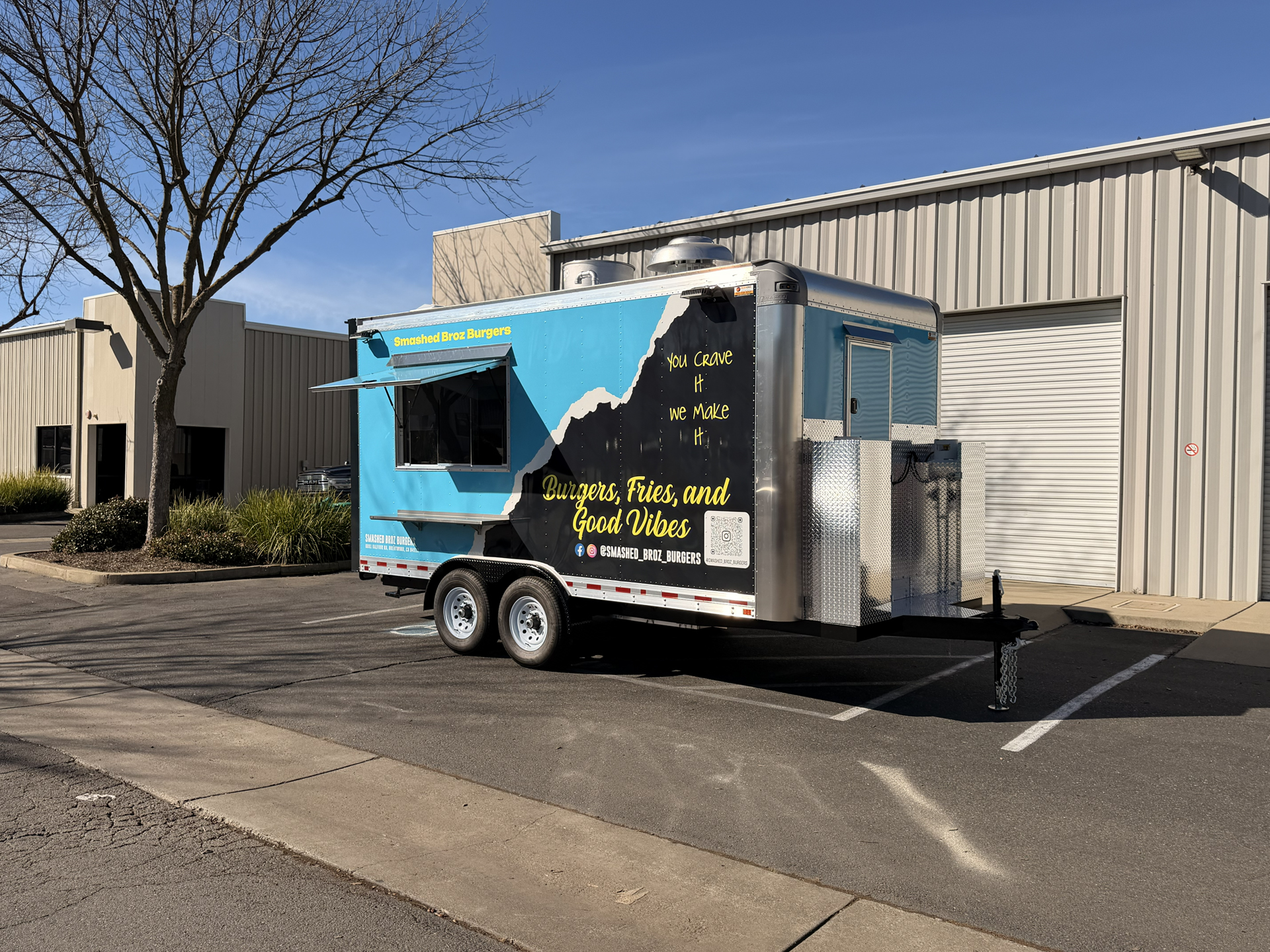
Burger concepts remain well suited to food trailers because the production sequence can be relatively clear and repeatable. Ingredients move from refrigeration and preparation through cooking, assembly, packaging, and service within a defined commercial kitchen workflow.
A burger food trailer may require griddles, refrigeration, preparation surfaces, holding areas, fryers, and appropriate ventilation. The exact equipment package depends on the menu and the cooking methods selected by the operator.
Menu discipline becomes especially important when adding multiple proteins, toppings, sides, or specialty preparations. Every additional food trailer menu item can create new storage, preparation, or equipment requirements.
Operators should evaluate whether each menu addition improves the concept enough to justify the operational complexity it creates.
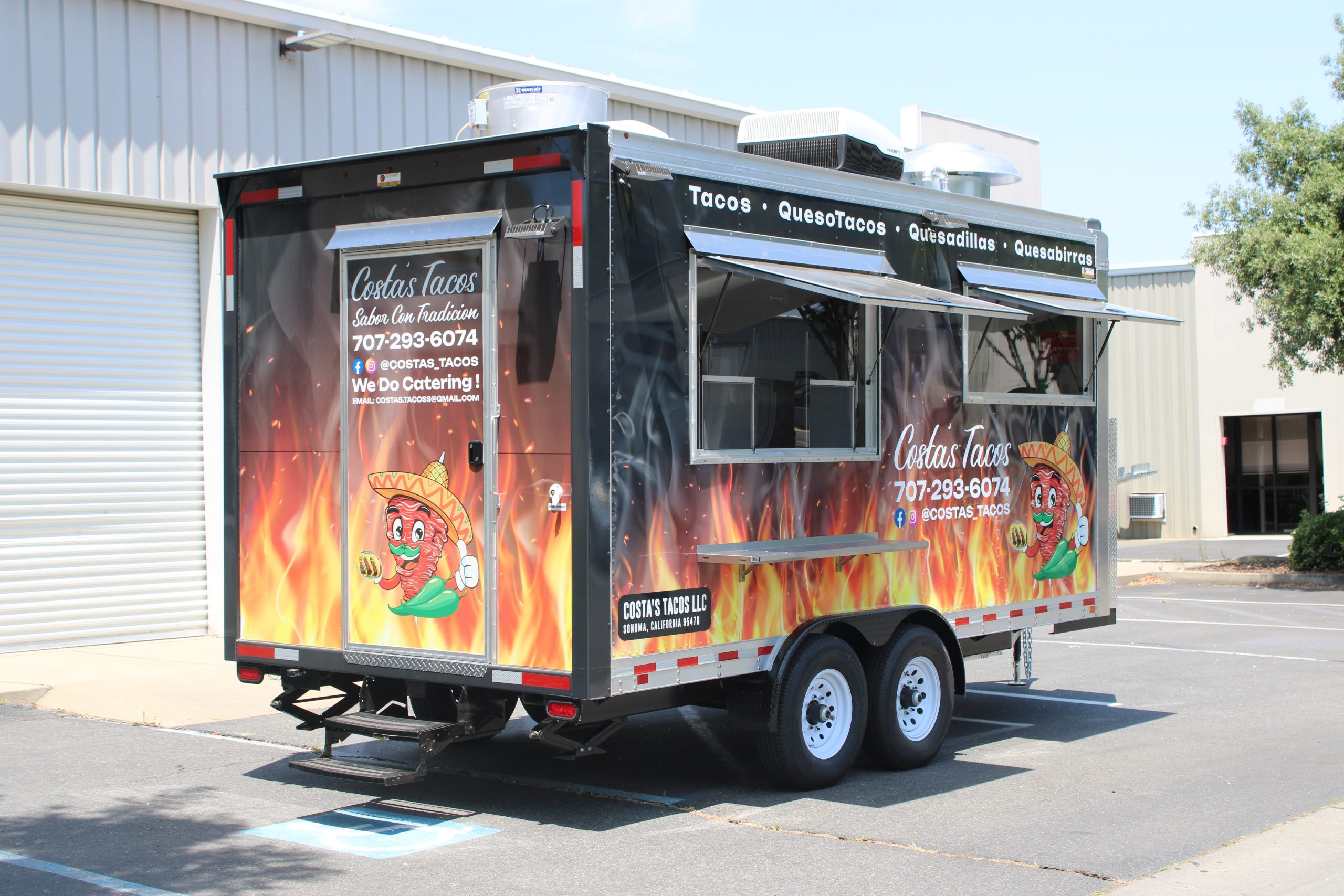
Taco concepts can work effectively in food trailers when ingredients and cooking processes share common preparation areas. Proteins, tortillas, toppings, sauces, and sides can often be organized around a predictable production sequence.
However, a broad Mexican menu can become equipment-intensive when it includes several cooking methods simultaneously. Frying, grilling, steaming, hot holding, refrigeration, and extensive preparation can compete for limited commercial kitchen space.
A focused taco food trailer concept usually benefits from clearly defined proteins, toppings, and assembly procedures. Storage planning also matters because fresh ingredients can require significant refrigeration and preparation capacity.
Operators should build the layout around actual production flow rather than copying a restaurant kitchen into a smaller mobile environment.
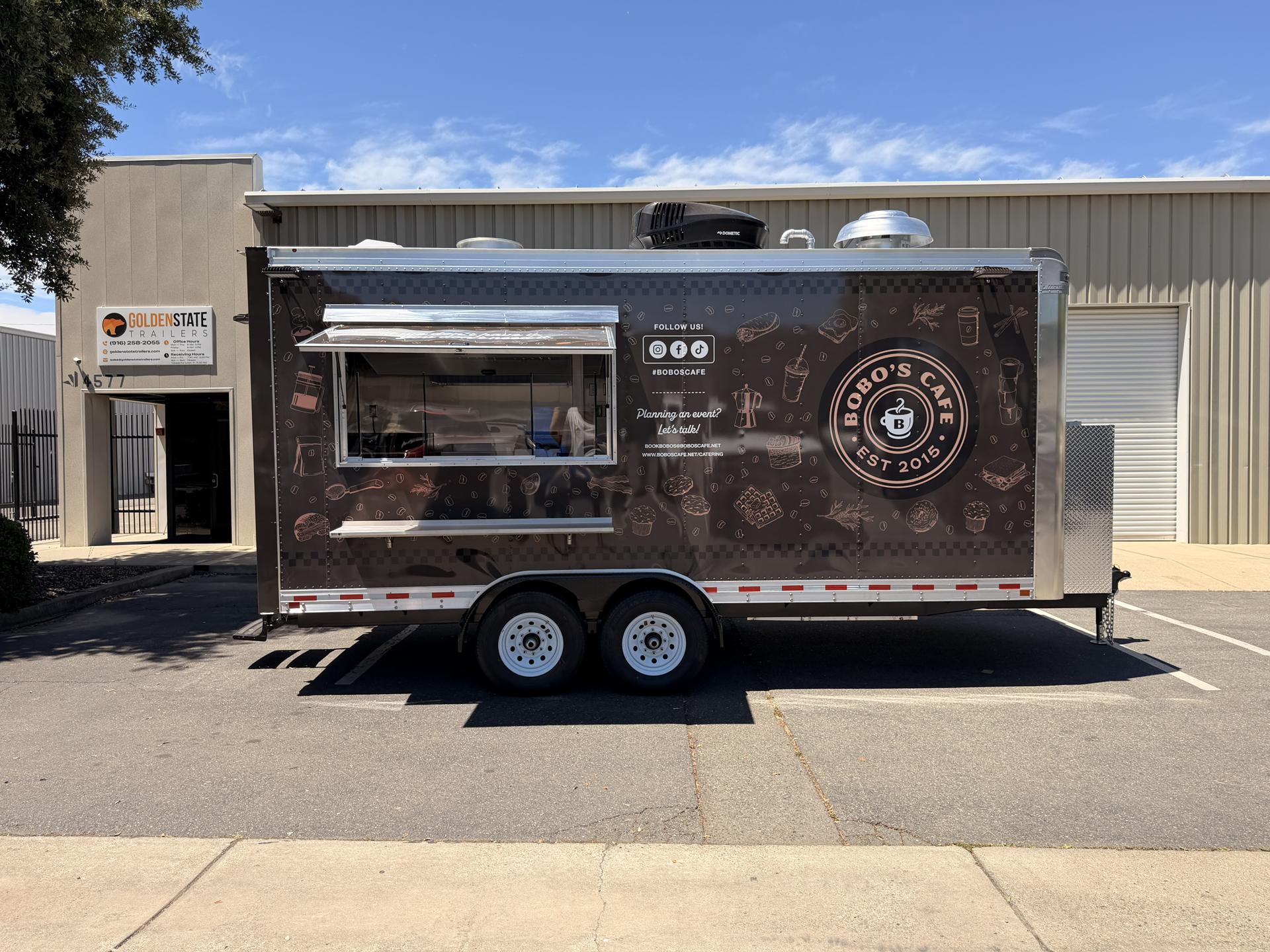
Coffee trailers operate differently from cooking-focused food trailers because beverage production creates another type of workflow. Espresso equipment, refrigeration, water systems, ice, storage, electrical requirements, and customer service become central planning considerations.
A coffee food trailer may have limited cooking equipment while still requiring substantial utility coordination. Beverage equipment can create demanding electrical and water requirements even when the menu appears relatively simple.
Service speed depends heavily on station placement because employees repeatedly move between espresso, milk, syrups, ice, cups, and service areas. A well-planned commercial food trailer reduces unnecessary movement during periods of frequent drink orders.
Operators considering food additions should evaluate how those products affect an otherwise beverage-focused workflow.
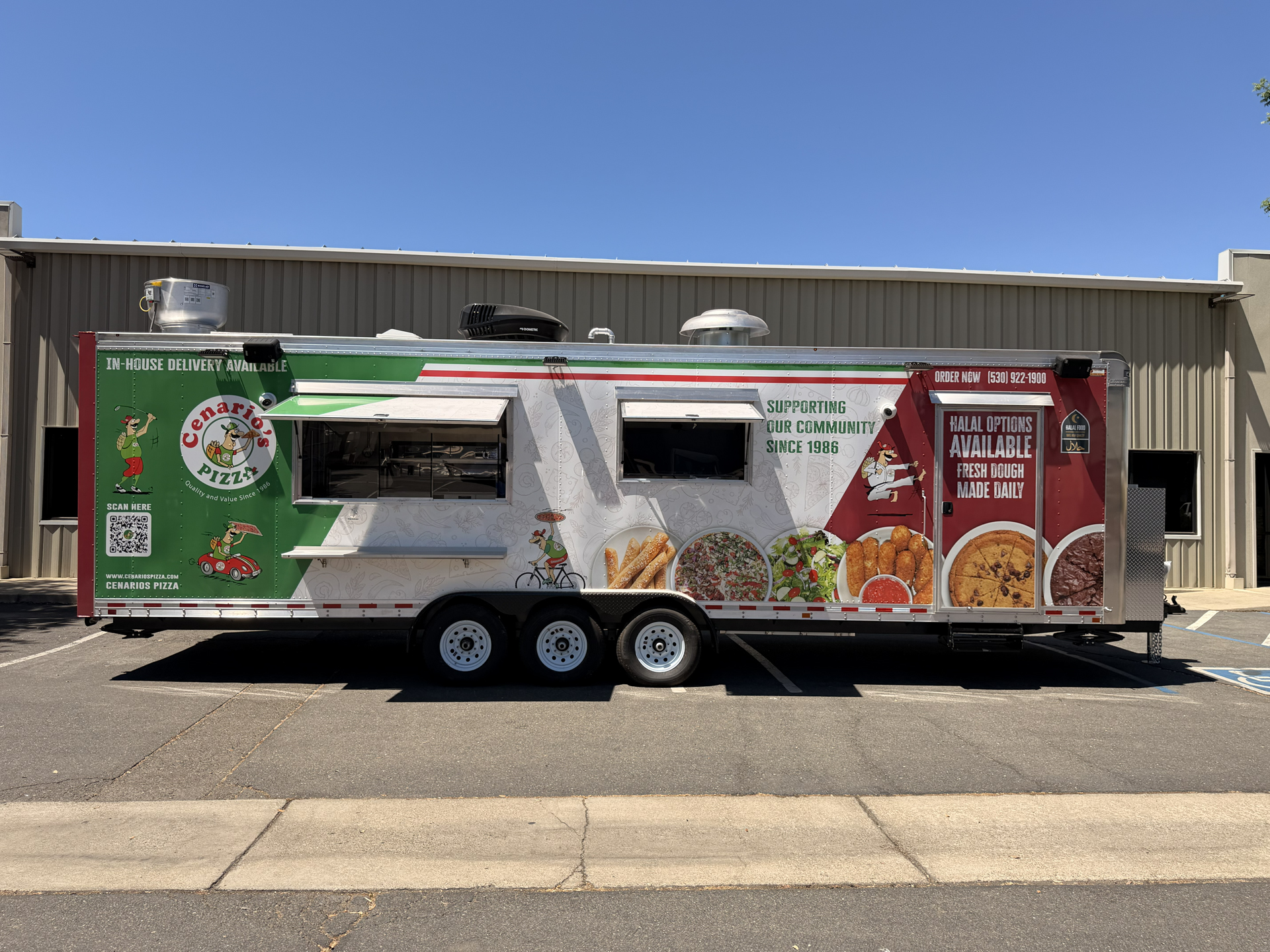
Pizza food trailers can support highly recognizable concepts, but their kitchen requirements depend strongly on production style. Dough preparation, refrigeration, toppings, oven selection, storage, ventilation, and service procedures all affect the final configuration.
A concept using prepared dough can operate differently from one completing extensive dough production inside the food trailer. Oven type also influences available space, utilities, ventilation, and the surrounding commercial kitchen layout.
Ingredient organization becomes important because efficient pizza production requires repeated access to toppings and preparation surfaces. The equipment plan should support a smooth sequence from dough preparation through baking, finishing, and service.
Operators should define the complete production process before selecting a trailer based only on oven dimensions.
Ice cream food trailer business ideas can range from packaged products to soft serve, scooped ice cream, specialty desserts, or combined beverage menus. Each format creates different refrigeration, freezer, water, storage, and electrical requirements.
Frozen dessert concepts may appear operationally simple because they require less traditional cooking equipment. However, temperature control and equipment capacity become critical parts of the commercial food trailer configuration.
Storage should account for both product inventory and ingredients used for toppings, drinks, or specialty desserts. Employee workflow also needs enough preparation and service space to prevent congestion during periods of high order volume.
The best format is the one that matches the planned menu and service model rather than simply offering the largest variety.
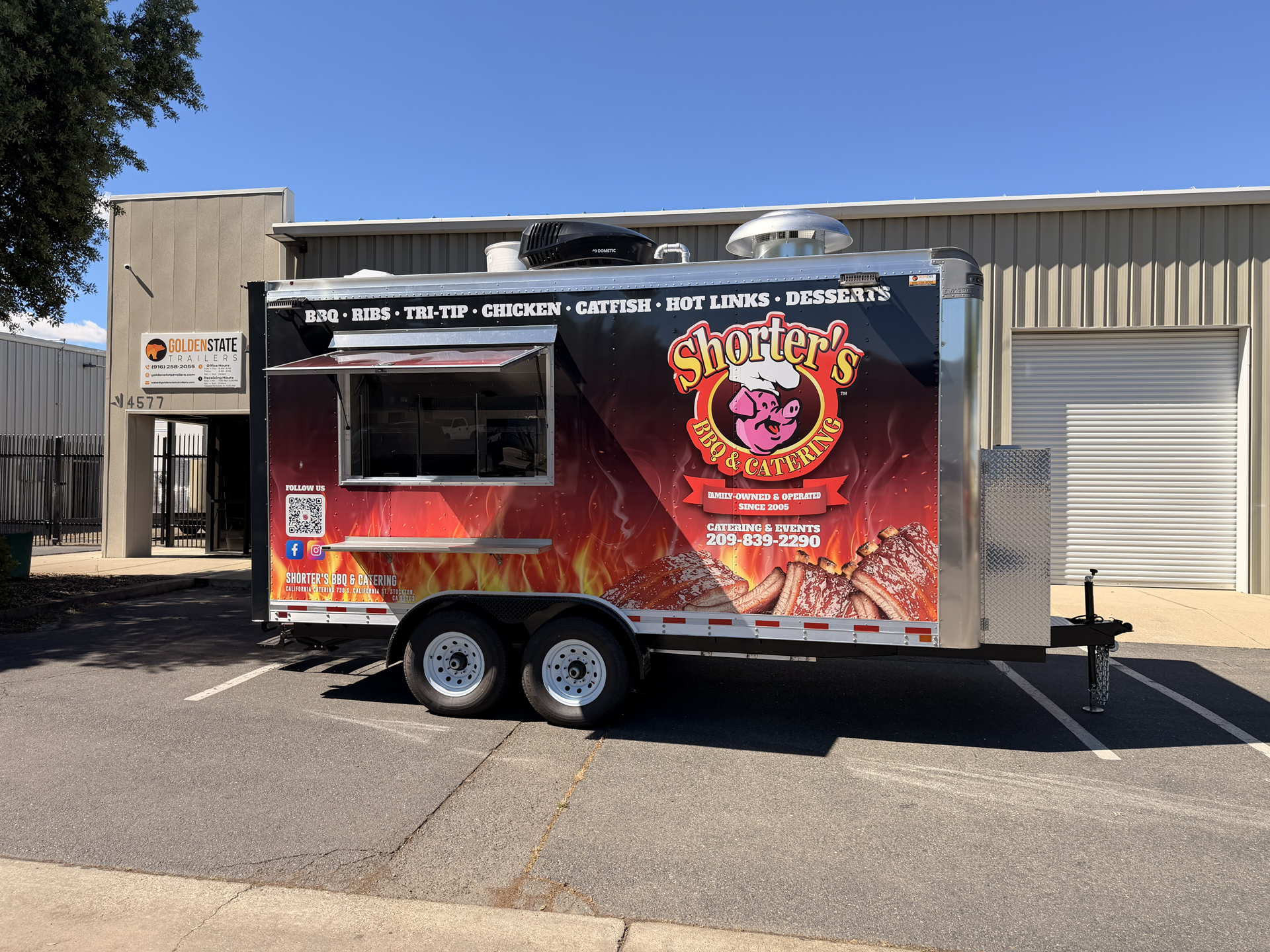
BBQ food trailer concepts require careful planning because cooking, holding, preparation, storage, and service can occur at different stages. Some products may be prepared over long periods before service while others require finishing or assembly inside the trailer.
The selected cooking process determines much of the commercial kitchen configuration. Equipment, ventilation, storage, refrigeration, and food holding should all reflect how products move from preparation to customer service.
A broad BBQ menu can require extensive space when several proteins, sides, sauces, and preparation methods are offered simultaneously. Operators should identify which products are central to the concept and which additions create unnecessary operational complexity.
A food trailer layout should support the actual service process, not simply accommodate every appliance available.
Breakfast concepts can combine eggs, breakfast sandwiches, burritos, pancakes, coffee, pastries, and other morning-focused products. The challenge is that seemingly related menu items can require several different cooking and preparation methods.
A food trailer serving breakfast should evaluate griddle capacity, refrigeration, hot holding, beverage production, ingredient storage, and preparation space. Orders often involve customization, making station organization particularly important during busy service periods.
Limiting the number of cooking processes can help maintain a more efficient commercial kitchen workflow. Breakfast food trailer business ideas work best when customers receive enough variety without creating excessive equipment or ingredient requirements.
Operators should also consider whether the concept will remain limited to morning service or expand throughout the day.
Sandwich concepts can work efficiently when the kitchen emphasizes refrigerated preparation, organized ingredient storage, and fast assembly. Cooking requirements may remain limited or become more extensive depending on whether the menu includes grilled or hot products.
A sandwich food trailer often benefits from clear station organization because many orders follow similar preparation sequences. Refrigerated prep equipment, work surfaces, storage, packaging, and service access should support that repeated workflow.
Menu complexity can grow quickly when every sandwich requires unique ingredients or preparation procedures. Shared ingredients allow the commercial food trailer to provide variety without expanding inventory excessively.
Operators should examine how often each ingredient appears across the menu before committing valuable storage space to it.
Bakery food trailer ideas can include pastries, donuts, cookies, specialty desserts, or finishing products prepared elsewhere. Production requirements vary greatly depending on how much baking and preparation occurs inside the mobile kitchen.
A food trailer completing significant baking onsite may require ovens, preparation surfaces, storage, ventilation, cooling areas, and appropriate electrical capacity. Concepts focused mainly on finishing and service can require a very different commercial kitchen arrangement.
Operators should clearly define which production stages occur inside the trailer and which occur at another approved location. That distinction influences equipment, storage, workflow, and applicable operational requirements.
The final concept should reflect the actual production method rather than simply the type of product being sold.
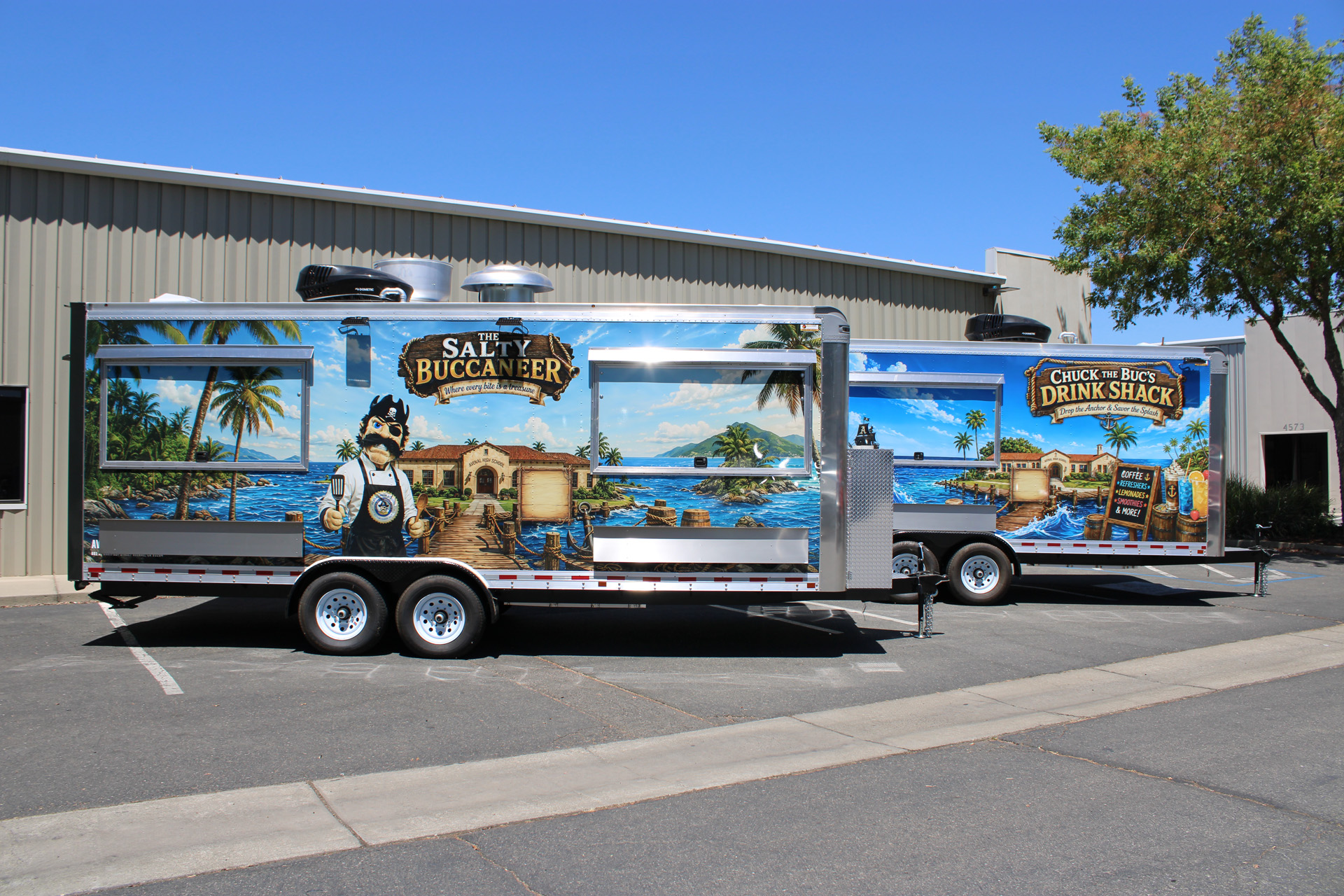
Specialty beverage trailers can focus on tea, smoothies, juices, lemonade, energy drinks, or other drink-based concepts. These operations usually rely heavily on refrigeration, ice, water, electrical equipment, cups, ingredients, and organized storage.
A beverage food trailer still requires careful workflow planning despite using less traditional cooking equipment. Employees may repeat short production sequences hundreds of times during busy service periods.
Placing ingredients and equipment in the wrong locations can create unnecessary movement throughout the commercial kitchen. High-use items should remain accessible around the primary preparation and service stations whenever practical.
Operators should also account for dry storage because cups, lids, straws, packaging, and ingredients can consume substantial space.
Schools, colleges, businesses, and other institutions may use food trailers for different reasons than traditional street-food operators. The mobile kitchen may support meal service, campus events, overflow capacity, catering, or service in locations without permanent kitchen infrastructure.
Institutional food trailers often need to support defined production volume, staffing, sanitation, storage, and service requirements. Equipment planning should reflect how the unit integrates with the organization’s broader food-service operation.
A school food trailer may also need a different service configuration than a public-facing commercial concept. Menu structure, service windows, storage, employee access, and production equipment should match the intended operating process.
These projects benefit from planning the food trailer as part of a larger food-service system rather than as an isolated kitchen.
A franchise food trailer should reproduce an established operating model within a mobile commercial kitchen. Menu consistency, equipment specifications, preparation procedures, service sequence, branding, and employee training can all influence the trailer configuration.
Standardization becomes especially important when several food trailers may eventually operate under the same brand. Equipment placement and kitchen workflow should be repeatable enough to support consistent operations across multiple units.
However, an existing restaurant layout cannot always be transferred directly into a trailer. Mobile kitchens have different space, utility, weight, ventilation, and service constraints that require careful adaptation.
The goal is preserving the franchise operating model while designing a food trailer suited to mobile service.
Service speed should be considered before finalizing any food trailer business idea. A concept requiring several long preparation steps after each order can create bottlenecks even when the food itself is attractive.
Map the order process from customer request through cooking, assembly, packaging, and final handoff. This reveals which stages limit food trailer production when multiple orders arrive simultaneously.
Pre-preparation and holding strategies can sometimes improve workflow, but they must remain consistent with food-safety and quality requirements. The commercial kitchen should make frequent production steps easy to repeat without unnecessary movement.
A concept becomes stronger when service capacity matches the locations and customer volume the operator expects to pursue.
Ingredient count affects refrigeration, dry storage, preparation, waste, purchasing, and menu consistency inside the food trailer. A large menu may appear attractive to customers while creating operational challenges that remain invisible before opening.
Look for ingredients that can serve several menu items without making those products feel repetitive. Shared ingredients can help simplify the commercial food trailer while still supporting meaningful menu variety.
Specialty ingredients used for only one low-volume product deserve additional scrutiny because they occupy valuable storage. Every ingredient should have a clear operational purpose within the overall food trailer concept.
Menu development should balance customer choice with the limited space available for commercial production and storage.
Every food trailer business idea eventually becomes an equipment plan. Cooking methods determine appliances, while ingredients determine refrigeration, preparation, storage, and sanitation requirements.
Operators should identify major equipment before finalizing the trailer size or kitchen layout. A concept that requires several unrelated cooking systems may need considerably more coordination than a focused production model.
Equipment should also reflect expected service volume rather than only menu variety. A commercial food trailer needs enough production capacity to support realistic demand without sacrificing necessary workspace.
Reviewing the menu alongside the equipment package can reveal whether the concept remains practical before fabrication begins.
A food trailer concept should work for the number of employees expected during normal and peak service. Additional workers require enough aisle space, workstations, equipment access, and separation between production activities.
A kitchen that feels spacious for one employee may become congested when several people prepare orders simultaneously. Food trailer workflow should therefore be tested against realistic staffing rather than an empty floor plan.
Each employee should have a clear role during busy service periods whenever possible. Defined work zones can reduce unnecessary crossing between refrigeration, cooking, preparation, packaging, and service areas.
Staffing expectations should become part of the commercial kitchen design before the final layout is approved.
The same food trailer business idea may perform differently across events, campuses, private properties, business districts, or recurring locations. Operating environment influences service volume, menu expectations, setup requirements, and customer ordering patterns.
A concept designed around fast event service may prioritize a narrow menu and high production capacity. Another commercial food trailer operating predictable daily service may support a broader offering or different preparation strategy.
Operators should define their primary service environments before completing the menu and kitchen configuration. This helps align food trailer workflow with the conditions the business will encounter most frequently.
Location also affects applicable operating requirements, which should be verified with the relevant local authorities.
Trends can create customer interest, but they should not replace practical food trailer planning. A concept still needs a workable menu, reliable supply chain, suitable equipment, clear production process, and identifiable customer base.
Operators should understand why customers would choose the business after the initial novelty disappears. A strong food trailer business idea should have value beyond its appearance on social media.
The concept should also fit the operator’s experience and ability to produce the menu consistently. Complicated techniques become difficult to scale when the commercial kitchen is small and customer volume increases quickly.
Long-term operational fit usually matters more than designing the entire business around a temporary trend.
Before approving a food trailer concept, ask whether the menu can move through one coordinated production system. Every major product should have a clear path through storage, preparation, cooking, holding, assembly, service, and cleaning.
Then review whether the planned equipment supports that process without creating unnecessary duplication. The commercial food trailer should have enough capacity, storage, workspace, and employee access for realistic daily service.
Finally, consider whether customers can quickly understand what the business specializes in. A clear concept makes menu development, equipment planning, branding, and food trailer design easier to coordinate.
If those three areas align, the idea has a stronger foundation for moving into detailed kitchen planning.
Good food trailer business ideas have focused menus, repeatable production steps, appropriate equipment, practical storage, and efficient customer service. Burgers, tacos, coffee, pizza, frozen desserts, sandwiches, BBQ, breakfast, bakery products, and beverages can all work with proper planning.
There is no single food category that is easiest for every operator or market. A stronger food trailer concept matches customer demand with a menu the commercial kitchen can prepare consistently and efficiently.
Yes. The menu influences food trailer equipment, refrigeration, ventilation, plumbing, storage, electrical requirements, and kitchen workflow. Defining core products before final design produces a stronger basis for equipment and layout decisions.
A focused menu can simplify equipment, inventory, preparation, storage, and employee training inside a commercial food trailer. However, menu size should be determined by the operating model rather than an arbitrary number of items.
Map each menu item from storage through preparation, cooking, assembly, service, and cleaning. A practical food trailer concept allows those stages to share equipment and workspace without creating frequent production conflicts.
It is possible, but unrelated concepts can require additional ingredients, equipment, refrigeration, storage, and production procedures. Operators should evaluate whether the added menu variety justifies the increased commercial kitchen complexity.
Define the core menu, cooking methods, production volume, staffing, refrigeration needs, storage, and service model first. Those factors provide the basis for selecting food trailer equipment that supports actual daily operations.
The best food trailer business ideas are not simply the concepts with the longest menus or most equipment. They are concepts that connect menu, production, service, storage, staffing, and commercial kitchen requirements into one workable operating model.
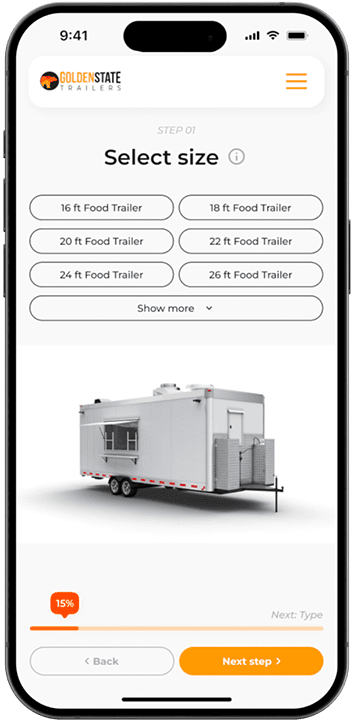
Define the core menu first, then evaluate equipment, workflow, refrigeration, ventilation, storage, and employee movement before finalizing the trailer. Use the 3D Food Trailer Builder to explore possible configurations, or Request a Quote when your food trailer concept is ready for detailed planning.