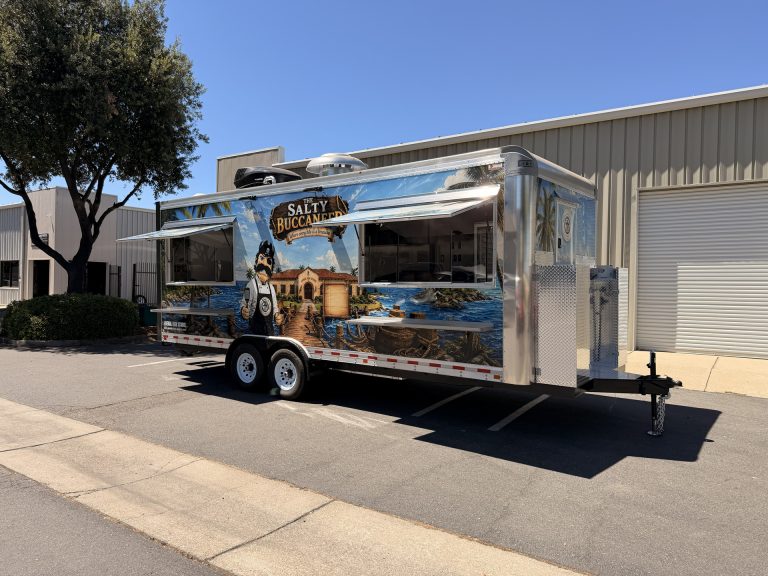
Our crew fabricates each Joliet order in Olivehurst, CA. An appointment lets you look over the build in person at any stage. The finished trailer is ready for pickup there or for delivery to Joliet, and we ship to all 50 states.
Next comes the Will County Health Department, which schedules its inspection once plan review is done. That visit issues the mobile unit permit sticker. The permit runs through December 31 and renews yearly with a fee and another inspection.



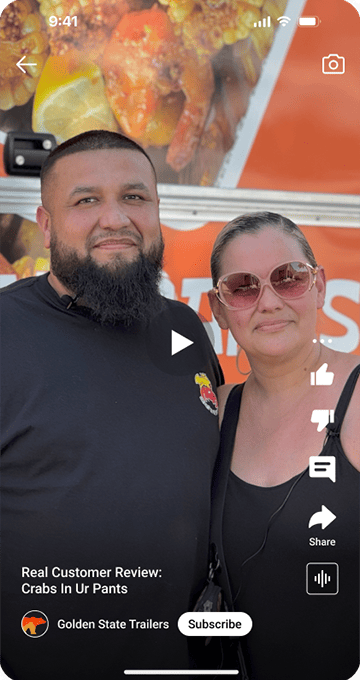
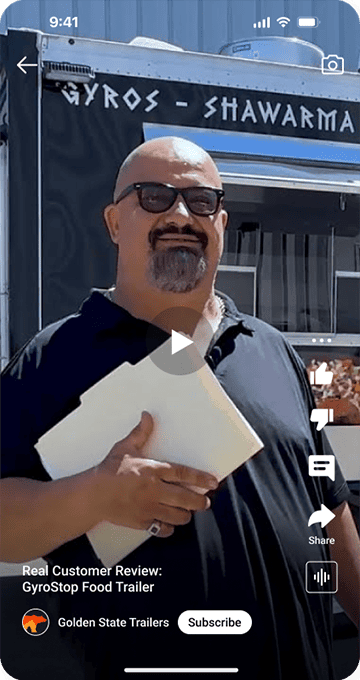
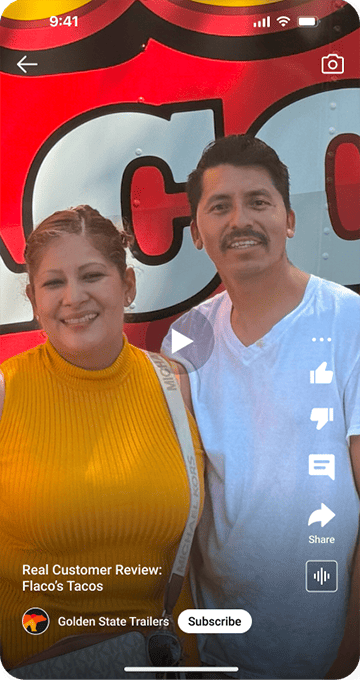

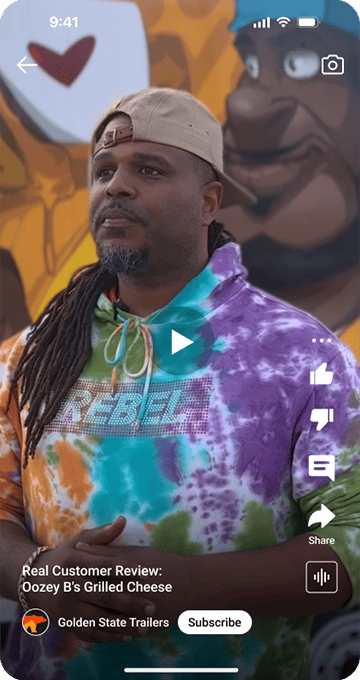
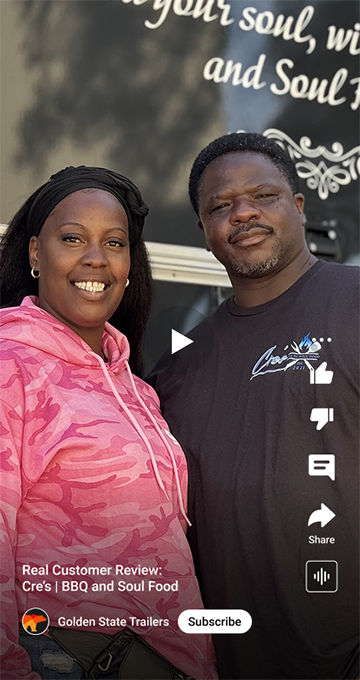
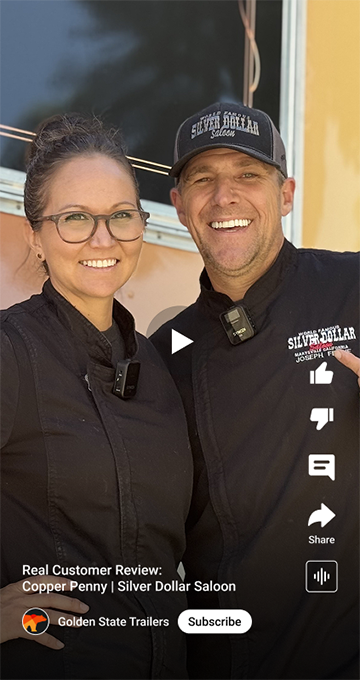
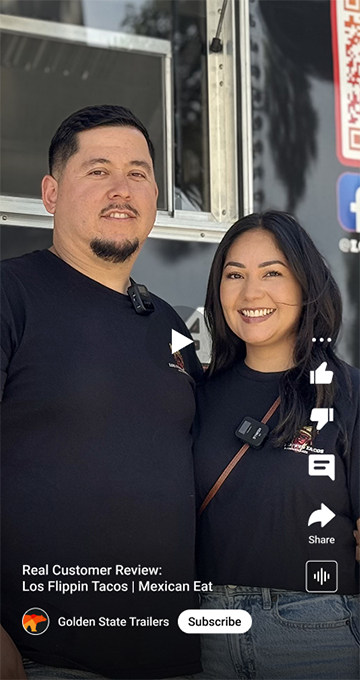
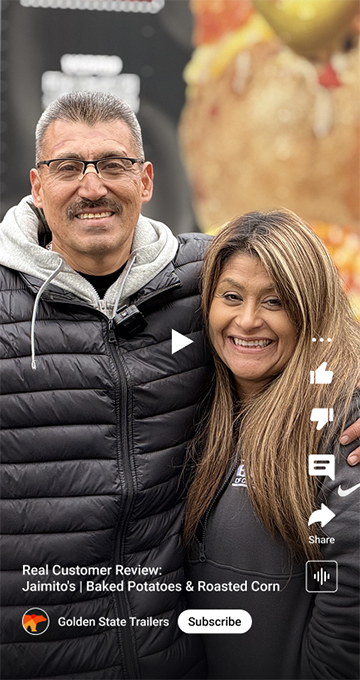


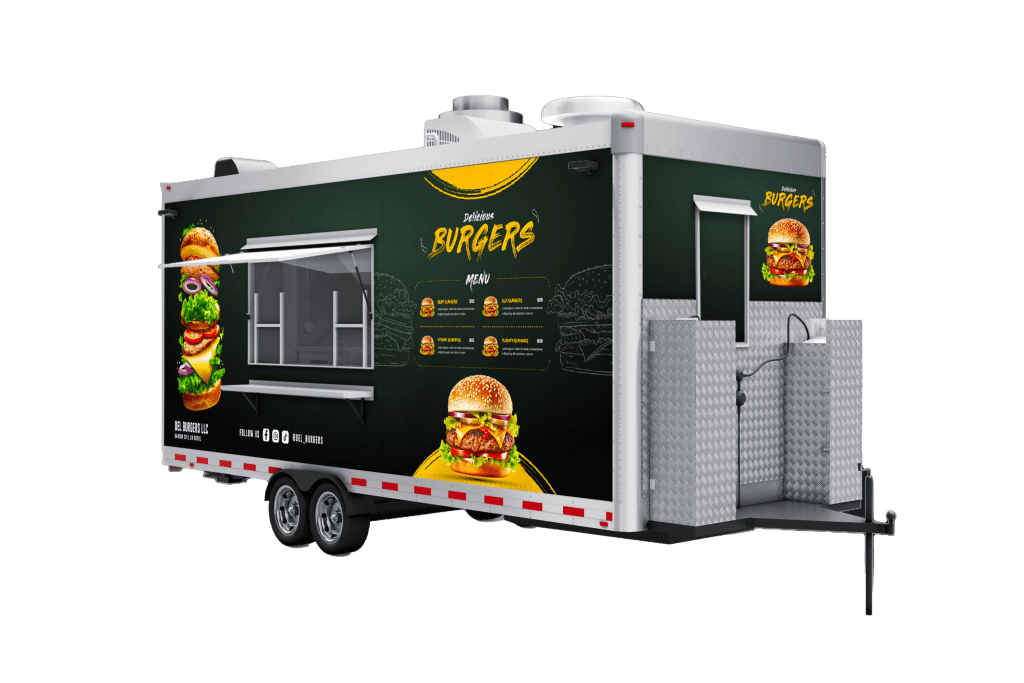


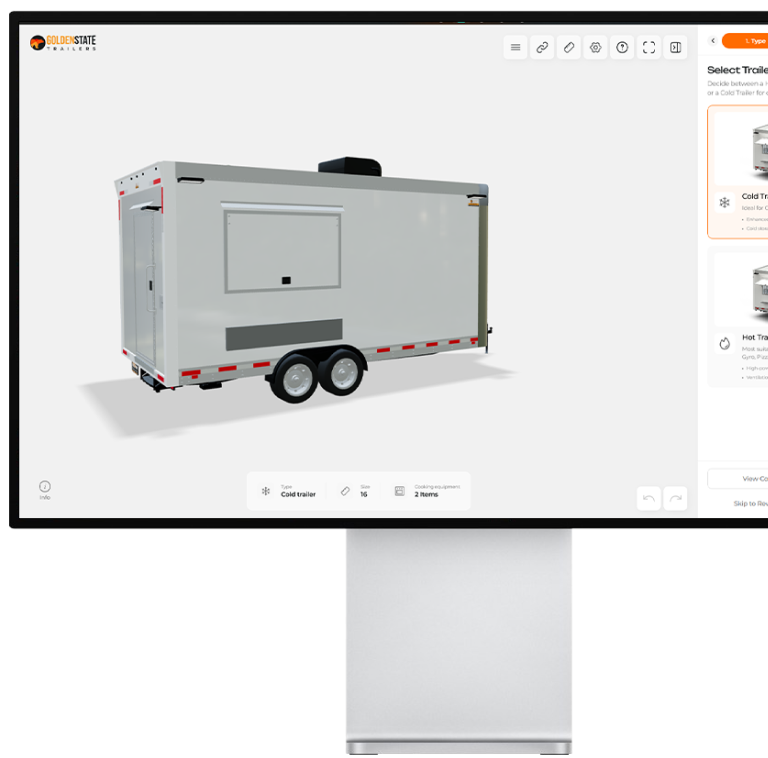
Using our 3D builder costs nothing, and it needs no account or registration. Pick a hot or cold kitchen, then one of our eight lengths. Appliances, service-side items and extras go in after that. Your work stays saved for 90 days, ready to reopen or share.
Will County's mobile unit worksheet asks for a drawing of where each piece of equipment sits. Place every appliance with that drawing in mind. You can take the plan the builder generates to WCHD before production begins.
Golden State Trailers welds the frames and builds food trailers for sale in Joliet in our Olivehurst, California shop. From there, the finished kitchen travels east to Joliet.
Downtown, the Chicago Street Farmers Market runs on Fridays from late May into late summer, 10 a.m. to 2 p.m. Its operator lists mobile food vendors among the vendor types at its markets, beside growers, bakers and makers.
Start with the menu. It picks the appliances, and they set the floor plan, the utilities and the load on each axle. To compare layouts, browse our food trailers for sale, custom food trailers and eight trailer sizes.
Illinois leaves retail food, mobile units included, to the local health department where you operate. Joliet spans Will and Kendall counties, and its Will County side answers to the Will County Health Department (WCHD).
WCHD’s Division of Environmental Health requires an operating permit for every mobile food operator, trailers included. Each permit covers one operator and one vehicle and expires December 31.
Renewal takes the yearly fee and a passed inspection. A Certified Food Protection Manager supervises the operation, and on-board crew complete ANSI-approved food safety training and pass an exam.
Business licensing sits with Business Services in the Office of the City Clerk. Its license applications for food businesses ask for the WCHD inspection form and the state Certificate of Registration. Confirm trailer rules with Business Services at 815-724-3905 before you order.
When food is prepared on board, WCHD reviews a proposal before it issues the permit. You file the mobile food service worksheet with the permit application.
The worksheet lists each cold-holding, hot-holding, cooking and plumbing item by maker, model and fuel. It also asks for an equipment layout drawing, tank sizes, water heater capacity and the hood’s CFM.
Each trailer’s engineering blueprints map its wiring and plumbing, plus the gas lines on every hot build. Hood airflow follows CFM calculations for your cooking equipment, and we support you during plan review.
After the review, WCHD schedules the inspection that issues the permit sticker. Its mobile unit application lists a one-time $420 plan review and a $450 yearly permit for units with food preparation.
The WCHD guide for mobile units sets equipment rules that shape the build:
A WCHD-permitted unit returns daily to a licensed commissary for cleaning and resupply. The guide also keeps mobile units off fixed locations, so plan a daily tow to and from base.
WCHD accepts a licensed commissary or shared kitchen as the base, never a home kitchen. The signed commissary agreement goes in with your application. For a base outside Will County, attach its permit and last inspection report.
The base supplies potable water, takes waste water, stores extra food and is where you clean the trailer. Look for room to back the trailer in and a drain point that reaches its gray water outlet.
A menu built on the grill or fryer calls for a hot trailer. Coffee and ice cream need only a cold kitchen. Compare our coffee trailers and BBQ food trailers side by side.
WCHD calls for an approved exhaust system over any cooking that gives off grease or smoke. It cites NFPA 96, UL and NSF, and the system is designed to the grease and heat load.
Over the cooking line, each hot trailer carries a hood rated UL 710 compliant and built to NFPA 96. Commercial-grade 14×14 make-up air and UL 300 fire suppression complete the setup, as our build standards list.
Hot builds draw propane through a 400,000 BTU system with automatic cylinder changeover and a shut-off valve per appliance. Cold builds skip the hood, suppression and gas lines.
January highs in Joliet average near 31°F, and in a typical year freezing nights run from late October to mid-April. Before a hard freeze, drain a parked trailer’s tanks and plumbing, or keep it under a heated roof.
July highs average near 84°F, and a working hot line adds its own heat. Behind the stainless walls sits enhanced insulation with reinforced backing. The crowned one-piece aluminum roof sheds rain and snowmelt and carries a 15,000 BTU air conditioner.
Your Joliet trailer enters fabrication after you sign off the 3D render, following the stages of our process. Before the trailer leaves, our shop tests its brakes, frame, electrical load and plumbing.
On hot builds, we also check hood airflow, fire suppression and gas line pressure. The trailer leaves Olivehurst fully equipped to the design you approved, and only after every check passes. At handoff, you learn to run each system, from cooking equipment, gas and power to water tanks and suppression.
Your price rests on size, equipment and layout. The consultation also covers financing through our lending partners or a lender you choose. Request a quote for your Joliet build, with menu notes in the form’s free-text project box.

At Golden State Trailers, we build custom commercial food trailers around real operational needs. Every project is planned with equipment, workflow, systems, safety, and long-term reliability in mind. Our goal is to build food trailers that perform reliably in daily commercial use.