Starting a food trailer business in Washington requires planning before manufacturing begins. State and local approvals can affect equipment, layout, utilities, and operating procedures. Understanding Washington food trailer requirements early can reduce expensive design changes later.
Several agencies regulate different parts of a Washington food trailer business. Washington Labor & Industries focuses on the physical unit and installed systems. Local health jurisdictions regulate food service operations within their applicable operating areas.
Menu choices influence equipment, ventilation, plumbing, refrigeration, and electrical requirements. Those systems also determine how a commercial food trailer should be designed. Planning them together creates a stronger foundation for the entire Washington project.
Before opening a food trailer business in Washington, you may need:
No single Washington food trailer permit covers every part of the business. Requirements depend on equipment, menu, preparation methods, location, and business structure. Local jurisdictions may also apply additional rules before a food trailer operates.
A Washington food trailer generally needs local health plan review before construction. The owner must submit the required operating plan and unit specifications for approval. This review can directly affect food trailer equipment, layout, plumbing, and workflow.
The submitted plan includes menu details, preparation steps, equipment, and floor plans. It also covers water, sewage, restrooms, operating procedures, and cleaning schedules. These details should be established before the food trailer design becomes final.
Changes after approval can create additional review requirements for the operator. Menu changes, preparation changes, vehicle changes, or commissary changes can matter. Food trailer owners should confirm the current process with their local health jurisdiction.
Washington L&I plan review is separate from local health department review. Some food trailers need approved L&I plans before an inspection can occur. Whether plans are required depends on installed equipment and permanent utility systems.
Commercial cooking equipment requiring ventilation can trigger Washington L&I plan review. Propane piping, solid-fuel equipment, larger electrical systems, and alternate energy can also qualify. Heavy equipment or plumbing for bodily waste may create additional plan requirements.
These systems should be considered before a custom food trailer enters production. Ventilation, propane, electrical loads, plumbing, and equipment weight affect physical design. Early planning can reduce major revisions during the Washington food trailer approval process.
Food trailers covered by Washington L&I vendor-unit rules require applicable inspection. Inspection remains separate from plan review and applies in additional situations. A food trailer without required plans may still need inspection and insignia.
The L&I insignia identifies the approved unit and certain installed system details. Washington advises buyers to verify approval before purchasing a food trailer. This check becomes especially important when buying units originally built elsewhere.
L&I approval does not replace health permits or local operating requirements. Business licensing, fire approval, and food safety obligations remain separate processes. Washington food trailer owners should plan for each applicable approval independently.
A Mobile Primary Permit covers the primary Washington mobile food operation. The applicable regulatory authority issues it for the business’s primary jurisdiction. This permit connects directly with the local food trailer plan review process.
Application materials include the menu, equipment, floor plan, and preparation procedures. Plumbing, water supply, sewage disposal, cleaning, and restroom access also matter. These requirements can influence the commercial food trailer layout before manufacturing begins.
Operators should identify their primary jurisdiction during the early planning stage. Local health authorities can explain current application and inspection requirements for food trailers. That information helps align the project with the intended operating environment.
A Mobile Secondary Permit may apply when operating in another Washington jurisdiction. This process recognizes a valid Mobile Primary Permit from the original authority. It allows another jurisdiction to authorize the same food trailer operation locally.
The secondary authority may request the primary permit and approved plan review. A recent inspection report and applicable commissary documentation may also be required. Food trailer operators should confirm requirements before serving customers in additional jurisdictions.
One primary permit should not be treated as statewide operating authorization. Local licensing, fire, vending, and location requirements can still vary significantly. Multi-location food trailer businesses should map operating jurisdictions before finalizing launch plans.
Many Washington food trailers must use an approved commissary or servicing area. An exemption may apply when the food trailer meets specific requirements. The primary regulatory authority decides whether the operation qualifies for that exemption.
Commissaries can support warewashing, food storage, cleaning, and restroom access. Required services depend on the approved menu and food trailer operating plan. A written commissary agreement is generally required when a commissary supports operations.
Some food trailers can qualify for approved commissary exemptions in Washington. Those units must perform required functions onboard and satisfy specific operating conditions. Operators should obtain approval before assuming an equipped food trailer qualifies automatically.
A Washington food trailer business may need a state business license. Registration depends on the business structure, activities, employees, taxes, and endorsements. The Washington Department of Revenue administers the state’s business licensing process.
A Business License Application can establish several registrations and local endorsements. Approved businesses receive a Unified Business Identifier, commonly called a UBI. Certain entities may need Secretary of State registration before applying for licensing.
Business licensing remains separate from approval of the physical food trailer. Tax obligations and endorsement requirements depend on each operator’s individual circumstances. Owners should review current Washington requirements before beginning commercial food trailer operations.
Local licensing may also apply to a Washington food trailer business. Requirements depend on where the business is located and conducts commercial activity. Mobile operations can therefore have licensing responsibilities across multiple local jurisdictions.
Many Washington cities participate in the state’s Business Licensing Service. Other cities or counties may require a separate local application process. Food trailer operators should confirm licensing requirements for each regular operating location.
A state business license does not automatically satisfy every local requirement. Health permits and Washington L&I approval also remain separate from licensing. Checking these requirements early creates a clearer path toward opening the business.
Local fire requirements can apply to commercial food trailers using cooking systems. Propane, ventilation, fire suppression, and electrical installations may require local review. The exact process depends on the authority responsible for each operating location.
Fire rules are not handled through one statewide food trailer permit. Requirements can differ between Washington cities, counties, and local fire districts. Operators should confirm current requirements before scheduling service at a particular location.
Fire safety should also influence food trailer equipment planning from the beginning. Cooking lines, hoods, suppression systems, propane, and electrical loads work together. Addressing those systems early can reduce costly changes after manufacturing is completed.
Washington requires food workers to hold valid Food Worker Cards. This requirement covers workers handling unpackaged food, utensils, equipment, or contact surfaces. Employees working inside food trailers should complete the required food safety training.
Workers receive cards after completing training and passing the Washington food safety exam. New employees can work temporarily when employer-provided training requirements are satisfied. A valid Washington Food Worker Card can be used throughout the state.
This credential applies to employees rather than the physical food trailer. It does not replace health permits, business licenses, or required inspections. Operators should keep required employee documentation available during normal food trailer operations.
Most Washington food establishments need at least one Certified Food Protection Manager. This requirement differs from the Food Worker Card required for individual workers. A CFPM supports broader food safety management within the food trailer business.
The CFPM helps ensure managers understand procedures and applicable safety requirements. Washington does not require that person to remain onsite at all times. Other person-in-charge requirements still apply while the food trailer is operating.
Some establishments may qualify for exceptions under Washington food safety rules. Operators should confirm their specific requirements with the applicable local health jurisdiction. Menu and preparation methods can influence how food trailer requirements apply.
A trailer approved elsewhere is not automatically approved for Washington operations. States can apply different construction, system, and inspection requirements to food trailers. Washington L&I advises buyers to verify approval before purchasing a qualifying unit.
This matters when comparing used, stock, or previously manufactured food trailers. Plumbing, propane, ventilation, electrical service, or equipment may require significant changes. Those modifications can add cost and delay the planned food trailer opening.
A new custom food trailer allows requirements to influence design from the beginning. Menu decisions should drive equipment selection, kitchen layout, and utility planning. These choices can also affect Washington plan review and inspection requirements.
Price should not be the only factor when comparing food trailer manufacturers. Engineering, documentation, equipment integration, and construction quality support reliable daily operation. Serious operators need a commercial kitchen built around real business requirements.
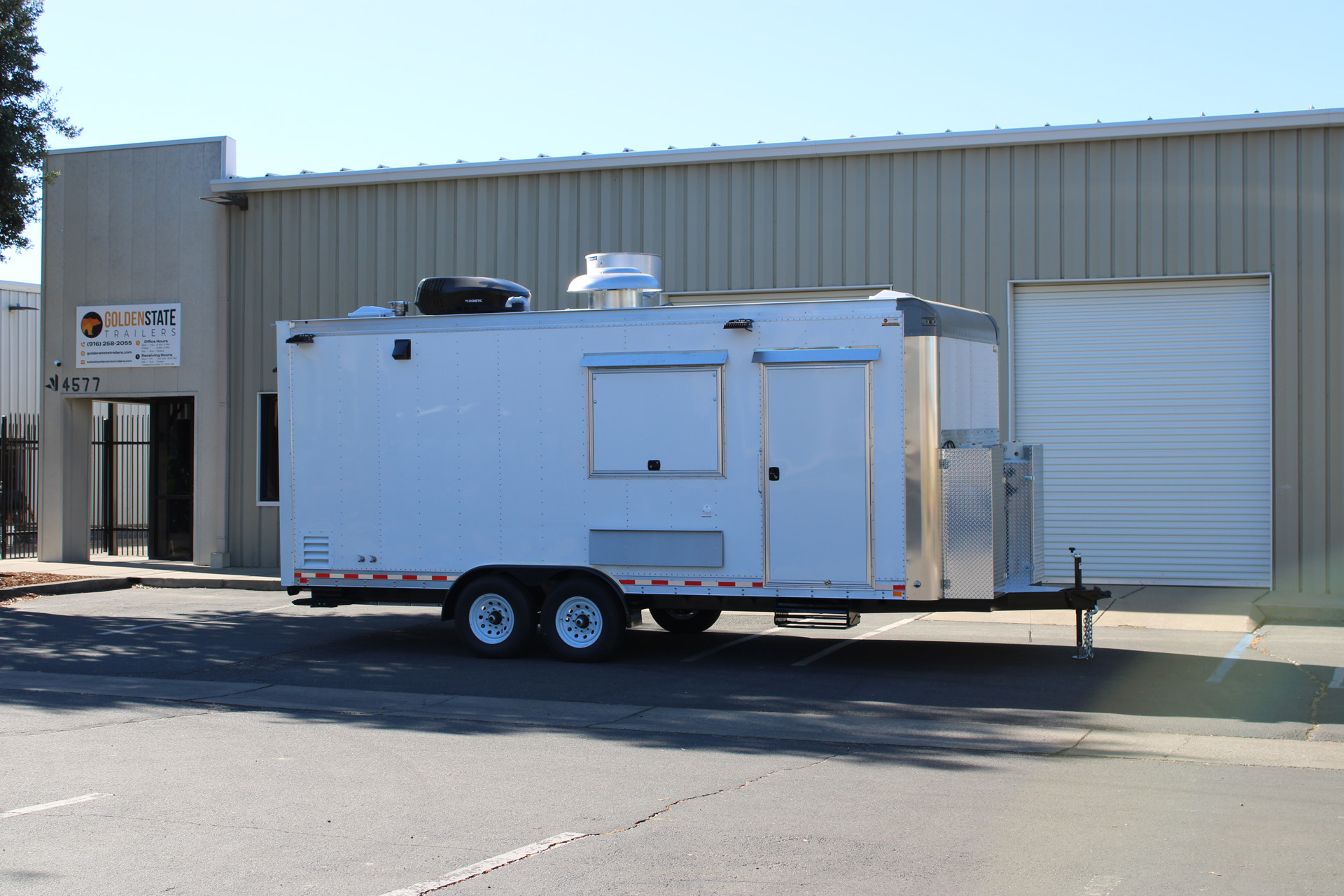
Golden State Trailers designs custom commercial food trailers around real food service operations. Every project begins with the menu, equipment, workflow, and operating requirements. Those details create the foundation for the physical food trailer design.
For Washington projects, our planning process considers ventilation, plumbing, electrical systems, and refrigeration. Water, wastewater, storage, equipment placement, and workflow are also reviewed carefully. These systems can affect how a Washington food trailer moves through review.
Our team plans the physical food trailer around applicable project requirements. Government agencies make final decisions regarding permits, inspections, licenses, and approvals. Requirements can vary by jurisdiction, equipment package, menu, and operating location.
Planning a custom food trailer for Washington starts with clear project information. Tell us what you will serve and where you plan to operate. Our team can then discuss the equipment and physical build requirements. Request a Custom Food Trailer Quote.
A Washington food trailer may require several separate permits and approvals. These can include health permits, L&I review, business licensing, and fire approval. Exact requirements depend on the operation, equipment, menu, and operating jurisdiction.
No, L&I plan review depends on the equipment and installed systems. Certain cooking, propane, electrical, plumbing, or heavy equipment can trigger review. Even plan-exempt food trailers may still require Washington L&I inspection and insignia.
Washington requires plan review before beginning a mobile food unit construction project. The submitted information includes the menu, equipment, floor plan, and operating procedures. Food trailer owners should involve their local health jurisdiction before finalizing design.
Washington L&I focuses on the physical food trailer and installed systems. Local health jurisdictions regulate the food service operation and approved operating plan. A commercial food trailer may need to address both processes separately.
Many Washington food trailers must operate from an approved commissary. Qualifying operations may receive an exemption from the applicable regulatory authority. Operators should confirm exemption eligibility before relying entirely on onboard food trailer systems.
Yes, but additional local permits or approvals may still apply. A Mobile Secondary Permit may be required outside the primary permitting jurisdiction. Food trailer operators should also check local licensing, fire, and location rules.
Yes, but Washington approval requirements still apply to qualifying food trailers. Approval in another state does not guarantee approval for Washington operations. Buyers should verify applicable L&I and local requirements before completing the purchase.
Yes, Washington requires food workers to hold valid Food Worker Cards. The card applies statewide after required training and examination are completed. Food trailer businesses should keep employee credentials available for applicable health inspections.
Most Washington food establishments require at least one Certified Food Protection Manager. Some operations may qualify for exceptions under applicable food safety rules. Food trailer owners should confirm requirements with their local health jurisdiction.
A Washington business license may be required when registration conditions apply. Those conditions can involve employees, taxable sales, trade names, or endorsements. Food trailer operators should review their circumstances with the Department of Revenue.
There is no single startup cost for every food trailer business. Trailer size, equipment, ventilation, utilities, permits, insurance, and licensing affect costs. Operating location and business structure can also change the total investment significantly.
Start with the menu, expected volume, equipment, workflow, and operating locations. Those factors determine many physical and utility requirements inside the food trailer. A manufacturer should design the commercial kitchen around those real operating needs.
Government agencies issue permits, licenses, inspections, and final operating approvals. Golden State Trailers focuses on designing and manufacturing the physical food trailer. Owners remain responsible for confirming requirements and completing their business approvals.
A strong Washington food trailer project begins with clear operational requirements. Menu, equipment, utilities, workflow, and operating locations should be considered together. Early coordination creates a more organized path through design and manufacturing.
Golden State Trailers builds custom commercial food trailers for professional daily operations. Our team plans each kitchen around its equipment, workflow, and intended use. That approach supports reliability, efficiency, and long-term commercial food trailer performance. Request a Custom Food Trailer Quote
This article provides general information about Washington food trailer requirements and permits. It is not legal, regulatory, tax, licensing, engineering, or professional advice. Requirements can change based on equipment, menu, configuration, location, and jurisdiction.
Agency procedures, fees, forms, regulations, and interpretations may change over time. Operators should verify current food trailer requirements directly with applicable government authorities. Confirm requirements before purchasing, building, modifying, or operating a food trailer.