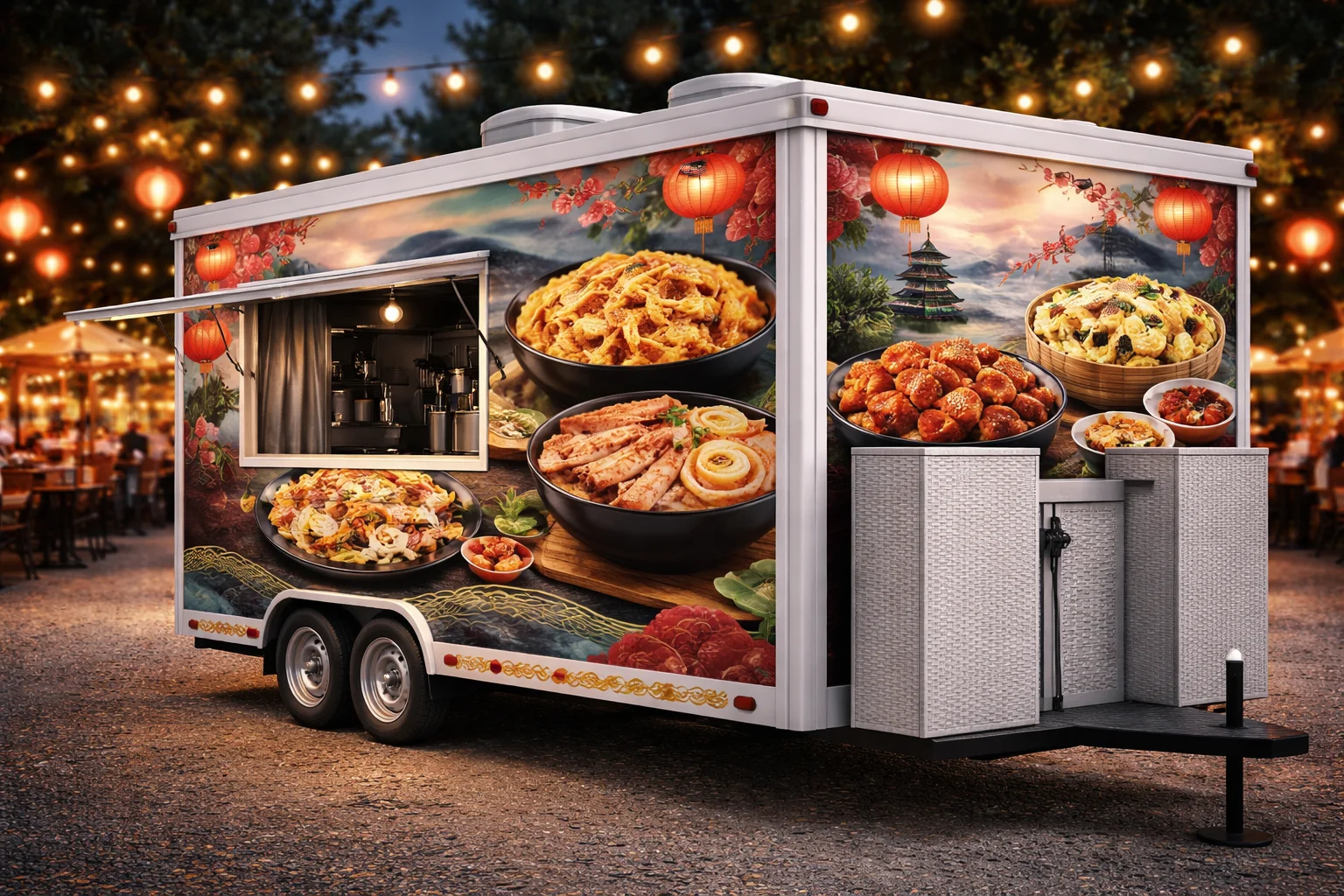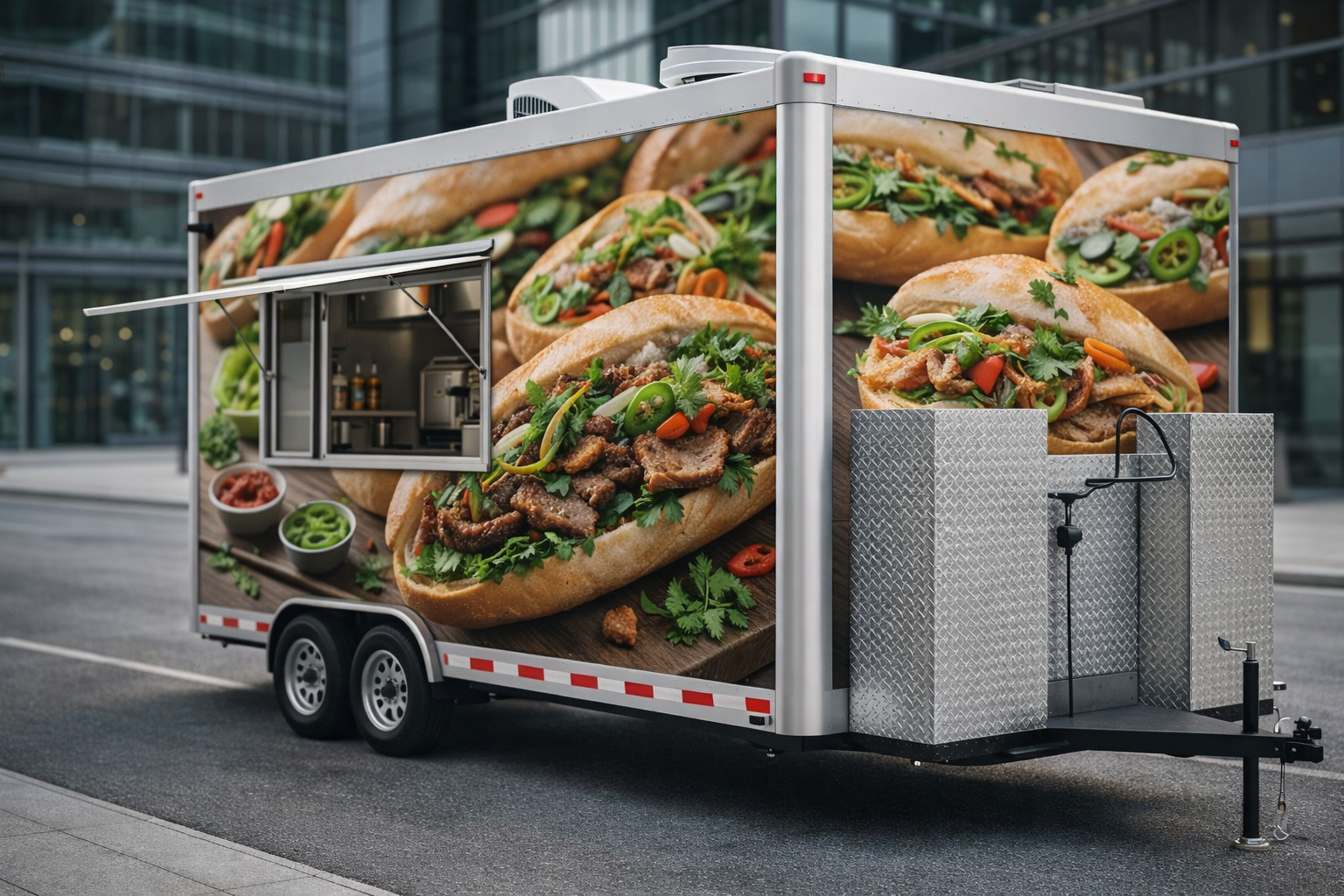
The tow chain anchor is a reinforced attachment point mounted directly to the trailer’s chassis, used to secure safety chains between the food trailer and the towing vehicle. It serves as a critical fail-safe in the event of coupler or hitch failure during transport. For mobile food operations, tow chain anchors are a required safety feature and are used whenever the trailer is transported, whether for daily vending routes or special events.
Inspect the tow chain anchor regularly to confirm it is securely welded to the trailer frame and free of rust, cracks, or deformation. Use safety chains rated for the trailer’s GVWR, and always cross them under the coupler to form a cradle that can catch the tongue if it disconnects. Include anchor and chain checks in every pre-trip inspection to maintain safety and regulatory compliance.
Track Width Measurement
“`html The Track Width Measurement refers to the precise distance between the centerlines of trailer wheels on the same axle. This measurement is crucial for ensuring the stability of food trailers, confirming axle alignment, and maintaining compliance with safety regulations. It is commonly used during the initial design and manufacturing phases, as well as during […]
Axle Seal Leak
An Axle Seal Leak occurs when the seal around the axle shaft fails, allowing lubricant to escape from the wheel hub assembly. In food trailers, which carry substantial weight from cooking equipment and supplies, properly functioning axle seals are essential to maintain wheel bearing lubrication and prevent contamination. Leaks are often detected during routine maintenance […]
Axle Camber Angle
The Axle Camber Angle refers to the slight vertical tilt of a trailer’s axle, typically measured in degrees. This angle is engineered during manufacturing to ensure optimal tire contact with the road surface. For food trailers, a properly set camber angle supports even tire wear, balanced load distribution, and improved towing stability. It is especially […]