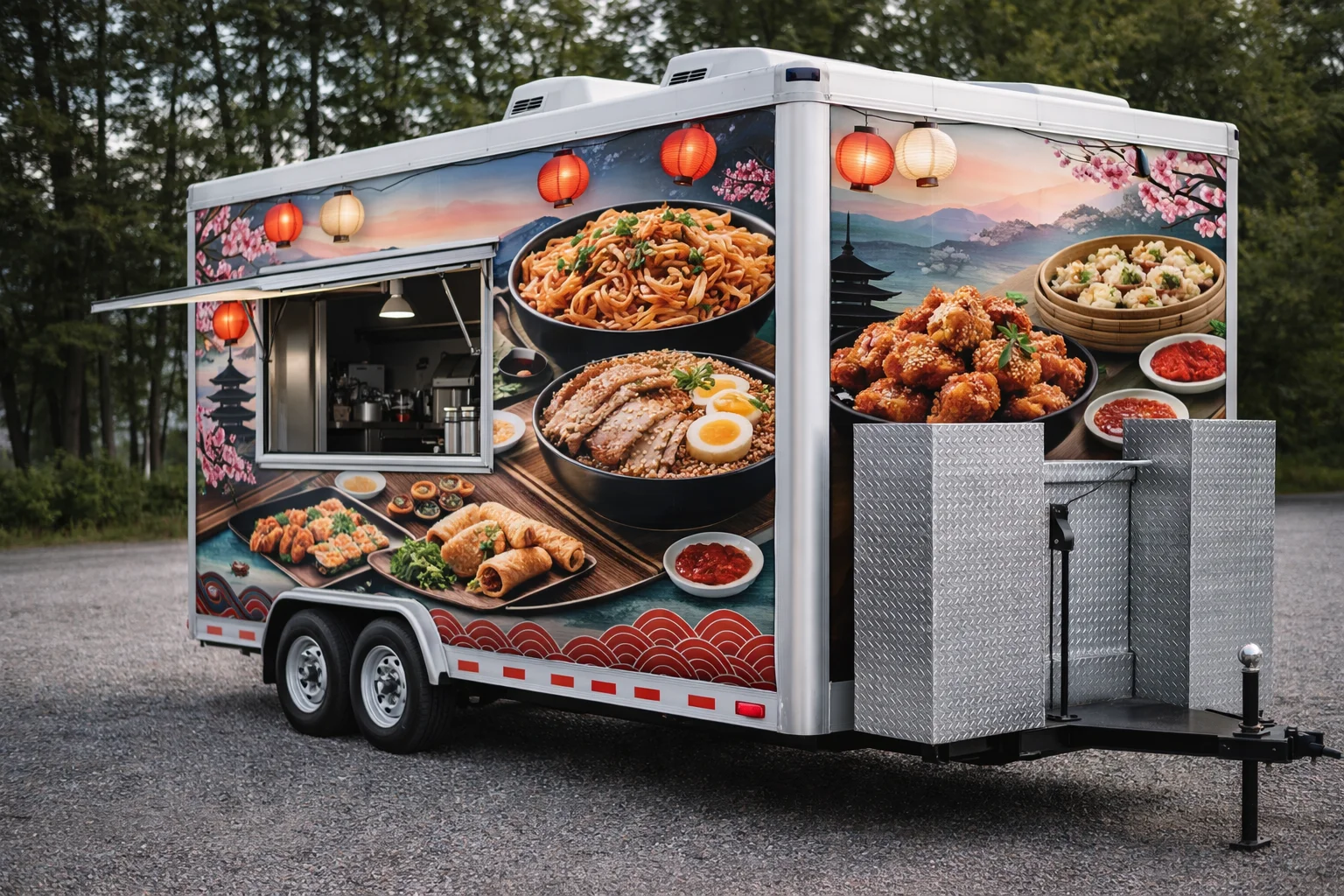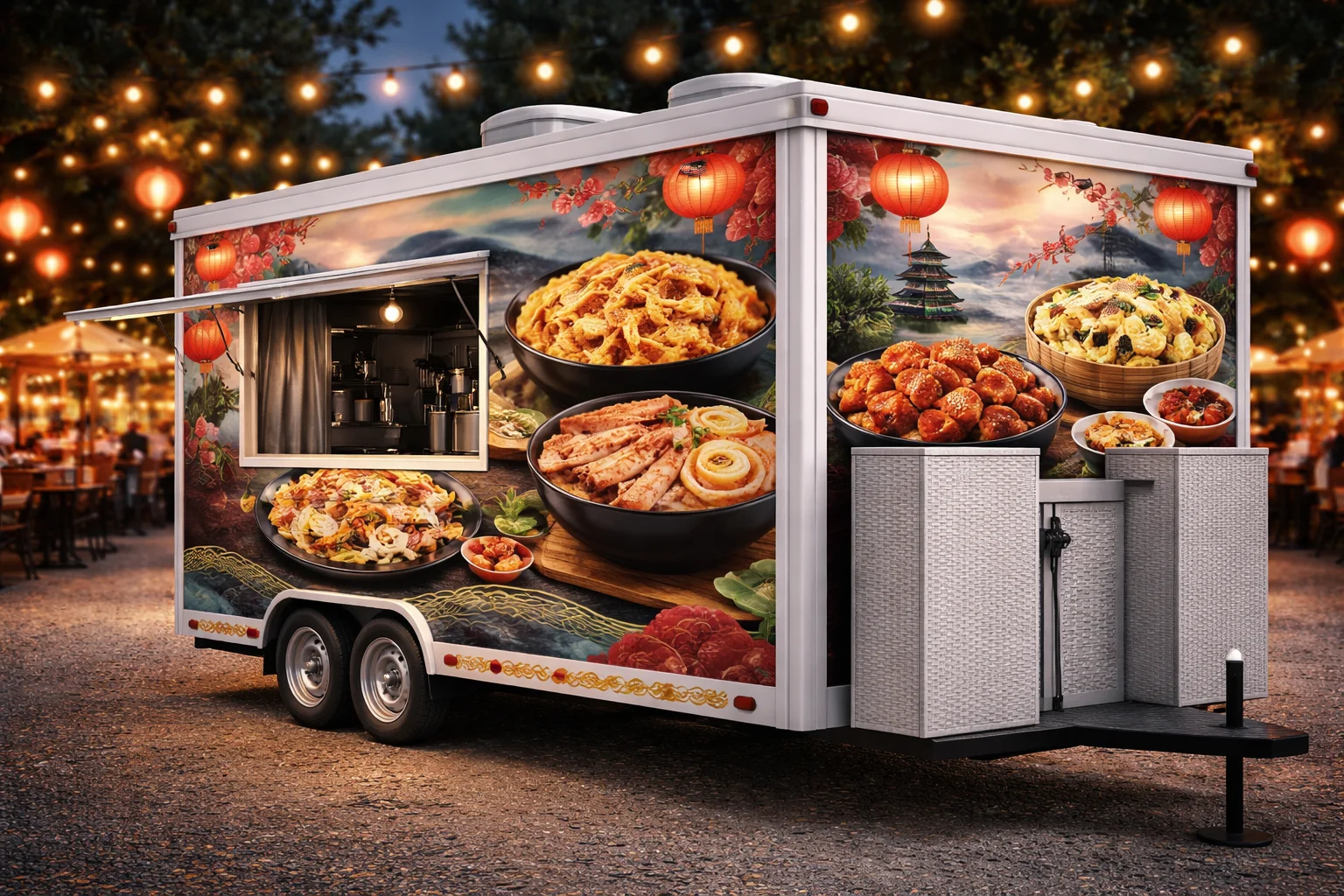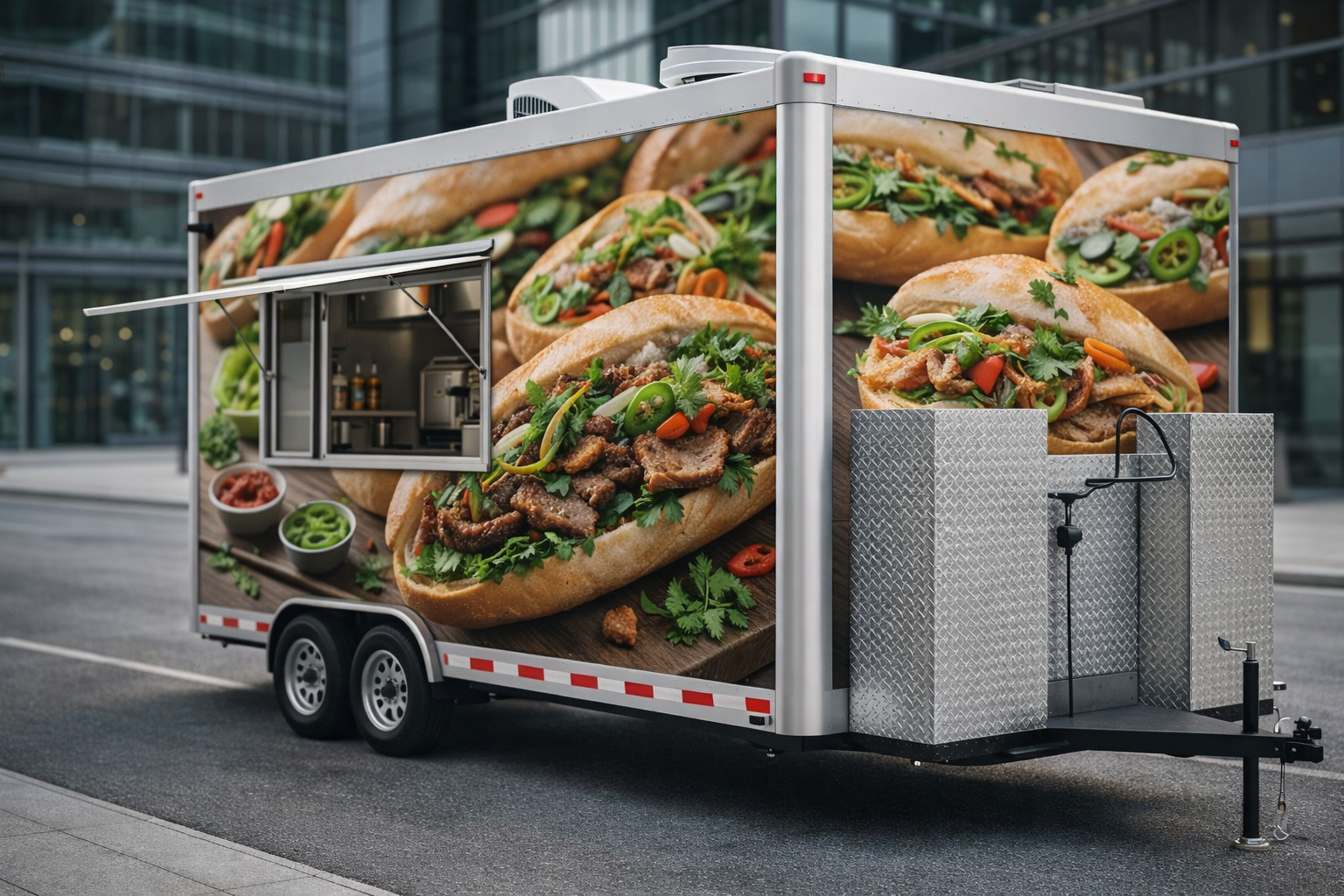
Tow Arm Reinforcement refers to the structural enhancement of a food trailer’s tow arm assembly to handle increased stress during transport. This reinforcement is critical for maintaining trailer stability and towing safety, particularly when hauling fully equipped mobile kitchens. It is commonly applied to heavy-duty or custom-built food trailers that carry substantial weight or operate in high-frequency transport conditions.
When designing or modifying a food trailer, work with a qualified trailer manufacturer to determine whether tow arm reinforcement is necessary based on your weight distribution and operational needs. Proper reinforcement can prevent in-transit failures, reduce maintenance costs, and help you stay compliant with transportation regulations. Perform regular inspections of the tow arm and surrounding structure for cracks, fatigue, or signs of stress.
Axle Travel Limit
Axle Travel Limit refers to the maximum vertical range an axle can move before it risks causing mechanical interference or structural stress. In food trailers, this limit is critical for maintaining ride quality, protecting suspension components, and ensuring safe transport across varying road conditions. Proper axle travel is especially important for mobile food units that […]
Cabover Clearance Check
Cabover clearance check refers to the process of measuring the vertical distance between the front section (tongue area) of a food trailer and the overhanging portion (cabover) of the tow vehicle, such as a cabover truck or RV. This check ensures that there is sufficient space to prevent contact between the trailer and tow vehicle […]
Wheel Bearing Preload
“`html Wheel bearing preload refers to the specific torque setting applied to a trailer’s wheel bearings to ensure they operate with the correct amount of rolling resistance. This is crucial for maintaining proper heat control and extending the longevity of the trailer’s axle. In the context of food trailers, wheel bearing preload is essential to […]