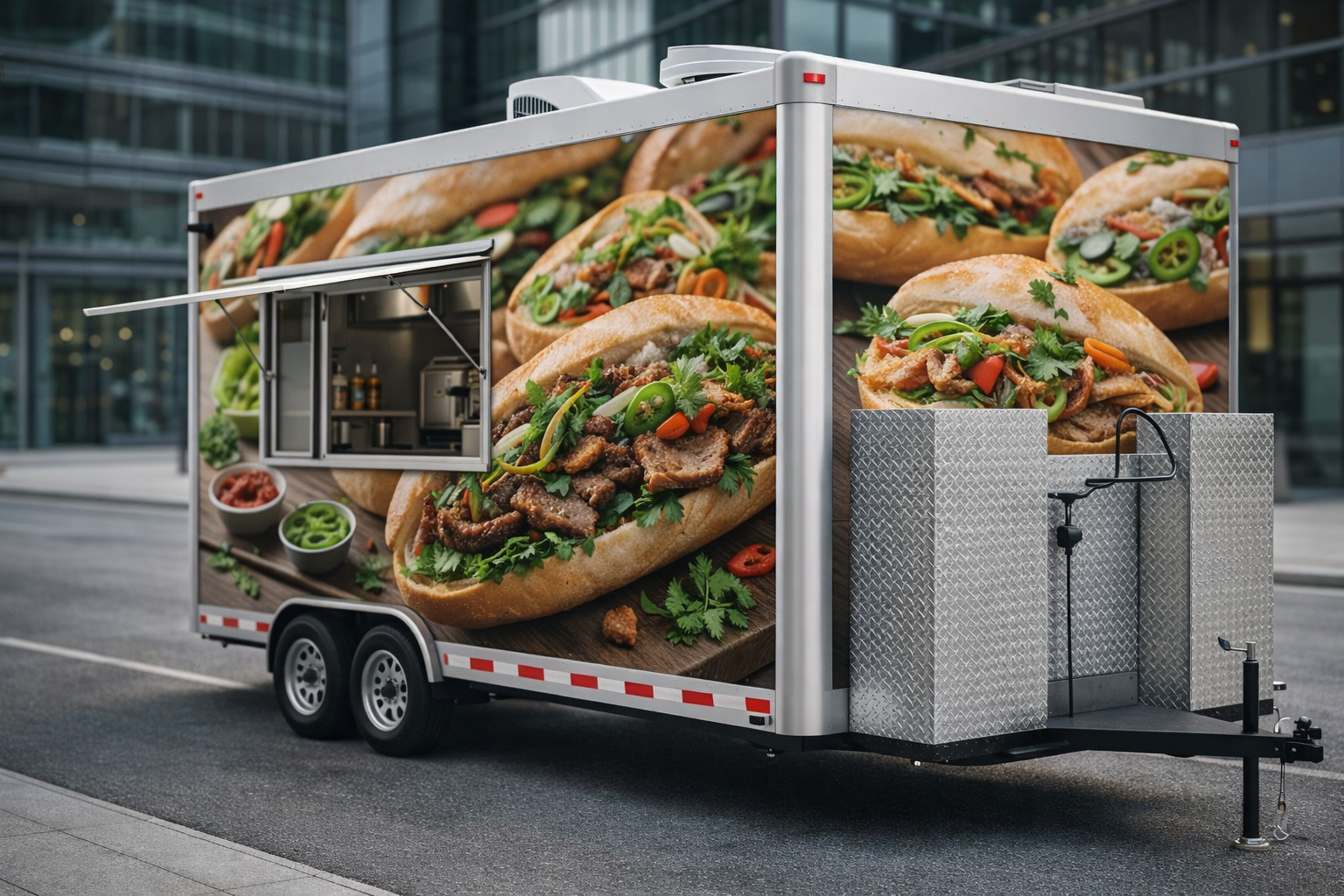
Cabover clearance check refers to the process of measuring the vertical distance between the front section (tongue area) of a food trailer and the overhanging portion (cabover) of the tow vehicle, such as a cabover truck or RV. This check ensures that there is sufficient space to prevent contact between the trailer and tow vehicle during towing, especially when navigating tight turns, uneven roads, or sudden stops. It is particularly important when using towing vehicles with extended front overhangs or mounted camper shells.
Measure cabover clearance with the food trailer fully loaded to reflect actual operating conditions, including tongue weight and ride height. Use adjustable hitches or leveling tools as needed to maintain adequate clearance. Always verify compatibility between your trailer and tow vehicle to avoid structural stress and ensure safe operation on the road.
Axle Load Monitor
Axle Load Monitor is an onboard sensor system that measures and tracks real-time weight distribution across each axle of a food trailer. It helps ensure the trailer remains within legal load limits and maintains balanced weight distribution, which is essential for safe towing and regulatory compliance. These systems are especially useful in mobile food operations, […]
Axle Alignment Check
Axle Alignment Check is a critical maintenance procedure that involves inspecting and adjusting the position and angle of a trailer’s axles to ensure they are properly aligned with each other and the trailer frame. For food trailers, proper axle alignment is essential to maintain safe, smooth towing, minimize tire wear, and protect onboard equipment. This […]
Tongue Weight Sensor
The Tongue Weight Sensor is a digital or mechanical device used to measure the downward force that a food trailer’s tongue applies to the tow vehicle’s hitch. In mobile food operations, maintaining proper tongue weight is critical for safe towing. Imbalanced weight distribution can cause trailer sway, reduced steering control, brake instability, or even detachment. […]