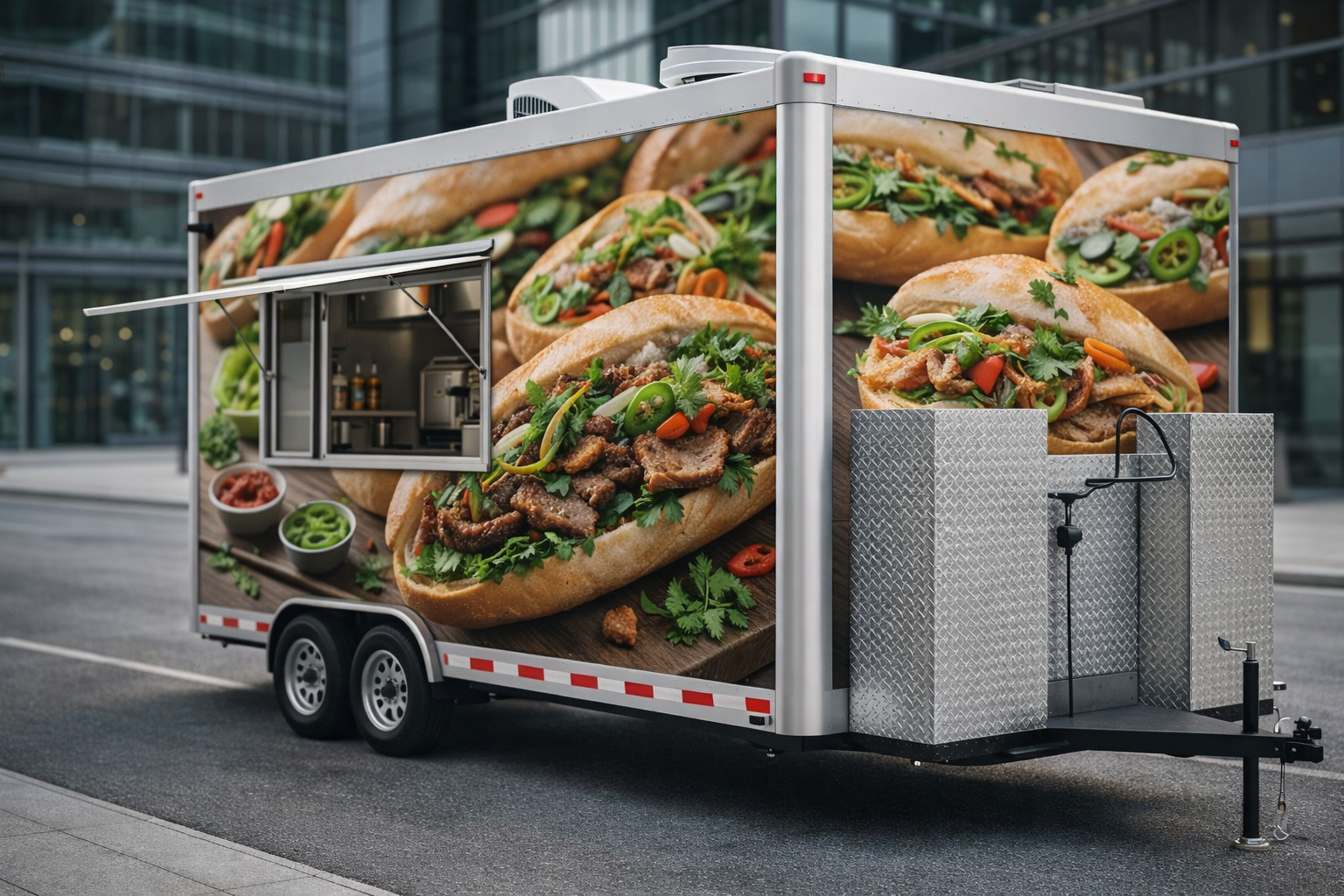
An Axle Load Spacer is a precision shim or insert placed between a trailer’s axle and frame to adjust ride height and optimize weight distribution. In food trailers, axle load spacers are essential for maintaining proper balance, especially when heavy kitchen appliances alter the trailer’s center of gravity. They are commonly used during the design or retrofitting process to fine-tune suspension alignment and ensure stable operation under load.
Selecting the correct axle load spacer depends on the trailer’s gross weight, axle specifications, and interior layout. Consult a qualified trailer technician or builder to determine the appropriate spacer material and thickness. Correct installation is critical for safe towing and consistent performance at vending locations.
Wheel Lug Torque
Wheel lug torque is the specified force used to tighten the lug nuts that secure a food trailer’s wheels to the hub. Applying the correct torque is essential for safe travel, preventing wheel loosening, stud damage, or complete wheel separation. In mobile food operations, maintaining proper lug torque is a key part of routine safety […]
Hitch Articulation Limit
“`html The Hitch Articulation Limit refers to the maximum safe turning angle between a tow vehicle and a food trailer before structural interference or contact occurs. Its purpose is to prevent damage during sharp turns and ensure safe maneuverability. This term is essential in the context of connecting and towing food trailers, particularly when navigating […]
Tongue Weight Sensor
The Tongue Weight Sensor is a digital or mechanical device used to measure the downward force that a food trailer’s tongue applies to the tow vehicle’s hitch. In mobile food operations, maintaining proper tongue weight is critical for safe towing. Imbalanced weight distribution can cause trailer sway, reduced steering control, brake instability, or even detachment. […]