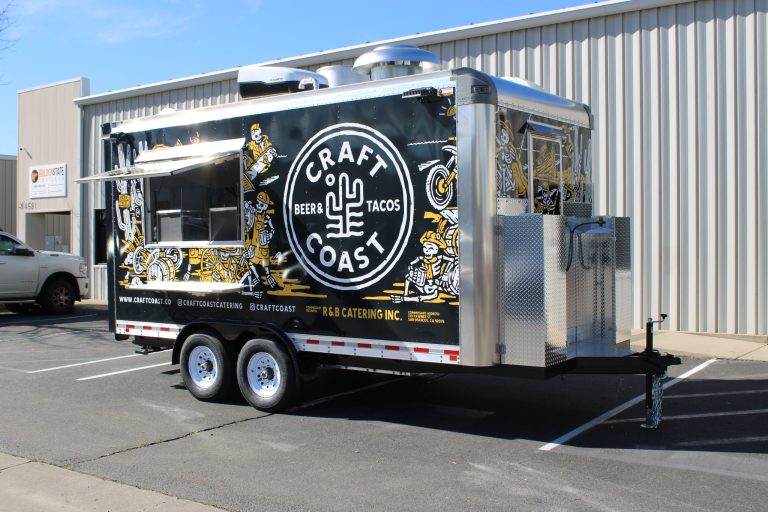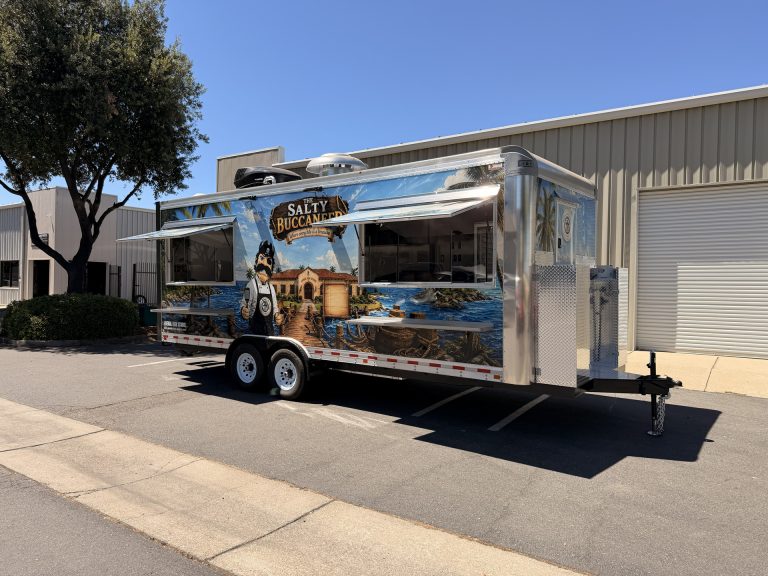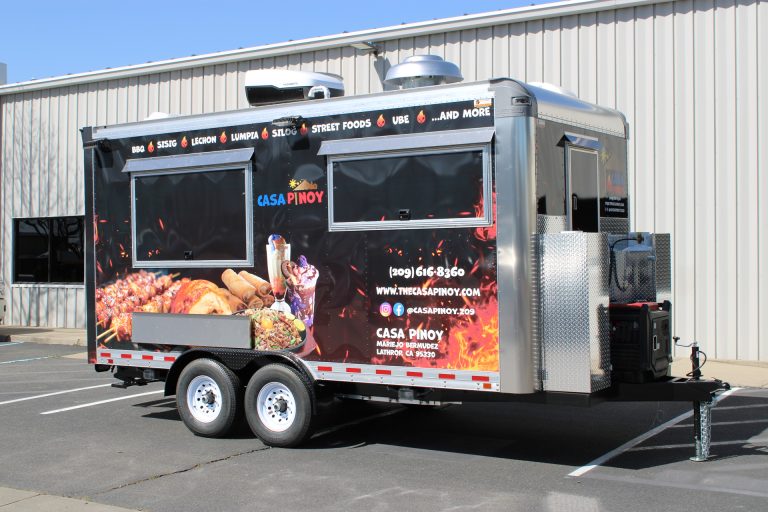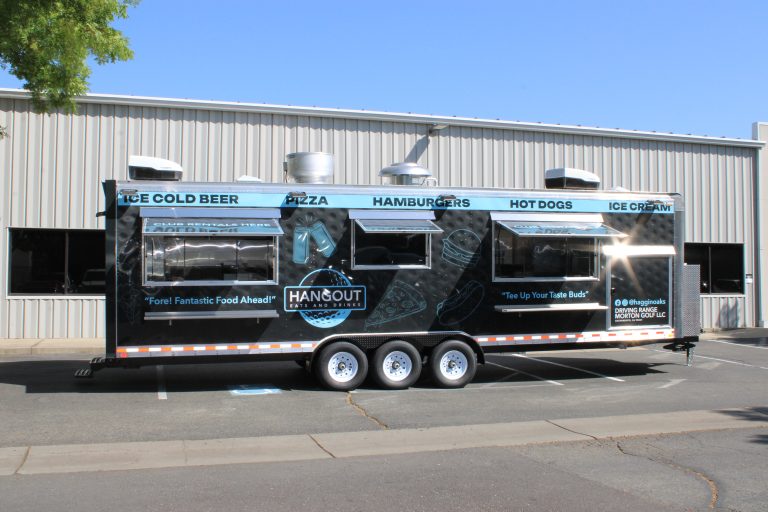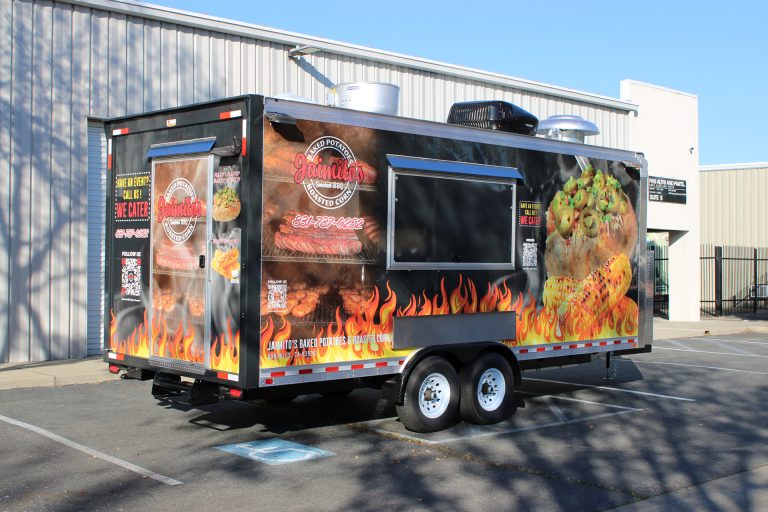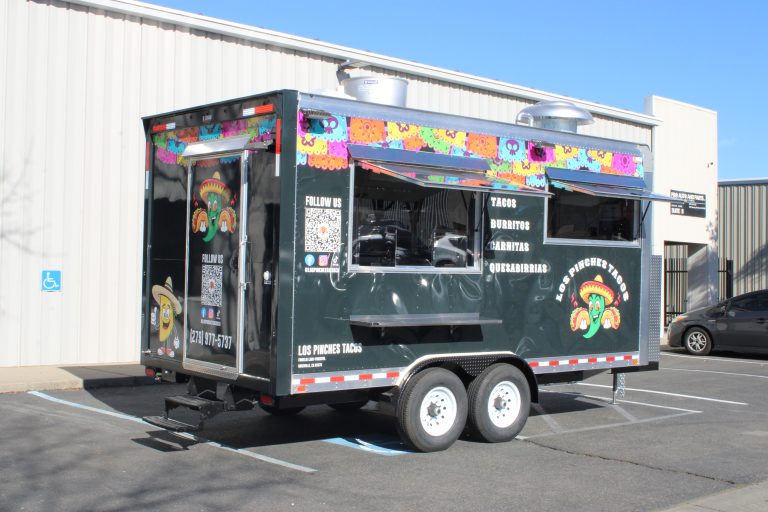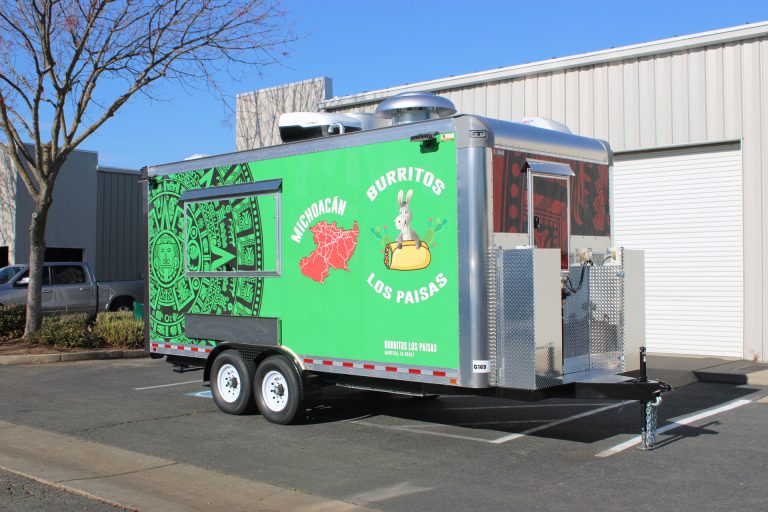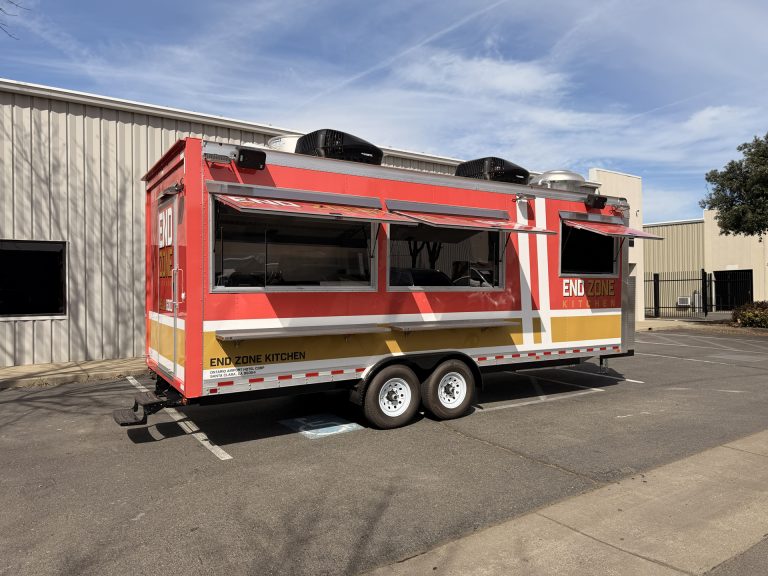


Your trailer takes shape in our Olivehurst, CA shop. Appointments let you see it on the shop floor while the build is underway. Once the build is done, you choose: pickup at our factory or shipping east to Richmond. We deliver to all 50 states.
In Richmond, the trailer operates from a commissary. The Richmond City Health District's permit application comes with a commissary form for the commissary owner to sign. Even fully self-contained units file one, so arrange that base before the trailer arrives.









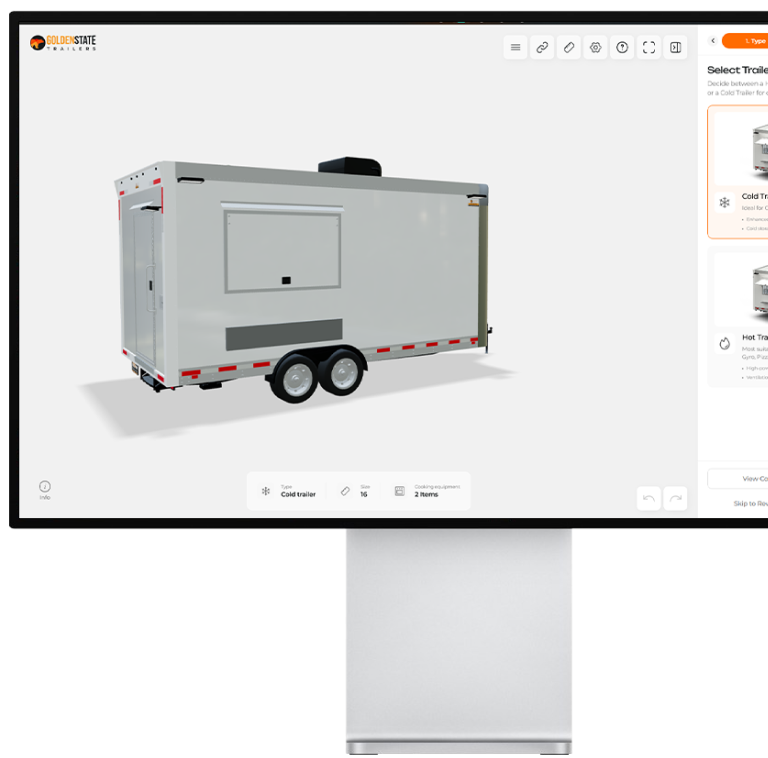
Building a layout in our 3D configurator is free, with no sign-up and no cap on attempts. You set the kitchen type and length, then fit cooking, cold storage and prep equipment. A saved design stays available for 90 days, so you can return, revise it or send it to a partner.
The Richmond Fire Marshal's checklist keeps electrical panels accessible and rules out extension cords in place of permanent wiring. List every plug-in appliance in the builder's comments box, so our electrical plan covers each one.
Food trailers for sale in Richmond from Golden State Trailers are custom commercial kitchens. Our crew fabricates each one in-house in Olivehurst, California, before it ships to Richmond. In October, the free three-day Richmond Folk Festival brings music and food vendors to the downtown riverfront.
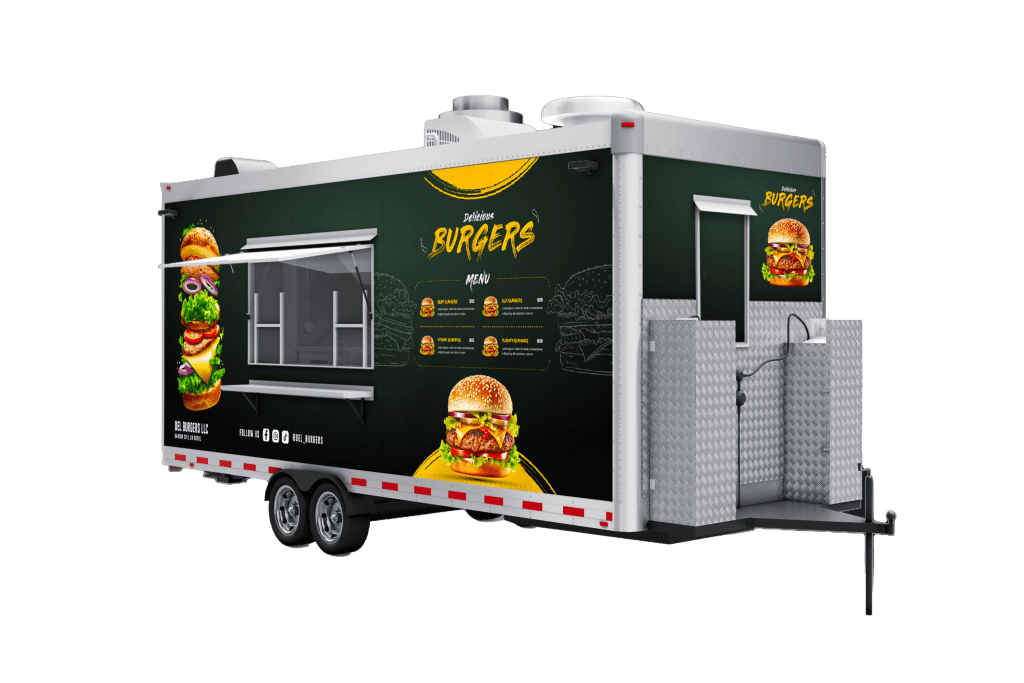
Your menu drives the design, because each dish calls for certain appliances. That equipment list decides the floor plan and the electrical, water and propane loads. A BBQ food trailer cooks on grills, so it is a hot build carrying ventilation, fire suppression and gas lines.
For espresso or cold brew, a coffee trailer runs cold and needs none of those three systems. Our catalog of food trailers for sale offers starting layouts to adapt. Our custom food trailers start from a blank floor plan.
The city’s Department of Parks, Recreation and Community Facilities runs the 17th Street Market as a public venue. Its calendar includes festivals, vendors and a recurring farmers market, and the market page lists a contact for vendor inquiries.
The Folk Festival takes food vendor applications directly, during its own application window. In August, the Carytown Watermelon Festival lines the neighborhood’s sidewalks with food and craft vendors. If events are your main market, browse our festival food trailers.
Organizers of public-property events with food sales file a Special Events Request Form at least 45 days ahead. The city’s Fire Marshal’s Office reviews and approves every special event with cooking. It can inspect at any point while you cook.
Before you order, confirm trailer rules for any long-term private site with the City of Richmond Zoning Administration. City zoning also keeps trailers off streets and alleys that are primarily residential. Plan an off-street spot to keep the trailer between events.
The Richmond City Health District, a local office of the Virginia Department of Health, permits the city’s mobile food units. Applicants file a Mobile Food Unit Permit Application and a Mobile Food Unit Plan Review.
The district requires its approval before a unit operates and advises seeking it before construction. Its guidelines cite Virginia’s food regulations, which call for plans to be submitted for review and approval. Check current forms on the Richmond City Health District permits page before you order.
Our engineering blueprints map the electrical, plumbing and gas lines. From them, we build the plan set the district reviews, and we support you through that review. You file the application yourself and name a Certified Food Protection Manager with supervisory duties.
Other offices give their own approvals, and the district lists them. They cover zoning, building inspection, the business license and the Fire Marshal, plus vehicle registration with the Virginia DMV.
The City of Richmond Fire Marshal’s Office keeps a fire safety checklist for mobile cooking units. It draws on the Virginia Statewide Fire Prevention Code. Propane cylinders belong outside or in vapor-tight cabinets opened from outside, mounted securely and never stored inside.
Cooking that gives off grease-laden vapors needs a Type 1 hood with a tagged suppression system. The list also asks for an installed LPG gas detector, a 2A10BC extinguisher and a Class K unit where required. Read every item on the Fire Marshal’s permits page and confirm current requirements with that office before you order.
The hood, suppression and propane items concern hot trailers only. As our build standards list, every hot build gets a UL 710 compliant exhaust hood made to NFPA 96.
Make-up air comes through a 14×14 system, and kitchen fire suppression protects the cook line. The 400,000 BTU propane system uses an auto changeover regulator that swaps cylinders when one runs empty. Our gas systems also include leak detection.
Richmond’s normal high in mid-July is 90°F, and fryers and griddles raise the heat inside the trailer further. To counter it, our builds include a 15,000 BTU air conditioner mounted on the roof. Inside, the walls pair enhanced insulation with reinforced interior backing.
Mid-January lows normally reach 29°F. On nights below freezing, drain an idle trailer’s tanks and lines or protect them.
About 46 inches of precipitation falls in a normal year, and our one-piece crowned aluminum roof sheds it. The exterior skin is riveted aluminum, designed to keep water out. An awning from the builder’s options shelters your line from sun and rain.
Each order moves through our build process: consultation, 3D design, fabrication in Olivehurst, system testing and handoff. Before shipping, we test the electrical load, the gas line pressure and every plumbing connection. Brakes and structure are checked too, and hot builds add tests of hood airflow and the fire suppression system.
At handoff, our team demonstrates the cooking equipment, the propane and electrical start-up, the water tanks and the fire suppression. The trailer leaves with its blueprints, equipment manuals and warranty card. Request a quote when the concept is settled, adding your size, timeline and menu notes in the form.
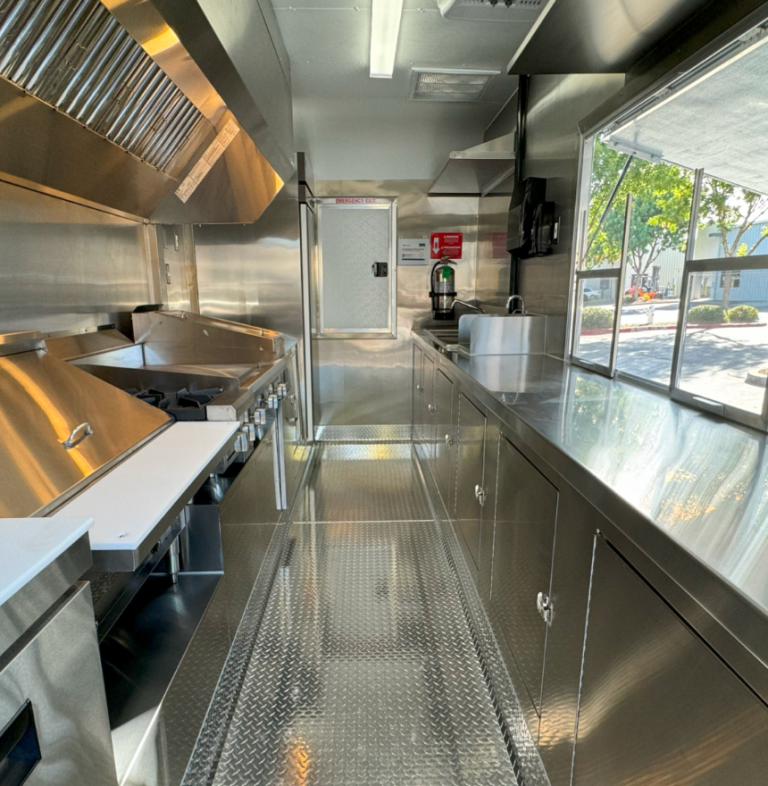
At Golden State Trailers, we build custom commercial food trailers around real operational needs. Every project is planned with equipment, workflow, systems, safety, and long-term reliability in mind. Our goal is to build food trailers that perform reliably in daily commercial use.