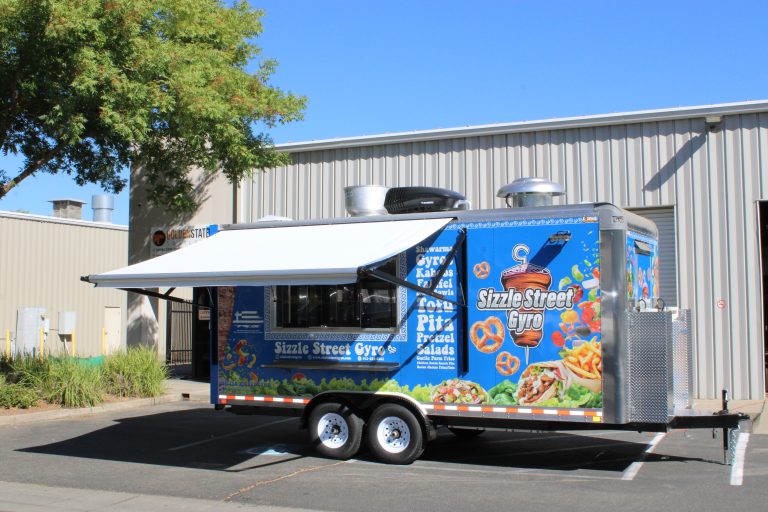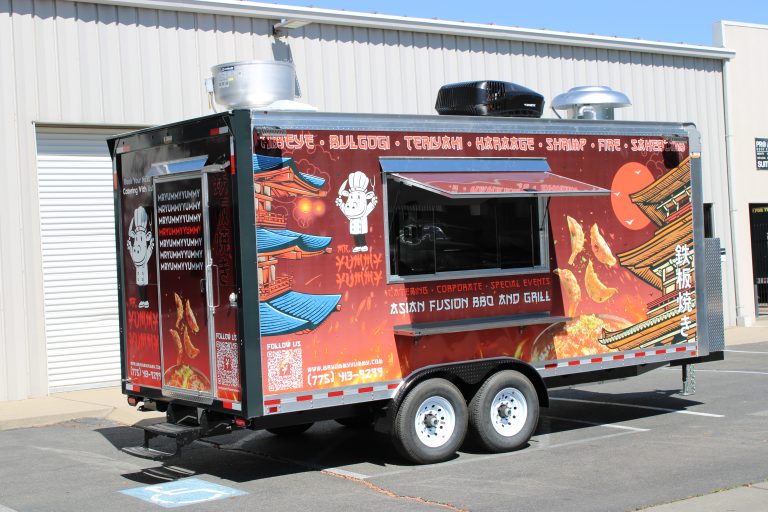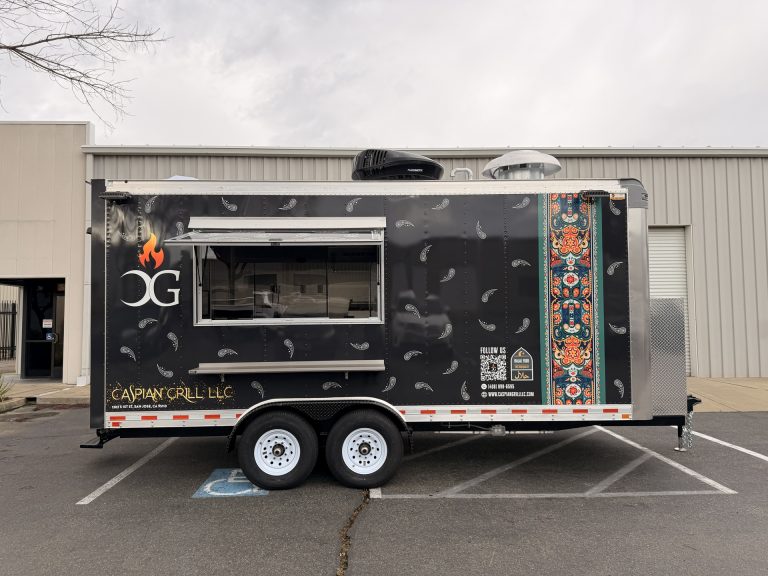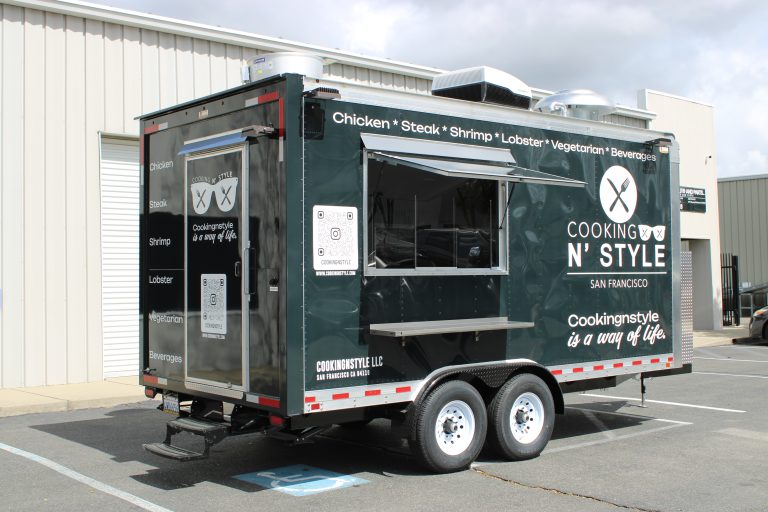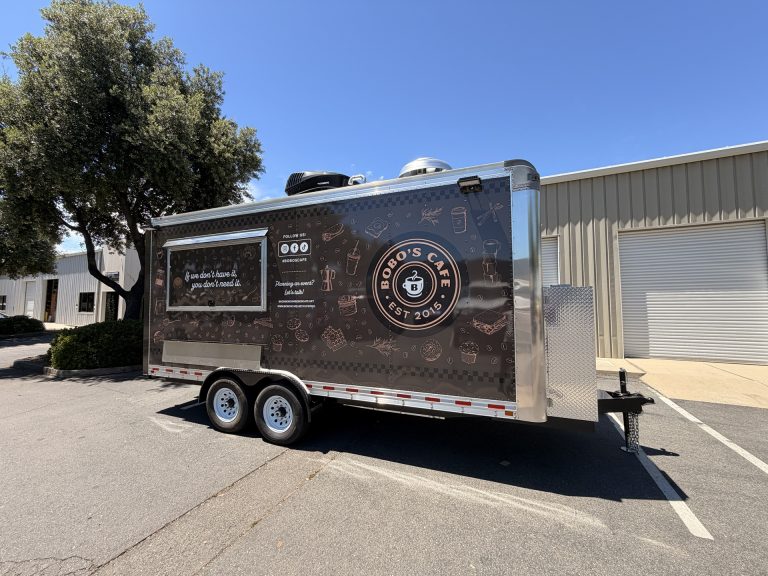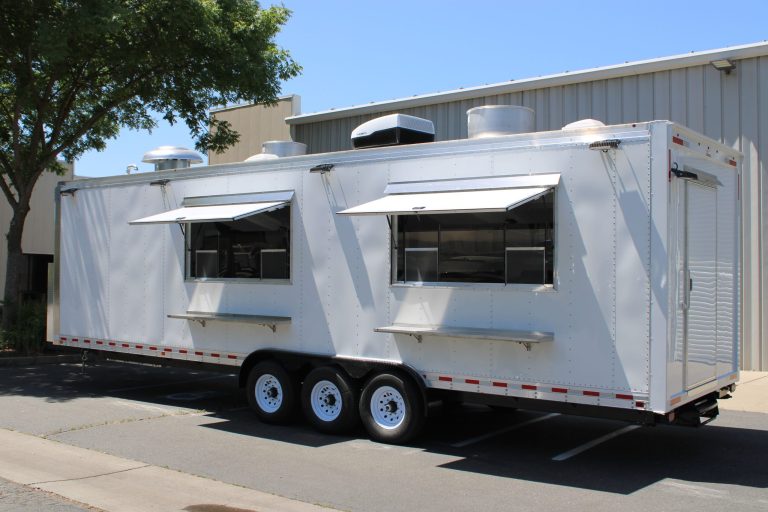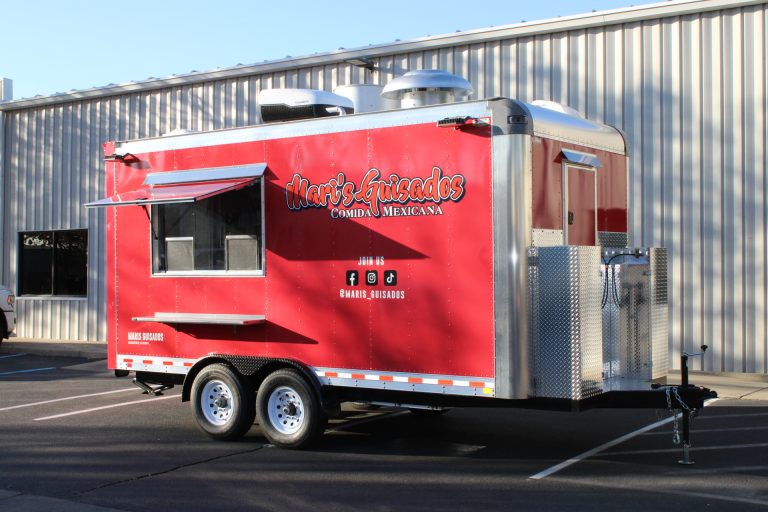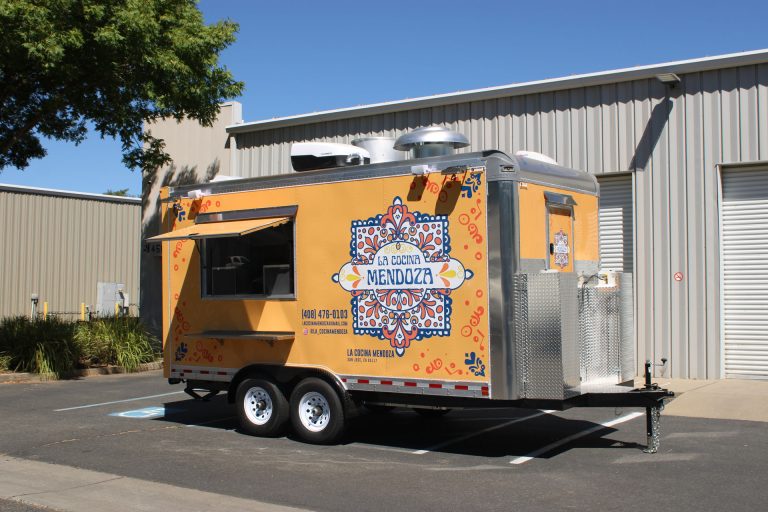


Every Salt Lake City order is fabricated by our crew in Olivehurst, CA. You may tour the shop at any stage of your build, by appointment. Once it is finished, you can collect the trailer in person or choose delivery. We deliver to all 50 states.
Local inspections come next. The Salt Lake County Health Department holds a preopening inspection before it issues your permit. The Salt Lake City Fire Department inspects the unit for your city business license.



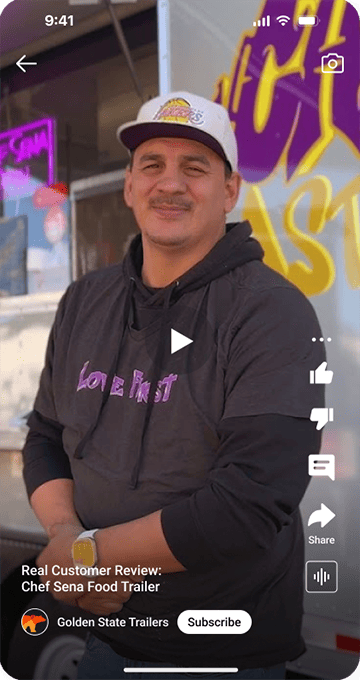
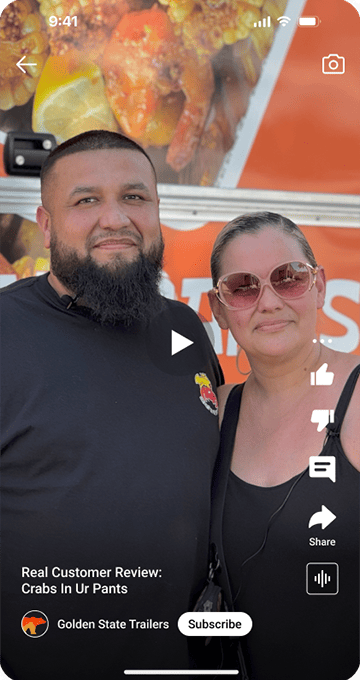
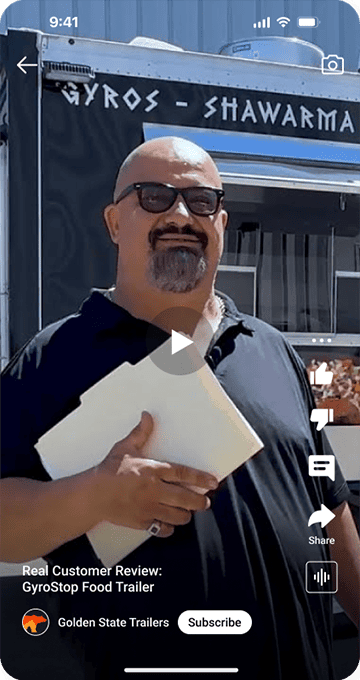
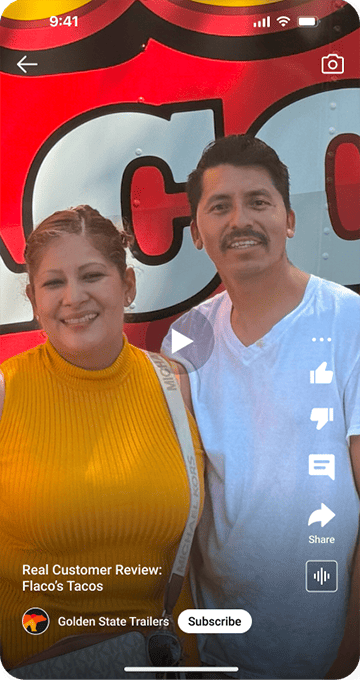

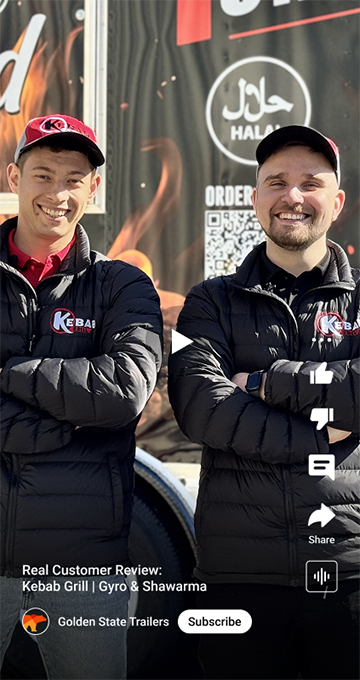
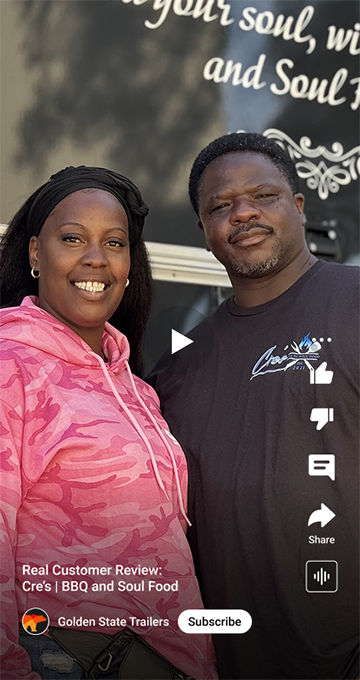
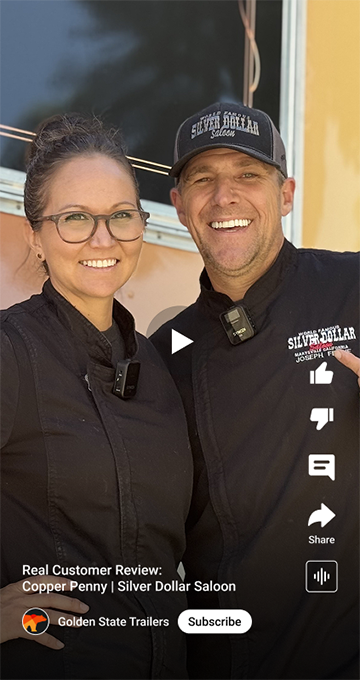
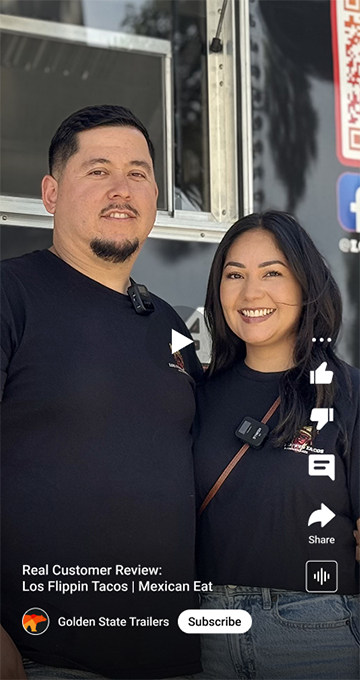


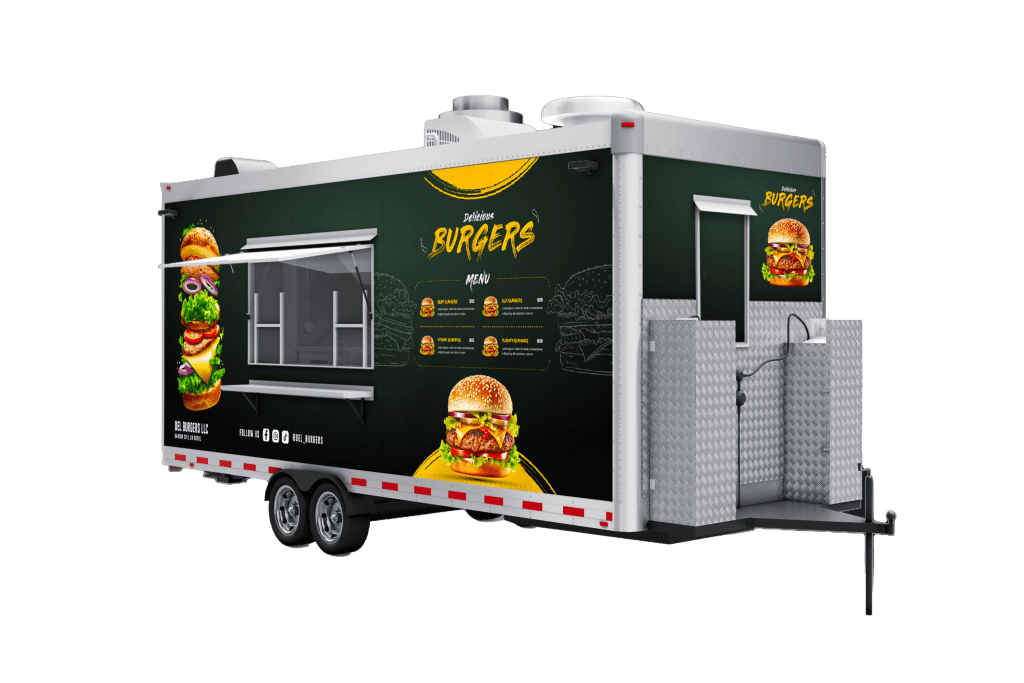




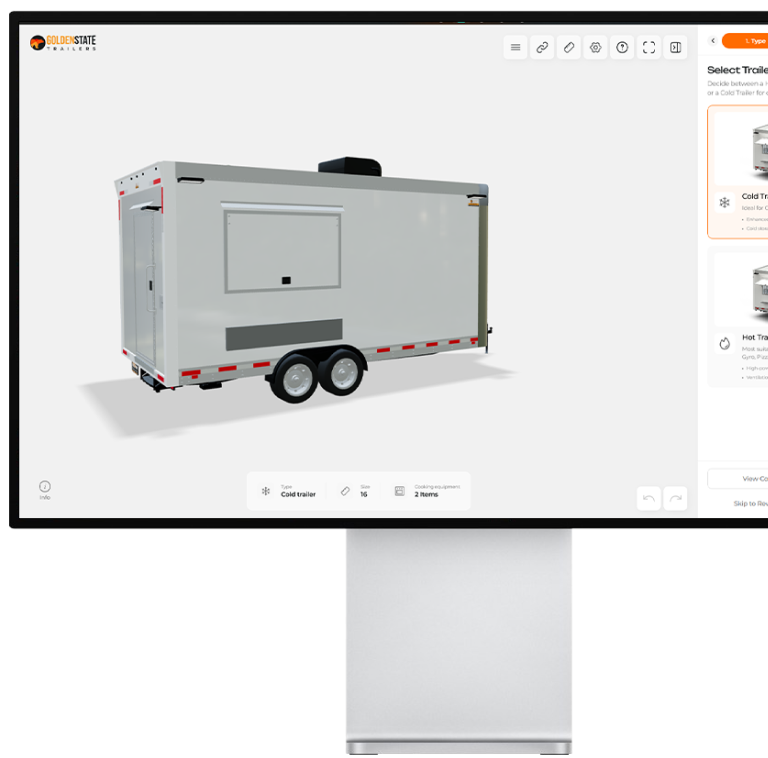
The 3D builder on our site is free to use, with no account to create. Start with hot or cold and take a length from our eight. Then add the kitchen equipment, service-side items, extras and a wrap. Saved builds stay open for 90 days, so you can return, edit or share them.
Plan the wrap around a county check. County inspectors look for the business name in letters at least 4 inches tall. The county's guidelines put that name on both sides of a mobile unit, so leave room on each.
We build the food trailers for sale in Salt Lake City from frame to finish in Olivehurst, California. Welding, wiring and plumbing stay with our own crew. The finished kitchen then travels to your Salt Lake City site.
Planning starts with the menu. Its appliance list sets station order, tank and power sizing, and the load over the axles. A grill line needs a hot trailer, while espresso and ice cream run cold, as our coffee trailers do.
Model layouts are in our food trailers for sale catalog and on the custom food trailers page. All eight lengths, 16 to 30 feet, are compared on our food trailer sizes page.
For Salt Lake City, the health permit is a county matter. The Salt Lake County Health Department requires a current mobile food service permit for each mobile food unit, trailers included. Its permit page asks you to review the rules before you buy or build one.
The county first sends you to the city to confirm your business type is allowed. Then book its Mobile Food Service Class at 385-468-3845, where you receive the plan review application. Plan review comes before the permit application, and a preopening inspection comes before the permit is issued.
Utah’s state rule requires plan review before a unit is built, menu and equipment cut sheets included. We draw the engineering blueprints, assemble the plan set and support you through that review. Lock the menu early, and confirm current requirements with the county before you order.
The county’s permit page requires mobile food units to work from an approved local commissary under a signed Commissary Agreement. A home kitchen does not qualify, and the county must permit the commissary before your trailer opens.
The agreement ties the trailer to the commissary on each operating day, for cleaning, restocking and the water tanks. Pick a site where the trailer and tow vehicle can pull in, park and reach the drain.
Salt Lake City also requires a business license for mobile food businesses, with a separate fee for each vehicle. The city lists the mobile food trailer as its own category, a non-motorized unit pulled behind a motorized vehicle.
The license is issued only after city inspections pass, including one by the Salt Lake City Fire Department. That inspection follows the state fire rule for mobile food units. Gas appliances must be secured, with a listed propane detector at floor level by the cooking equipment.
Propane cylinders belong outside the trailer or in vapor-tight cabinets reached from the exterior. On a hot build, our 400,000 BTU propane setup has automatic changeover and a shut-off at every appliance.
Grease-producing cooking needs a Type I hood with a tagged extinguishing system serviced every six months. Hot builds carry an NFPA 96 exhaust hood, UL 710 compliant, paired with UL 300 fire suppression. A commercial-grade 14×14 unit supplies make-up air, as our build specifications list, and cold trailers skip these systems.
A trailer can sell on private property in certain zones with the owner’s written permission. The limit is 12 hours in any 24. When two or more units share one parcel, the city calls the site a mobile food court.
Events add a county temporary event permit, and the extended type covers up to 14 event days within one year. The Utah State Fair at the Fairpark takes concessionaires by application and measures each space with hitches and awnings included. Fairpark electricians connect only properly grounded trailers and UL-approved equipment.
Our panels and wiring are fully grounded, with GFCI-protected outlets on 50-amp, 240-volt service. See our state fair concession trailers for fair builds.
The Downtown Farmers Market books prepared-food vendors who cook on site, each under a county permit for every selling day. Power in the park is limited, so settle the power source at design time if you plan to apply.
Salt Lake City reaches 32°F or colder on about 112 nights a year. Under the county’s guidelines, a year-round permit needs proof that a system keeps every water line from freezing. The seasonal permit covers March through November.
Even with an approved system, a frozen line that stops the hand sink closes the unit. Decide early on winter service and raise freeze protection in your consultation.
Summer swings the other way, with July highs near 94°F before the fryers start. Roof-mounted cooling comes standard at 15,000 BTU, and the walls carry enhanced insulation, R13 on our 20-foot model. The crowned one-piece aluminum roof lets snowmelt run off.
Fabrication starts when your 3D render is approved, and from there our build process follows the blueprints. Progress photos arrive as the trailer takes shape.
Every system is tested before the trailer heads for Utah. That covers electrical load, plumbing and brakes, plus gas pressure, hood airflow and fire suppression on hot builds. At handoff, you learn to run the gas, electrical, water tanks and cooking line.
We deliver food trailers to Salt Lake City, the rest of Utah and every other state. To price yours, request a quote and list your menu and equipment in the form’s project box.
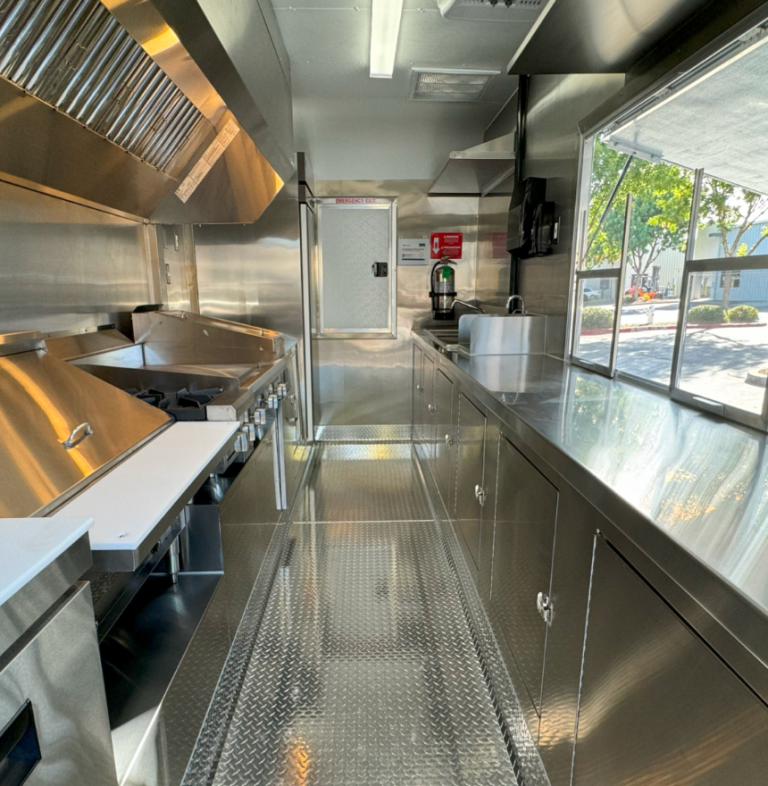
At Golden State Trailers, we build custom commercial food trailers around real operational needs. Every project is planned with equipment, workflow, systems, safety, and long-term reliability in mind. Our goal is to build food trailers that perform reliably in daily commercial use.