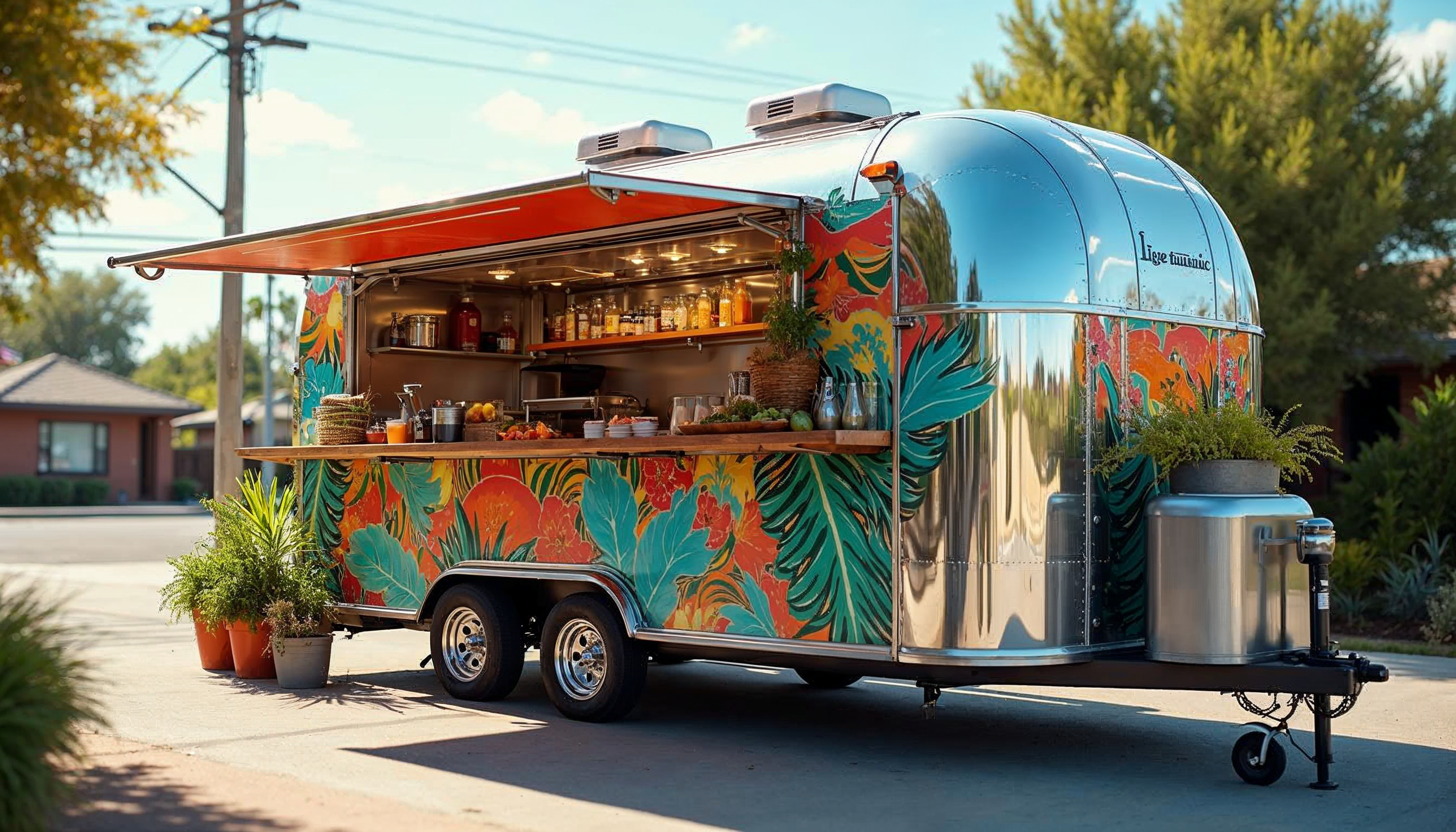
The trend towards plant-based eating has seen an immense rise in popularity, with vegan food trailers becoming a vibrant part of this culinary revolution. These mobile eateries represent an innovative approach to offering sustainable and ethically produced food options.
The vegan food movement is propelled by rising awareness of health, ethical, and environmental issues. As more consumers seek alternatives to animal-based products, vegan food trailers have emerged as appealing solutions for diners interested in cruelty-free and environmentally friendly options. They cater not only to vegans but also to a broader group of eaters who are looking to reduce their meat consumption.
Offering plant-based menu options is crucial for attracting a diverse customer base. Many customers are drawn to the fresh and innovative dishes that can be created using plant-based ingredients. Ingredients such as legumes, grains, nuts, and vegetables provide a wide array of flavors and textures, which chefs can harness to create appealing dishes. This diversity not only helps in attracting new customers but also plays a significant role in retaining them.
Running a successful vegan food trailer comes with its unique set of challenges. From sourcing high-quality ingredients to ensuring compliance with health regulations, operators face numerous hurdles. One solution to sourcing is developing relationships with local farms and suppliers, which ensures fresh produce and supports local agriculture. Adapting to customer feedback can also guide menu adjustments and help in refining the offer to meet diner’s preferences.
Another significant challenge is standing out in a competitive market. Building a strong brand identity and engaging with the community through social media and local events can help in creating a loyal customer base. Ensuring excellent customer service and consistent quality will further cement a food trailer’s reputation.
Plant-based ingredients often have a lower environmental impact, are generally healthier, and can attract a wide range of customers, including those with dietary restrictions or preferences.
Success in a vegan food trailer business is driven by a strong brand identity, excellent customer service, consistent quality, and effective engagement with the community.
Challenges include sourcing consistent quality ingredients, maintaining compliance with health regulations, and standing out in a competitive market.
Plant-based alternatives can significantly enhance customer satisfaction by meeting the growing demand for sustainable and healthier food choices.
Concession Window Header Support
“`html The Concession Window Header Support is an essential structural component installed above concession window cutouts in food trailers. Its main function is to maintain wall rigidity and prevent the frame from deflecting due to road vibrations. This component is vital for ensuring the structural integrity and safety of food trailers, particularly when they are […]
Weight Distribution Hitch
“`html A Weight Distribution Hitch is a hitch system designed to evenly distribute the weight of a trailer tongue across both the tow vehicle and trailer axles. This system is crucial for enhancing stability and control, particularly in food trailers that carry heavy cooking equipment and supplies. It is commonly used when transporting large or […]
Galley Flow Mapping
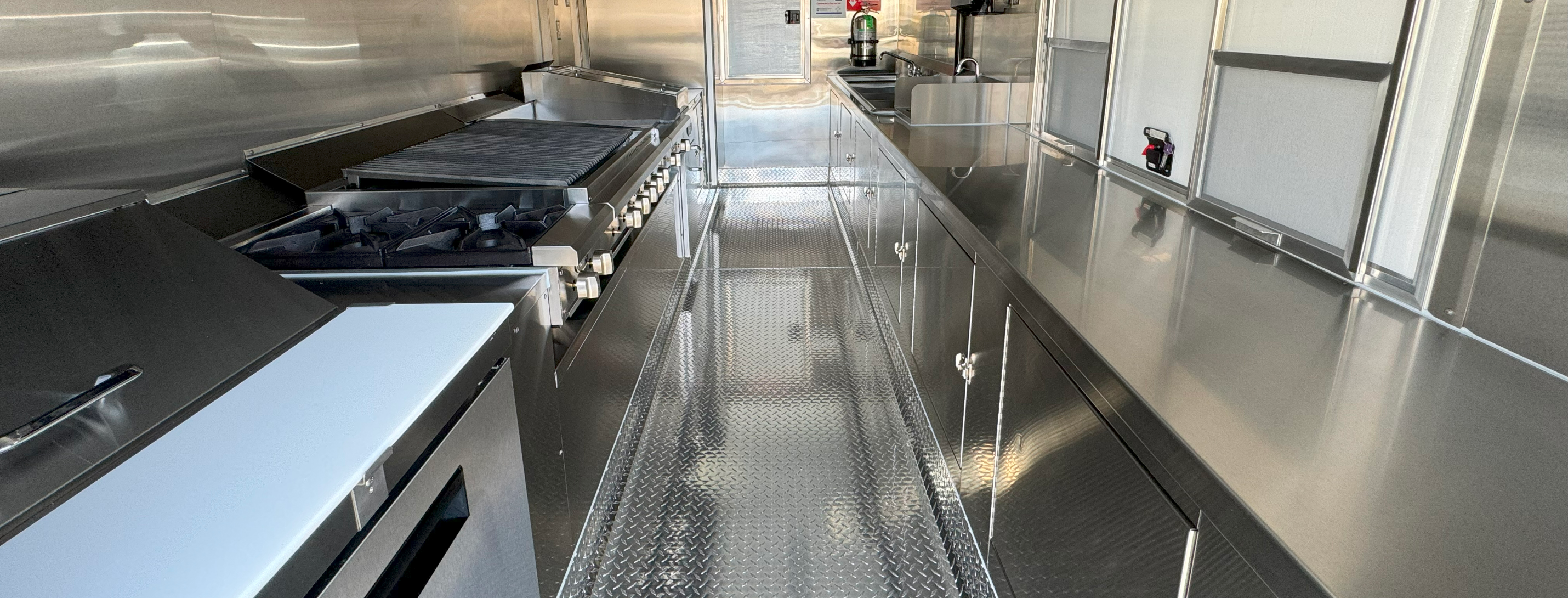
Galley Flow Mapping is the structured analysis and planning of a food trailer’s interior kitchen layout to streamline staff movement, equipment placement, and task sequencing. In the confined environment of a mobile food unit, effective galley flow design minimizes congestion, enhances safety, and supports consistent food quality. This process is critical during initial trailer buildouts […]