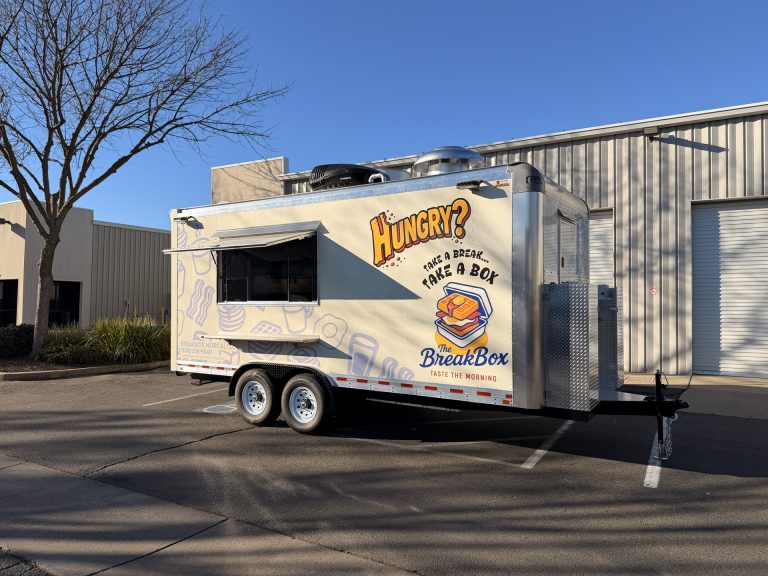
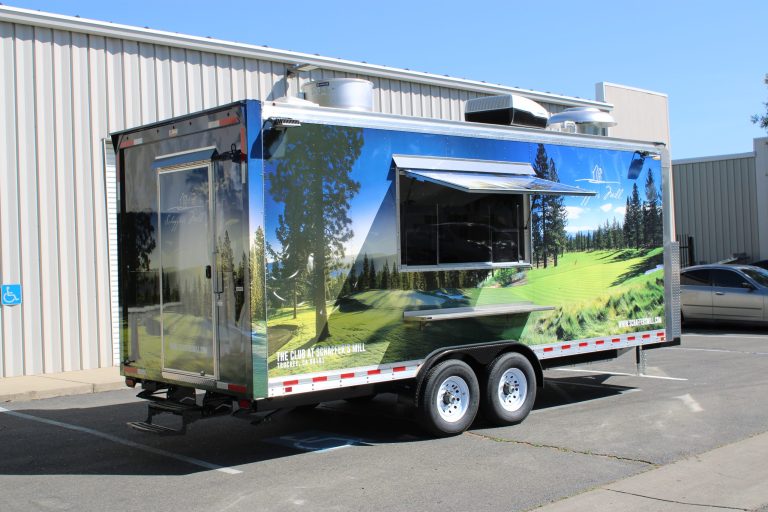
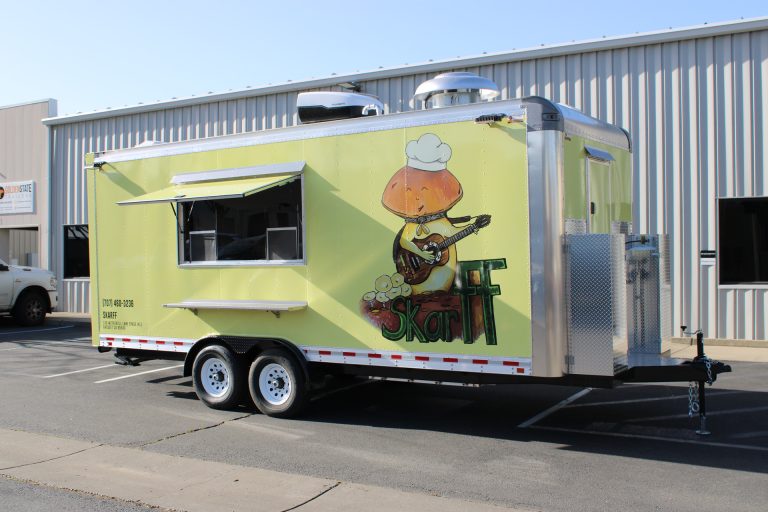
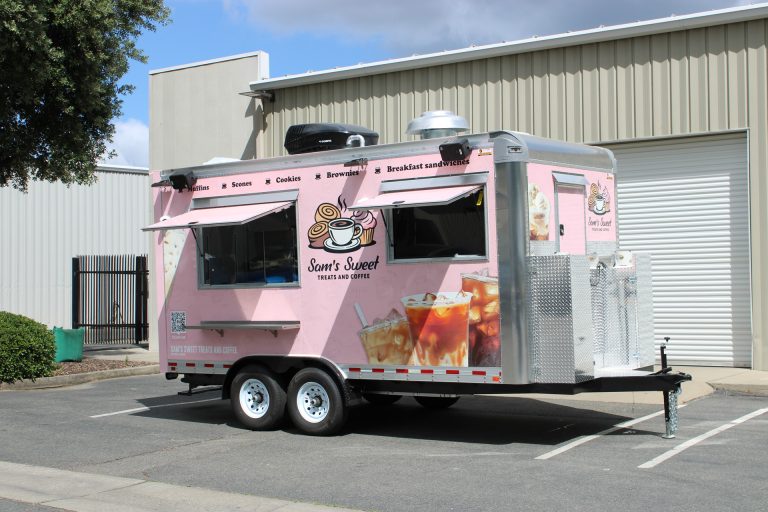
Our team builds your trailer from frame to finish in Olivehurst, CA. Visits are by appointment, so you can see it at any stage. Once production is done, pick it up at our facility or we ship it to Nashville. We deliver to all 50 states.
After it arrives, Metro Public Health is the next stop. The department inspects mobile food units in Davidson County under contract with the Tennessee Department of Health. The Nashville Farmers' Market asks vendors for that health permit.






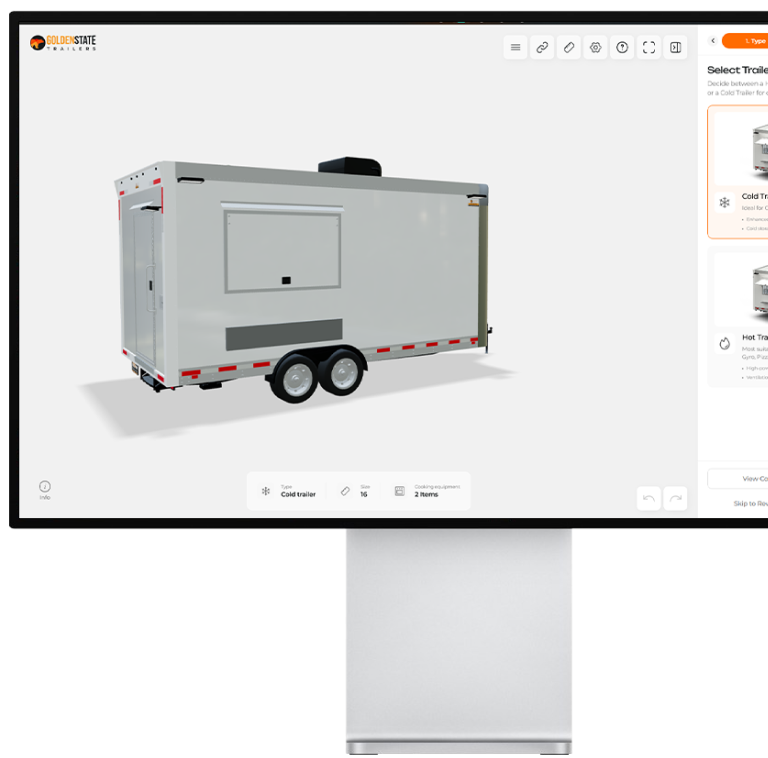
Our 3D builder is free, with no account to create. Choose a hot or cold kitchen and one of eight lengths, from 16 to 30 feet. Then place cooking, refrigeration and prep equipment and set up the service side. Your design stays saved for 90 days to edit or share with a partner.
Plan your power for Nashville weekends. The Farmers' Market asks vendors to bring their own electricity and water, and only quiet generators may run there. Generators are among the builder's additional options, so add one if the market is in your plans.
Every food trailer for sale in Nashville from Golden State Trailers is built in-house at our Olivehurst, California shop. We lay it out around your menu, and it reaches Tennessee equipped exactly as you approved it. The Nashville Farmers’ Market schedules mobile food vendors every Friday, Saturday and Sunday.
Planning runs from the menu outward. Dishes set the appliances, and appliances set the layout, power, water and propane. A fried chicken trailer for hot chicken is planned around its fryers and their oil weight over the axles. A coffee trailer starts from water capacity and hot-water recovery.
Our food trailers for sale show finished layouts to start from. For a one-off design, see our custom food trailers and compare trailer sizes from 16 to 30 feet. We also take multi-unit projects for franchise brands, schools and corporate dining.
The Farmers’ Market hosts no more than four mobile food vendors at a time. Trailer operators unhitch on arrival and move the tow vehicle to designated parking. Vendors supply their own power and water, and only quiet generators are allowed.
The market runs a peak season from March through October and a shorter-hours winter season from November through February. At any event, check the tow-in route, a level spot and which way the serving window will face.
Summer festivals take food vendors too. Tomato Art Fest is held in Five Points, East Nashville, each August. The Music City Hot Chicken Festival runs in East Park every July 4.
The Tennessee Department of Health sets the state’s food service rules. They treat a mobile food unit as a food establishment. Davidson County inspections fall to the Metro Public Health Department, working under a state contract.
Under those rules, plans drawn to scale go to the department for approval before construction. Settle the menu and the equipment list before the drawings are final. Ask Metro Public Health where to submit, and confirm current requirements before you order.
The state rules also size the wastewater tank 15% larger than the fresh water tank. Our standard gray tank holds 93 gallons, set against a fresh supply of 56 to 80 gallons.
Tennessee’s State Fire Marshal offers mobile food units an optional fire permit, renewed each year. State law requires a city to honor it. A city cannot then demand its own fire permit or inspection from that trailer.
Without it, Nashville can require a local fire permit and inspection. Confirm the route that suits your trailer with Metro’s Fire Marshal before you order.
For cooking that gives off grease-laden vapors, the permit looks for NFPA 96 protection or NFPA 10 portable extinguishers. It also checks wiring against the National Electrical Code. Each gas container needs a readily accessible main shutoff valve.
Our hot trailer standards pair a UL 710 hood, built to NFPA 96, with fire suppression and 14×14 make-up air. Wiring runs to a 125-amp, 24-circuit panel on 50-amp, 240-volt service. The 400,000 BTU propane system gives each appliance its own shut-off valve. Cold trailers leave out the hood, suppression and propane.
Selling from public streets, roads and alleys in Nashville takes an NDOT permit. NDOT is the Nashville Department of Transportation and Multimodal Infrastructure, and its permit runs one year with renewal.
Other Metro offices may weigh in, depending on what you sell. They include Health, the Fire Marshal, Codes, Water Services, Planning and the County Clerk.
The permit covers the public right-of-way only, so private property falls outside it. On public property, the Traffic and Parking Commission sets where mobile vending may happen. See NDOT’s mobile vending permit page for the background.
NDOT’s earlier pilot permit covered vendors selling from a licensed trailer pulled behind a vehicle. Confirm trailer rules with NDOT before you order.
July highs in Nashville average about 91°F, and the cooking line pushes the cabin warmer still. Every build carries a 15,000 BTU rooftop air conditioner, and insulation is enhanced with reinforced interior backing.
Around 66 nights a year drop to freezing or below. A trailer sitting idle through them needs drained or protected water lines and tanks.
Precipitation totals about 50 inches a year. A one-piece aluminum roof, crowned to shed water, sits on riveted aluminum walls that resist water intrusion.
Before the trailer ships, we pressure-test the gas lines, check every plumbing connection and run the electrical system under load. Brakes and structure get the same scrutiny, and hot builds add fire suppression and hood airflow tests. Testing is its own stage of our build process, and every check happens before the trailer ships.
In Davidson County, Metro Public Health’s pre-opening inspection compares the trailer with the approved plans before the permit is issued. The handoff includes a walkthrough of every system, from the cooking line and gas to the water tanks. Keep the blueprints, manuals and warranty card on board for that inspection.
When your plans are clear, request a quote and describe your menu, preferred length and timeline in the form.

At Golden State Trailers, we build custom commercial food trailers around real operational needs. Every project is planned with equipment, workflow, systems, safety, and long-term reliability in mind. Our goal is to build food trailers that perform reliably in daily commercial use.