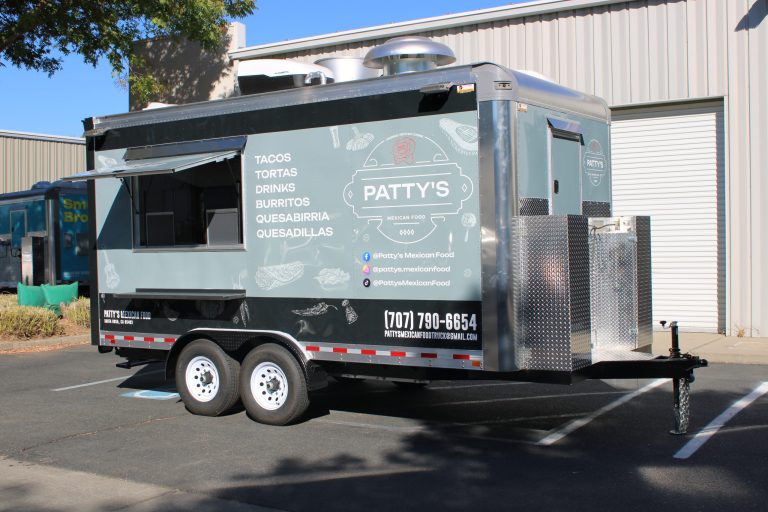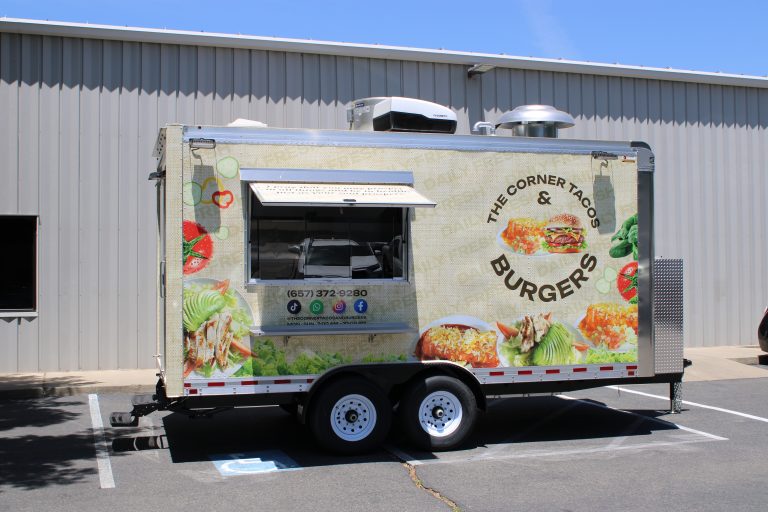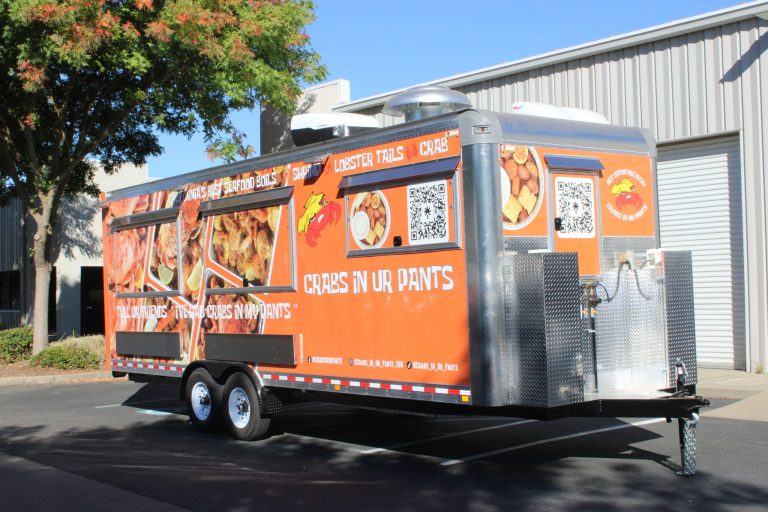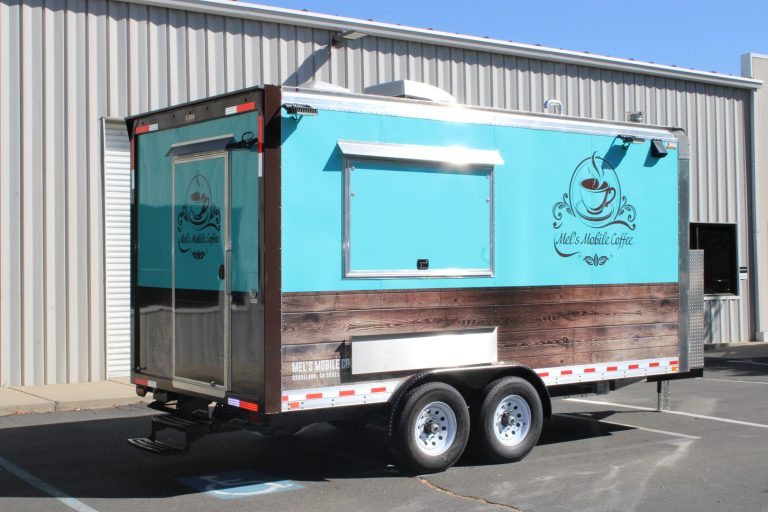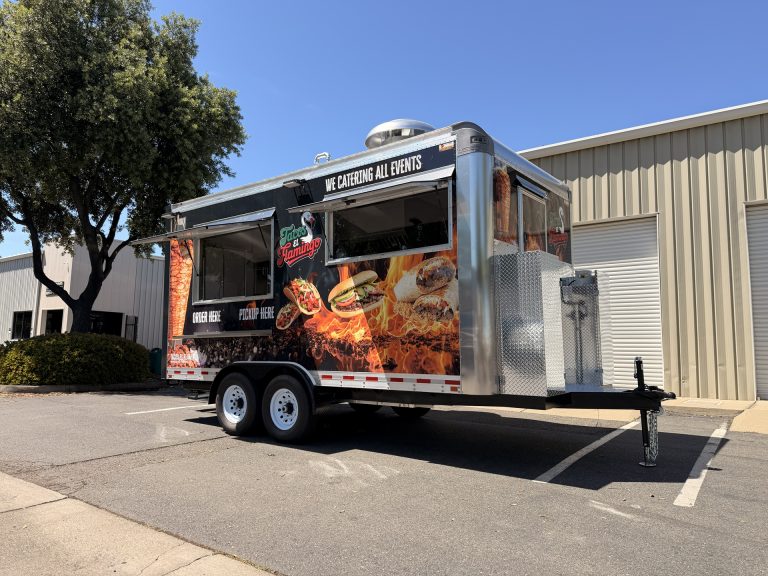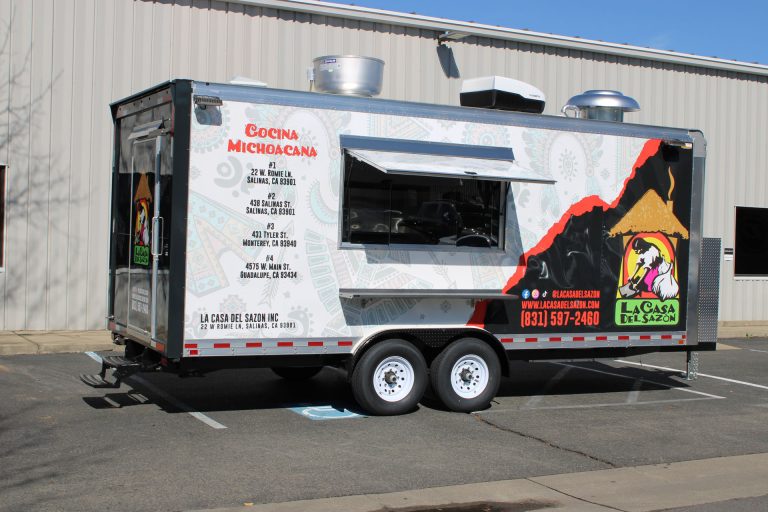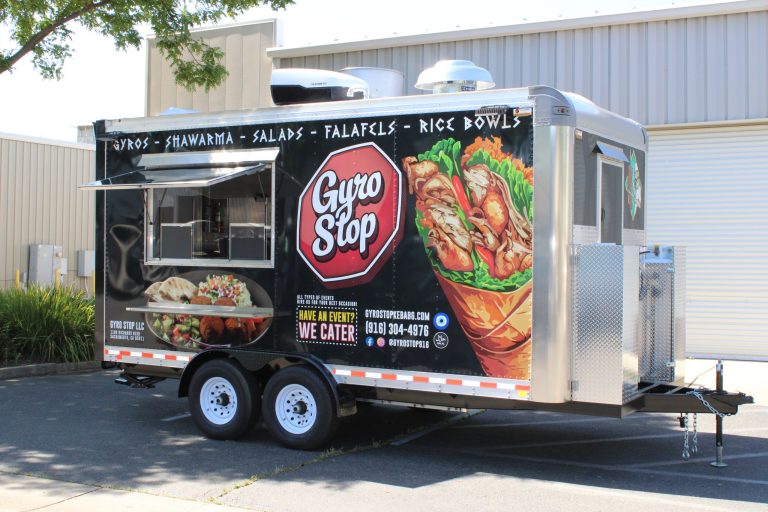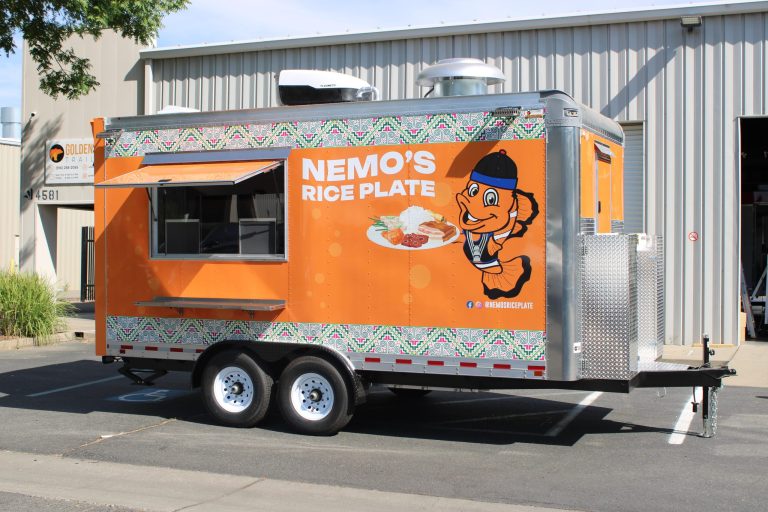


Your trailer is fabricated end to end at our Olivehurst, CA shop. You may book a visit at any stage. Once it is complete, take it home from the shop or have it delivered to Pittsburgh. Delivery covers all 50 states.
In Pittsburgh, you then book the Allegheny County Health Department's inspection, which comes before the first service. A permitted unit then shows the county's "Inspected and Permitted" placard wherever it serves.






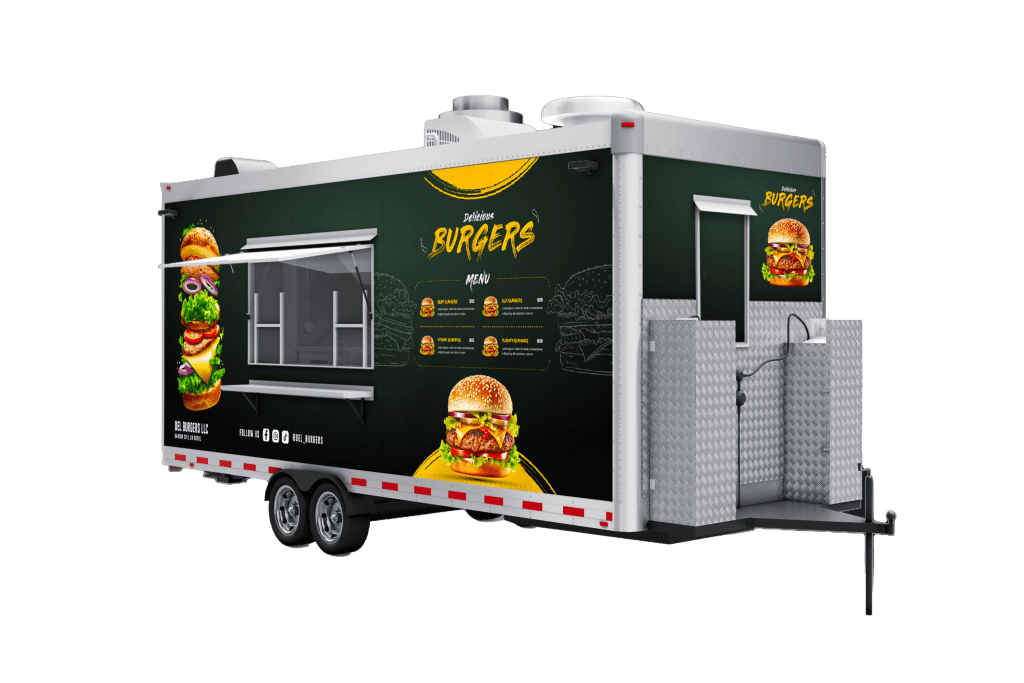




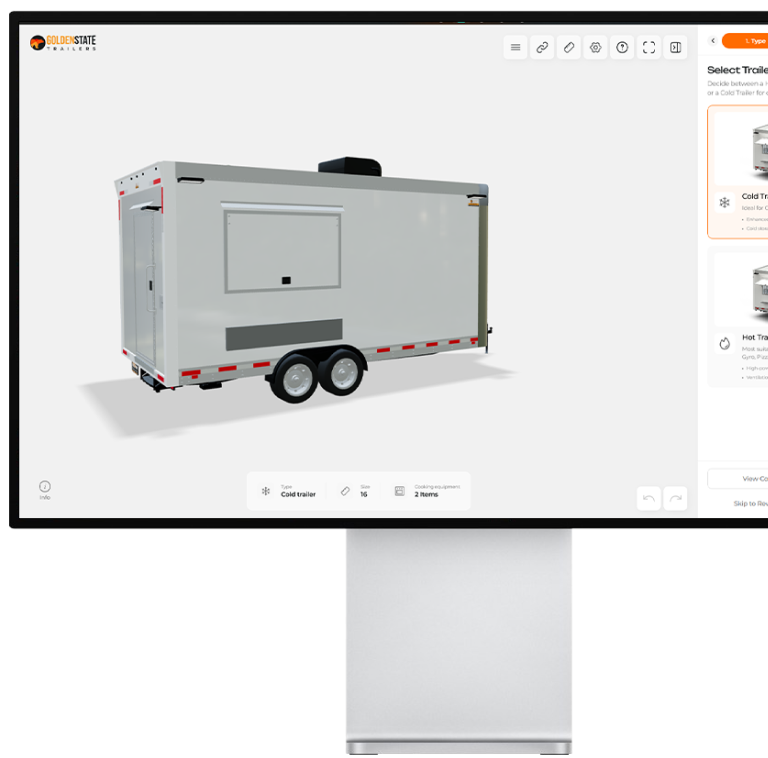
Pittsburgh buyers can use our 3D builder free, with no account and no limit on redesigns. Choose hot or cold first, then one of eight lengths. Next, place appliances and pick options like an awning, a storage box or a generator. You can reopen, edit or share the saved layout for 90 days.
Plan the serving side around a Pittsburgh vending rule: no service window may open toward vehicle traffic. Note in the comments box which side will face the curb or walkway, then submit the build for a quote.
Golden State Trailers builds each food trailer for sale in Pittsburgh from the frame up in Olivehurst, California. We plan the kitchen around the dishes it will serve daily, then deliver it to Allegheny County.
Your menu decides the equipment list, and that list fixes the layout, water, power and fuel. Frying and grilling call for a hot trailer, while a coffee trailer runs cold, without a hood or gas lines.
Two pages offer starting layouts: our food trailers for sale catalog and our custom food trailers collection. Eight lengths span 16 to 30 feet, and every trailer ships fully equipped to the layout you approved.
Mobile food permits for Pittsburgh come from Allegheny County, not the Pennsylvania Department of Agriculture. ACHD, the county health department, issues the trailer an annual permit and a second one for using its commissary.
Under ACHD rules, a unit is built only to plans the department has approved in writing. The mobile food facility application asks for a labeled floor plan, a tentative menu and cut sheets for each appliance.
You settle each appliance’s position with us in the 3D render. Our engineering blueprints then chart electrical and plumbing, plus gas lines on a hot build. We assemble that plan set for your ACHD submission and support you while it is under review.
ACHD asks applicants to allow about six to eight weeks for its review, so file before production starts. Check current requirements with the Allegheny County Health Department before you order.
Wastewater must go to a permanently installed tank 15% larger than the fresh water and hot water tanks combined. Our builds carry a 93-gallon gray tank and 56 to 80 gallons of fresh water. Size the fresh side and water heater against that ratio.
ACHD also wants a pump for pressure and a heater that keeps water at 100°F or higher. Our plumbing pairs an on-demand pump with a commercial hot water system and backflow prevention.
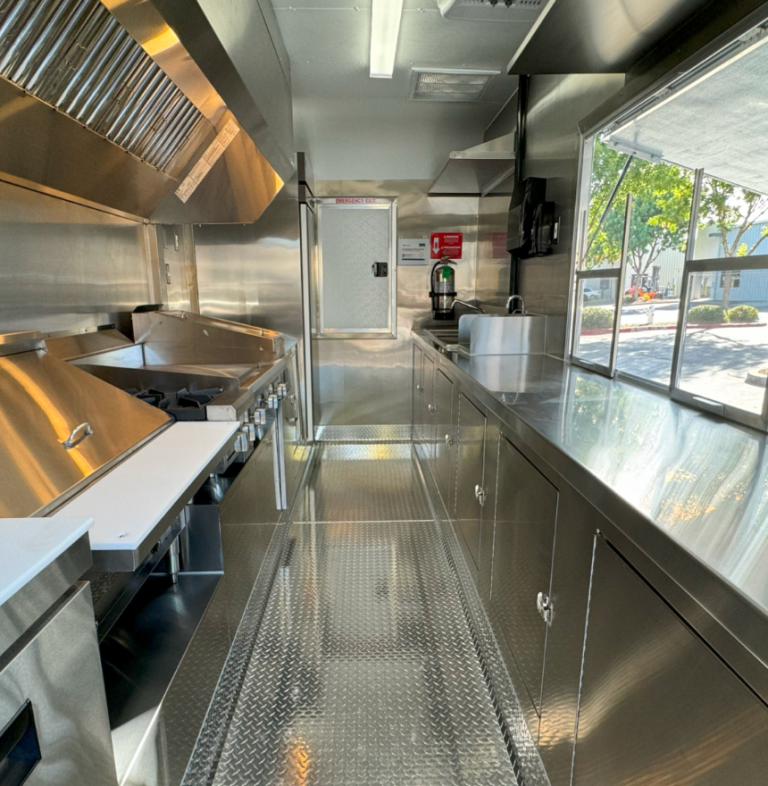
Residential appliances are not permitted, and the ACHD minimum requirements ask for smooth surfaces with junctures sealed to 1/32 inch. We build with 304 stainless steel interior walls, fully welded seams and NSF-certified components where applicable.
Every ACHD-permitted unit works from a permitted commissary and reports there daily for food, water, waste disposal and cleaning. The trailer cannot be its own commissary, but a permitted shared kitchen can serve.
ACHD inspects the commissary at least once a year, and the trailer should be there for it. Pick a site where a trailer backs in easily and the dump point meets your gray water valve.
Under ACHD rules, cooking with grease-laden vapors needs a Type I exhaust to current NFPA code, plus approved make-up air. Inside city limits, the Bureau of Fire inspects vending units that cook and requires the inspection from January 1, 2027. From that date, a City fire permit comes before a new or renewed Vending License.
A hot build carries the hood, suppression and propane lines a fryer or grill needs; a cold build skips them. Our construction standards call for a UL 710 compliant hood that meets NFPA 96 for commercial cooking ventilation. A commercial-grade 14×14 unit supplies make-up air, and our 20 ft trailer lists UL 300 suppression.
Propane rides in enclosed aluminum compartments and feeds the line through a 400,000 BTU automatic changeover regulator. Fire inspectors may check that tanks stand upright and secured, with main shutoffs within reach. Bring your ACHD permit, suppression inspection records and cooking equipment details to that visit.
Inside city limits, the City’s Department of Permits, Licenses, and Inspections (PLI) issues a Vending License through OneStopPGH. Under the City vending rules, it covers the public right-of-way, City parks and private property. Your ACHD certificate comes first.
On a street, a towed trailer wider than 4 feet vends from the parking lane, not the sidewalk. A unit longer than 22 feet pays the Pittsburgh Parking Authority for each spot it fills. Our 20 ft food trailer measures 24.5 feet in total length, so confirm with PLI which length counts.
For a regular spot, a Vending Location Priority Permit adds first priority and a 150-foot buffer from competing mobile vendors. Breweries and bars may host a concession trailer right beside them, even with a competing menu. Vendors at a permitted special event or City farmers market need no separate Vending License within its hours and footprint.
January lows in Pittsburgh average near 21°F, with more than 110 freezing nights a year. For Pittsburgh cold, wall insulation sits on reinforced backing behind the stainless interior, rated R13 on our 20 ft size.
Snow and rain run off our one-piece aluminum roof, crowned to shed water. If a freeze is due while the trailer is parked, drain its tanks and water lines or protect them.
July highs average near 83°F, and a hot line pushes the cabin higher. Our builds include a 15,000 BTU roof-mounted air conditioner.
Production moves through the stages shown on our build process page. Before any trailer leaves Olivehurst, we test its structure, brakes, plumbing and electrical load. On a hot build, gas line pressure, exhaust airflow and fire suppression get tested as well.
Your handoff walkthrough explains every system, from cooking equipment and power to the water tanks. Hot builds also cover gas startup and the suppression system. Your copies of the blueprints, the equipment manuals and the warranty card belong with your ACHD and fire paperwork.
What you pay depends on the size, equipment and layout you choose, itemized in the estimate that follows your consultation. To price your Pittsburgh build, request a quote; the form takes your size, timeline and menu notes.
At Golden State Trailers, we build custom commercial food trailers around real operational needs. Every project is planned with equipment, workflow, systems, safety, and long-term reliability in mind. Our goal is to build food trailers that perform reliably in daily commercial use.