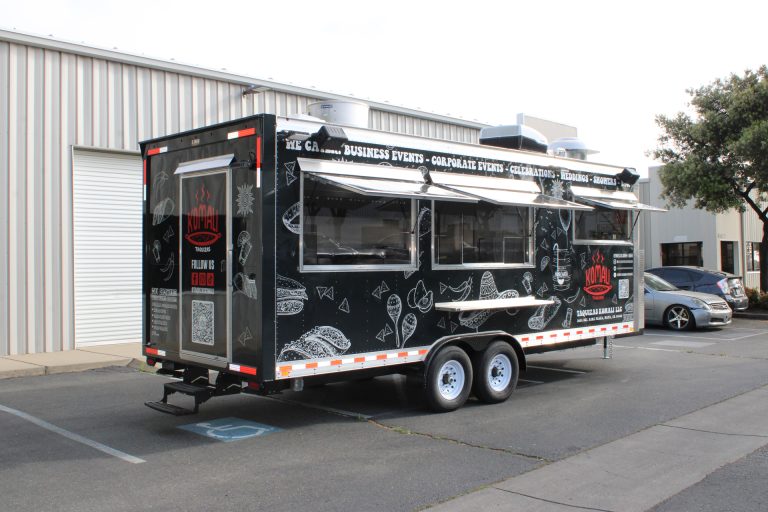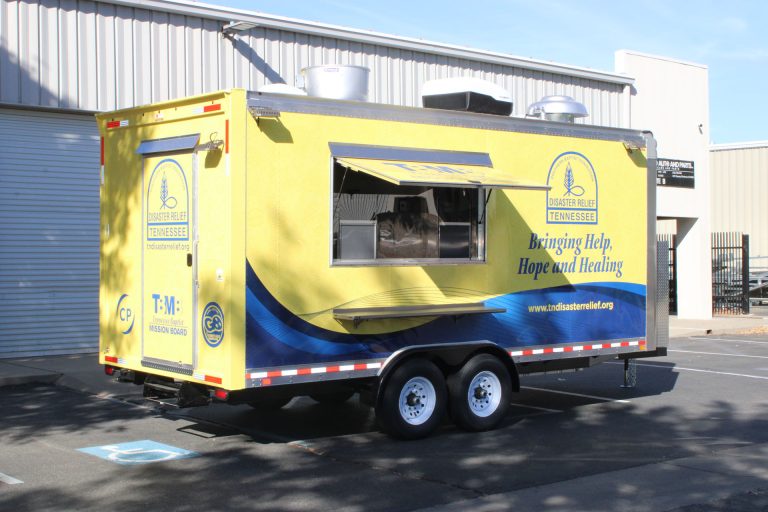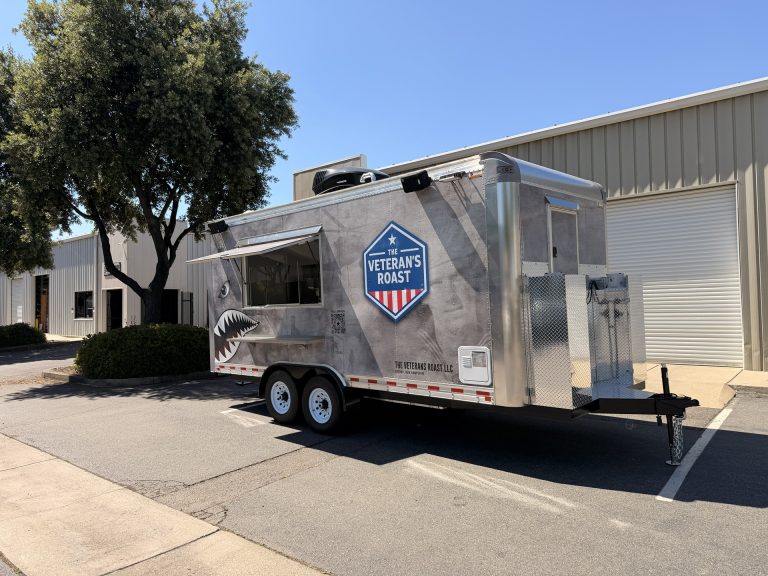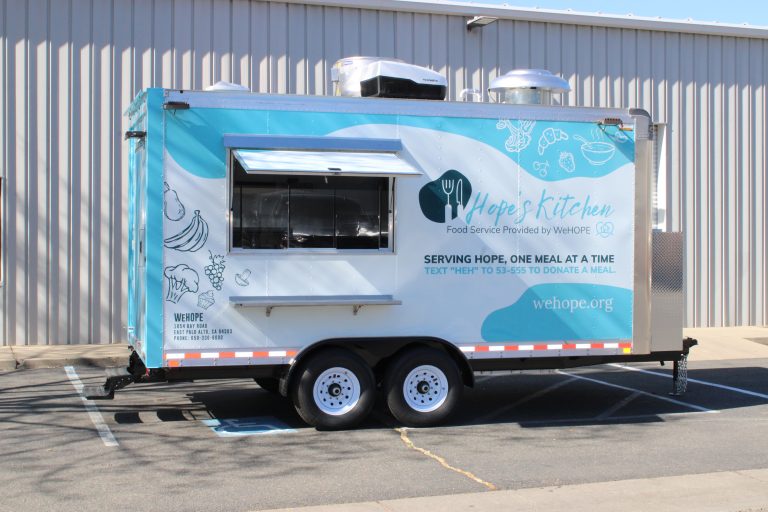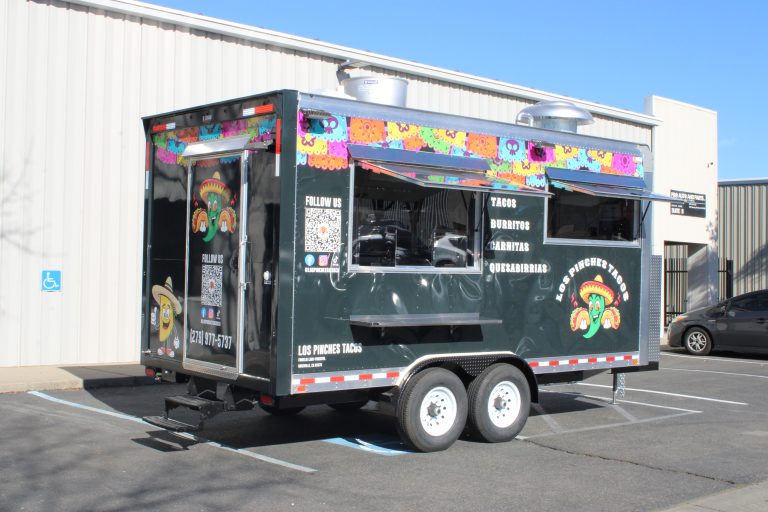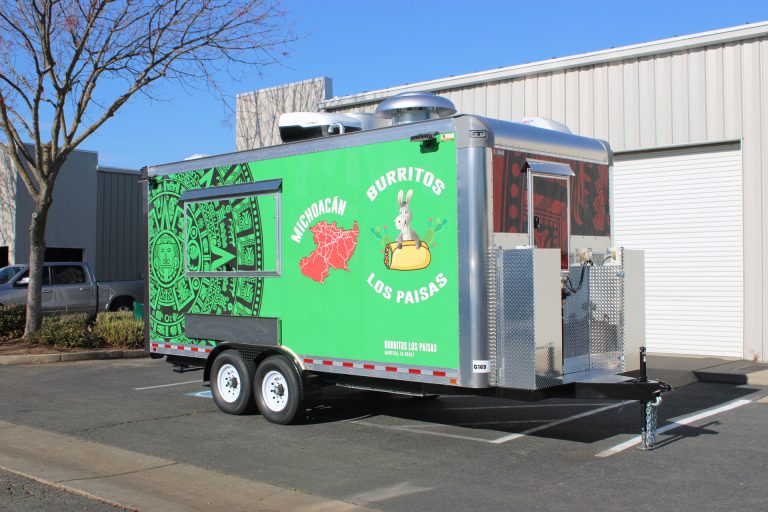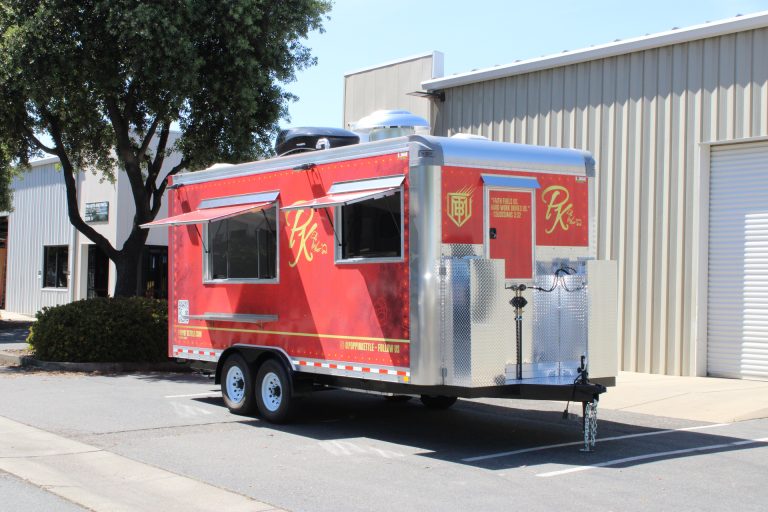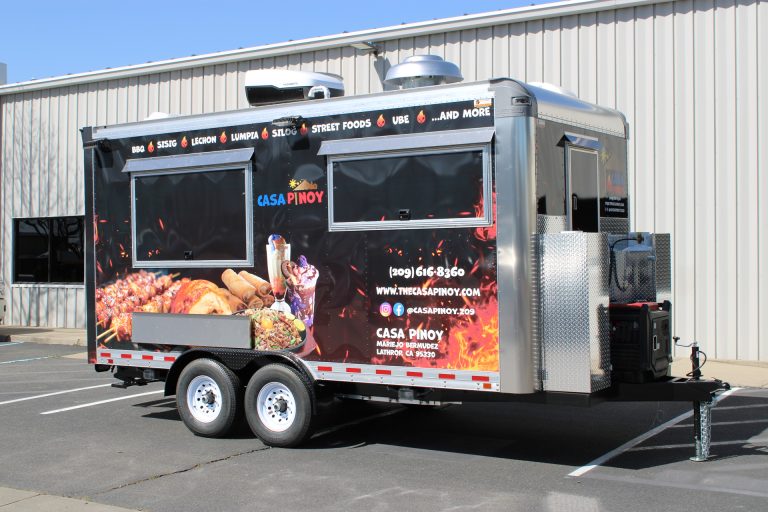


Our in-house team welds, wires and plumbs every Columbus order at the Olivehurst, CA shop. Nothing is outsourced, and no shells are imported. Shop visits are by appointment, at any point in the build. After production, you can collect the trailer in Olivehurst. Otherwise we ship it to Columbus, and we deliver to all 50 states.
To sell inside city limits, take the inspection form from the City License Section and complete it in order. A health inspection comes first, then a propane pressure and leak test by a propane specialist or licensed plumber. The Columbus Division of Fire inspects last, at 4252 Groves Rd, by appointment.



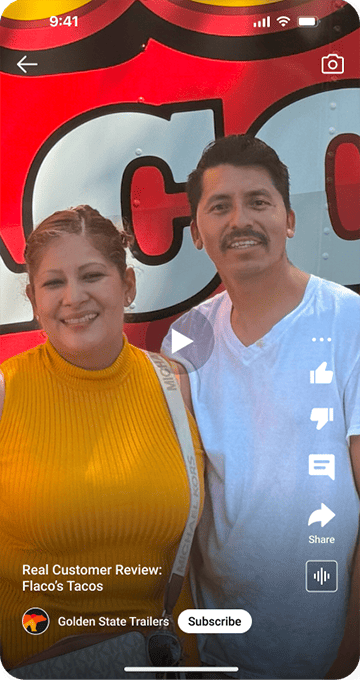

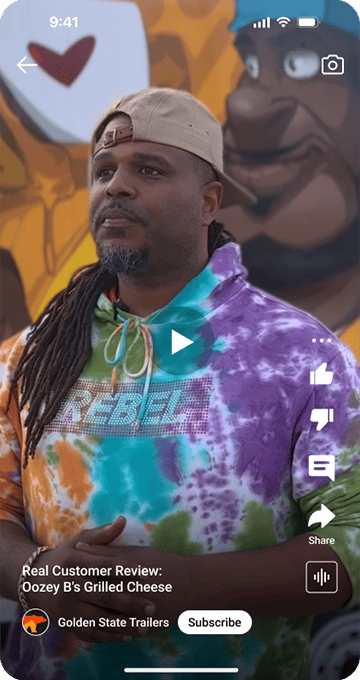
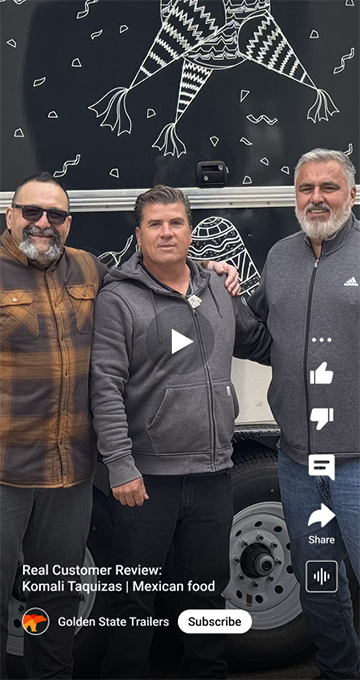
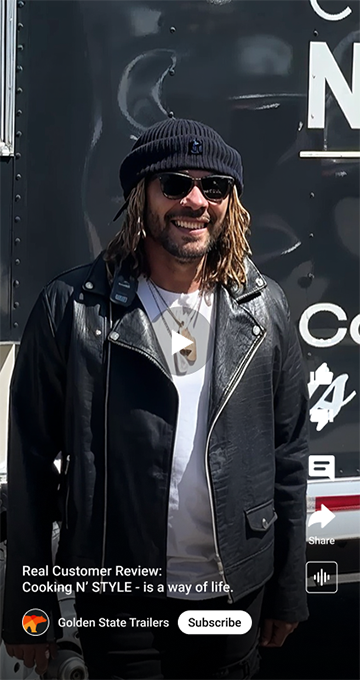


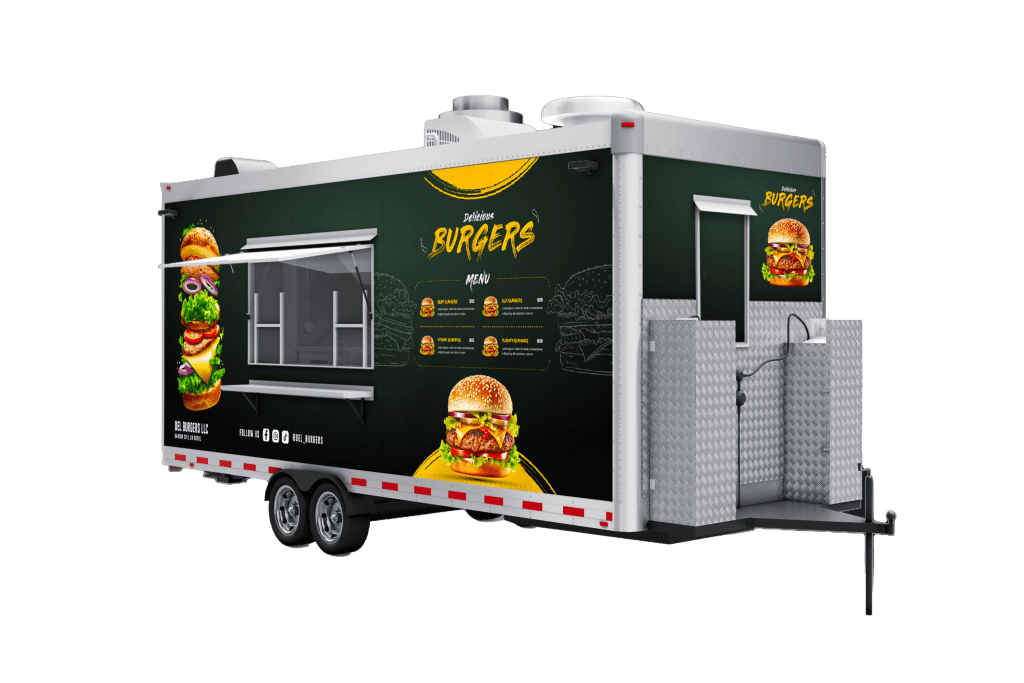



There is no charge and no account needed to use the 3D builder. Start by picking hot or cold, then a length from 16 to 30 feet. Place the cooking line along the kitchen wall and prep tables on the side facing customers. You have 90 days to return to a saved layout, change it or share it.
Columbus Public Health wants the unit's name, city, state, ZIP and phone shown on the exterior. Each letter must be at least 3 inches tall and 1 inch wide. Reserve space for that lettering as you place the serving windows and plan the wrap.
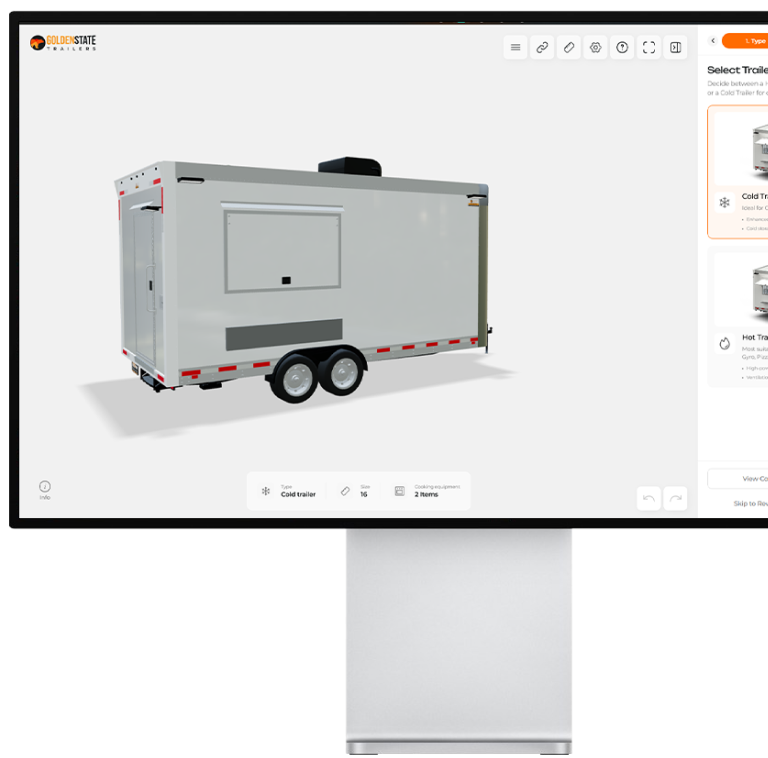
Every food trailer for sale in Columbus, Ohio, is built in-house at the Golden State Trailers shop in Olivehurst, California. Its layout follows your menu and daily workflow, and we deliver the finished kitchen to central Ohio.
Downtown, Columbus Commons hosts a Thursday lunch lineup of mobile vendors, with breakfast and taco days earlier in the week. Its vendor application lists trailers, and every vendor must pass a Columbus Division of Fire inspection at each event.
Taco menus need a hot line, like our taco trailers. Fair menus suit concession trailers, and breakfast coffee needs no cooking line, so a cold coffee trailer covers it.
Our food trailers for sale show catalog models to start from. Our custom food trailers begin with a layout drawn around your menu.
Inside city limits, the City of Columbus License Section adds a mobile food vending license to the health license. For a trailer, its packet lists the title or bill of sale, commercial vehicle registration and liability insurance. It also lists a letter of good standing from the City Income Tax Division.
A Public Right of Way permit lets a licensed unit reserve designated curbside spots online. They include stretches of North High Street near the Ohio State campus.
On private property, the License Section approves each site first, from the owner’s signed letter and photos of the spot.
City utilities are off limits, so a curbside trailer runs on its own tanks and power. Private hookups need the owner’s written permission, kept on board. The City’s mobile food vending rules cover the details.
Columbus Public Health’s Food Protection Program licenses mobile units whose owner’s address is in Columbus or Worthington. Owners based elsewhere apply to Franklin County Public Health or their local health department.
The program’s plan review application asks for your menu and a floor plan with every piece of equipment labeled. It also wants an equipment list with manufacturers and model numbers, plus a Person in Charge food safety certificate.
Review can take up to 30 days. Ask the program how early it accepts your application, so review runs while the trailer is in production. Confirm current requirements on the Food Protection Program page before you order.
Each appliance is placed in the 3D render you approve. The engineering blueprints drawn from it diagram electrical and plumbing, plus gas on a cooking trailer. We put the plan set together and support you while the program reviews it.
The department expects a licensable trailer to be self-contained. That covers mechanical refrigeration, plumbing with a hot water tank and multi-day storage. Its checklist adds these items.
The Columbus Division of Fire enforces fire safety for mobile food vending, with rules beyond the Ohio Fire Code minimum. For a newly built unit, its guideline calls for a listed automatic fire extinguishing system.
Deep fryers require a commercial hood, and a Type 1 hood is recommended wherever cooking produces grease-laden vapors. The Division also asks every unit to carry a commercial carbon monoxide detector and a handheld gas leak detector.
Propane tanks are metal-mounted outside the unit, with 200 lb as the total limit. Rear-mounted tanks sit at least 30 inches off the ground. Gas lines under the trailer or through a wall must be rigid pipe, with an exterior emergency shutoff.
On a hot trailer, our build standards call for an exhaust hood built to UL 710 and NFPA 96. A 14×14 system supplies make-up air, and our 20-foot model carries UL 300 fire suppression. Propane tanks ride in enclosed aluminum compartments, the regulator switches tanks automatically, and each appliance shuts off separately.
A cold trailer for a non-cooking menu leaves out the hood and gas lines. The Division’s mobile food vending guidelines list every item, so ask which apply to your menu before you order.
January in Columbus averages lows near 22°F and nearly 10 inches of snow. Between winter events, drain the tanks and water lines of a parked trailer or keep them above freezing.
Enhanced insulation with reinforced interior backing works in both seasons. Overhead, a crowned roof made from one piece of aluminum sheds snowmelt and rain. The exterior is riveted aluminum, made to resist water getting in.
July highs average about 85°F, and the cooking line raises the cabin temperature further. Rooftop air conditioning rated at 15,000 BTU is standard on our builds.
Fabrication follows the drawings you approved, and our build process lays out every stage. Progress photos reach you while the trailer is in our shop.
Our pre-shipping tests cover the frame, brakes, plumbing and electrical load. Cooking trailers also get gas pressure, hood airflow and suppression checks. Nothing leaves Olivehurst until each system passes.
At handoff, you get a walkthrough of each system. You also receive the blueprints, appliance manuals and warranty card. Our 1-year bumper-to-bumper warranty runs alongside each equipment maker’s own coverage.
Request a quote, choose a size and timeline in the form, and describe your menu in its project box.
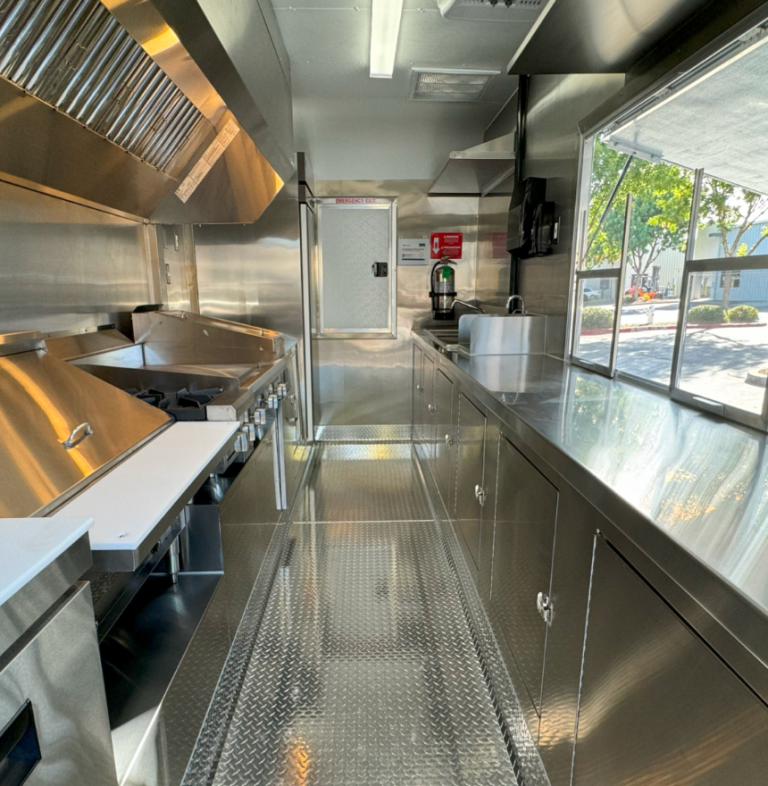
At Golden State Trailers, we build custom commercial food trailers around real operational needs. Every project is planned with equipment, workflow, systems, safety, and long-term reliability in mind. Our goal is to build food trailers that perform reliably in daily commercial use.