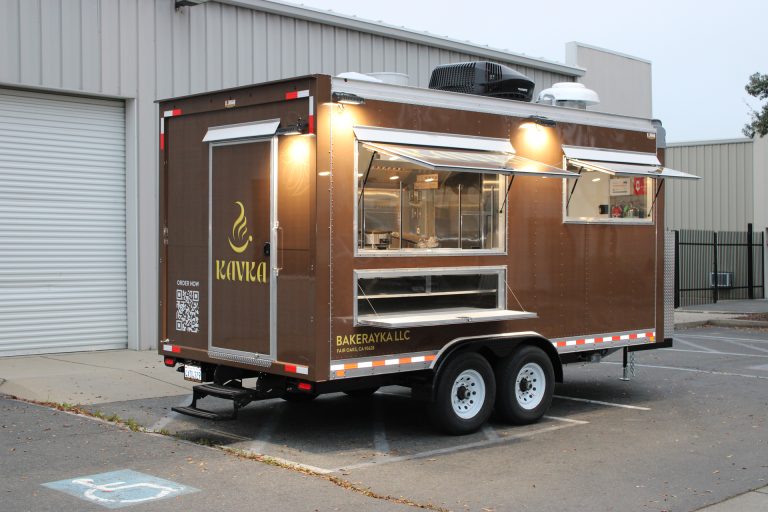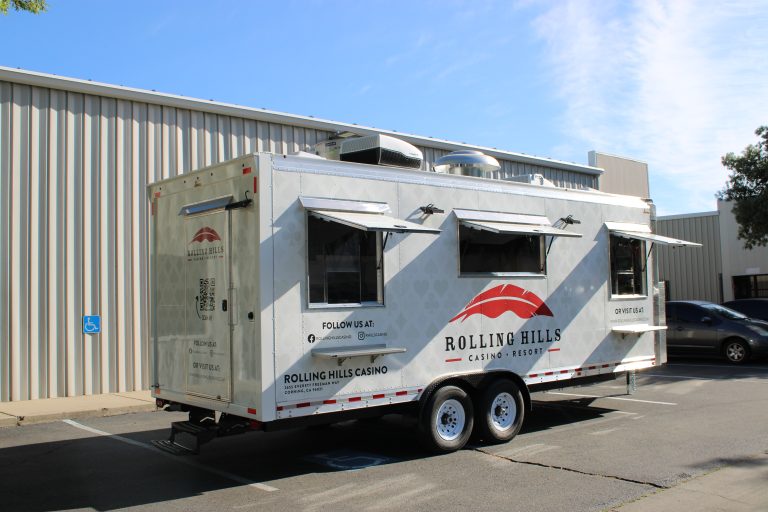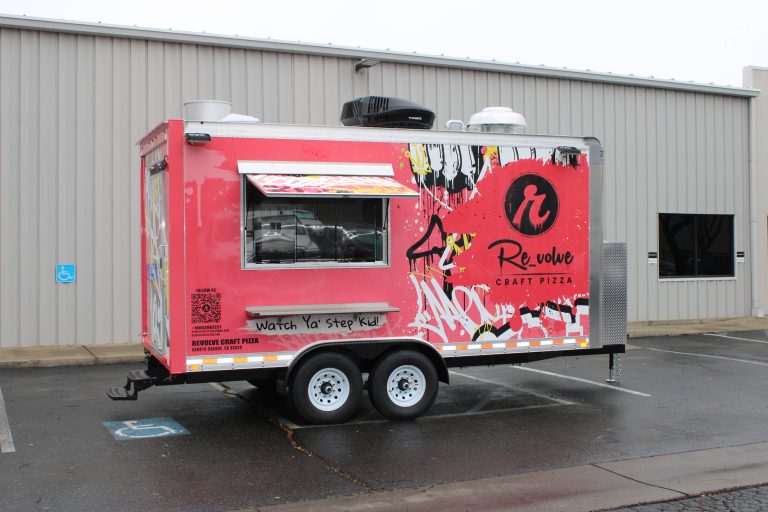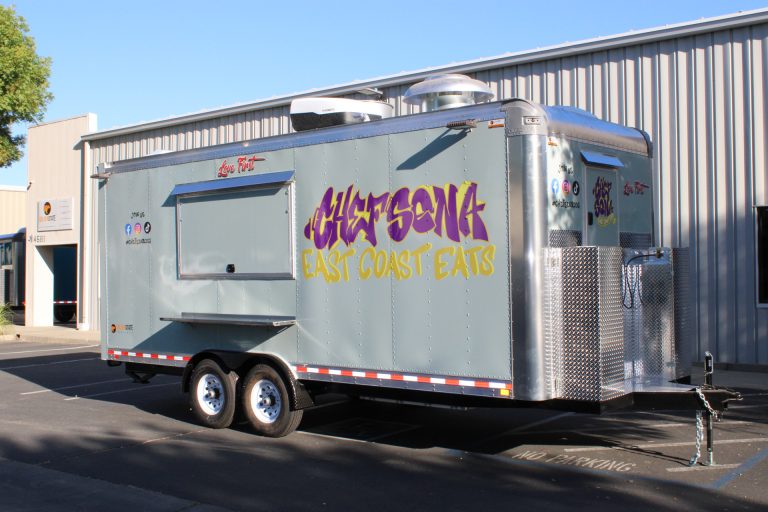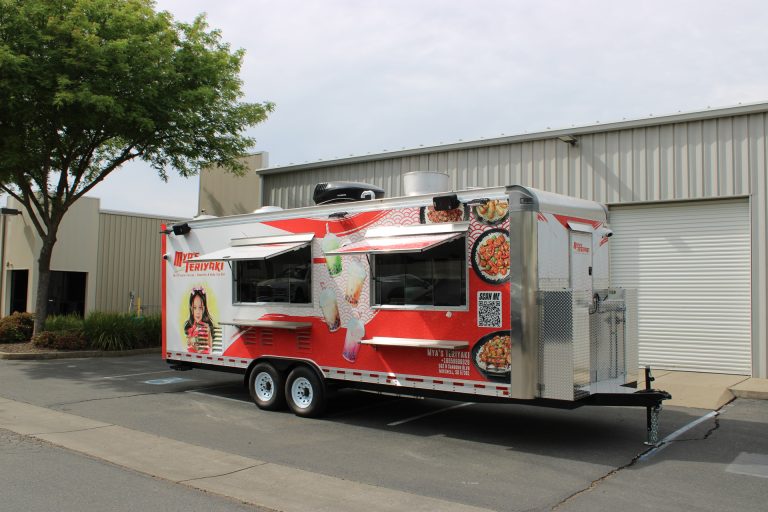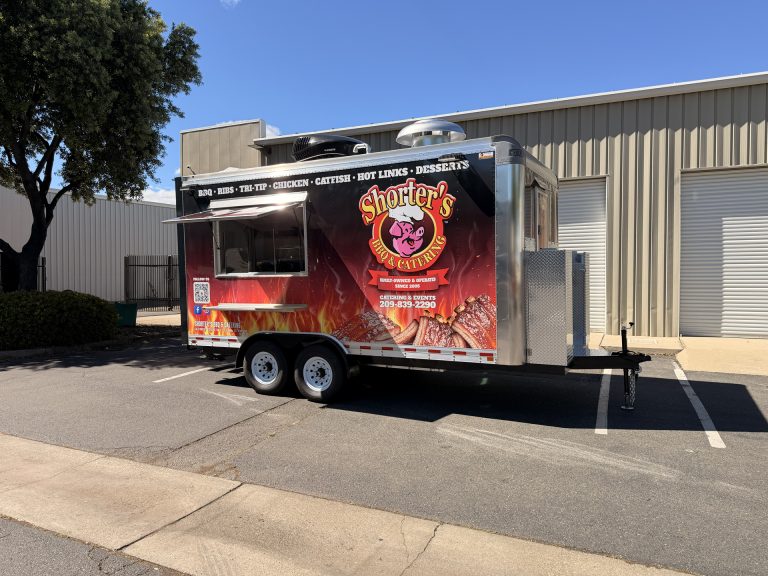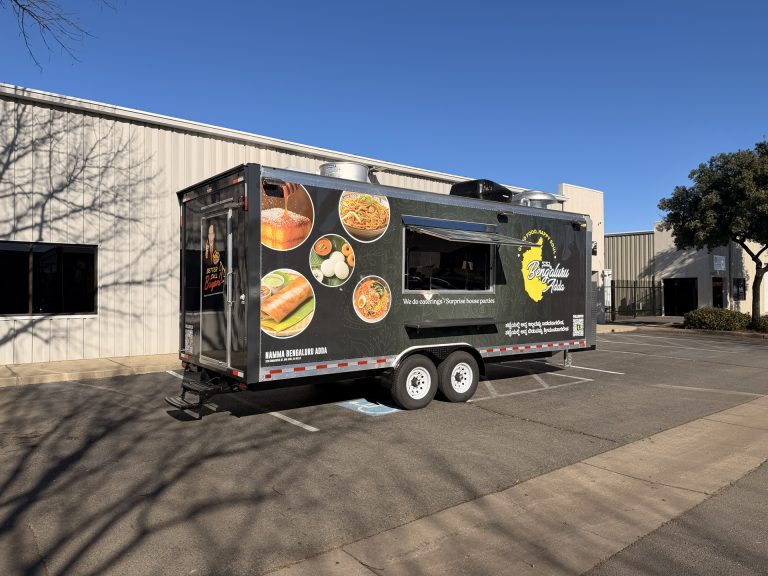


Cleveland trailers come off the same shop floor as every build we make, in Olivehurst, CA. Book an appointment, and you can walk through yours mid-build. Once it clears our final quality check, collect it in Olivehurst or let us ship it to Ohio. We deliver to all 50 states.
On arrival, a Cleveland Department of Public Health inspector carries out the pre-licensing inspection. A propane-fueled trailer also needs the Fire Prevention Bureau's inspection before first use, booked at 216-664-6664.









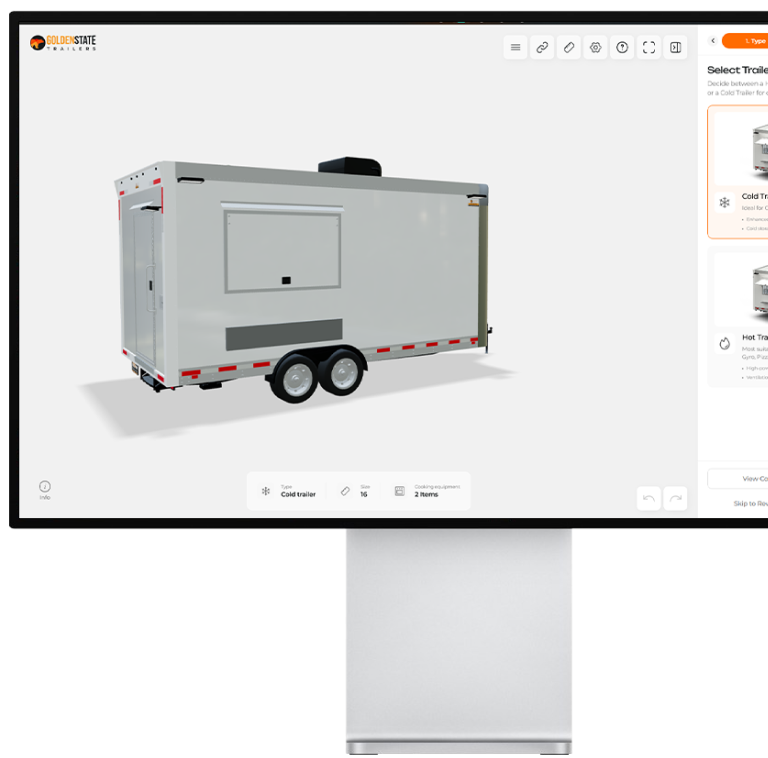
The 3D builder costs nothing to use and asks for no registration. Pick hot or cold, choose a length and fit out the kitchen line. Required commercial sinks come pre-placed on the service side. You can come back to a design within 90 days to edit or share it.
One Cleveland health rule shapes the exterior. Each concession must carry an ID at least 3 inches tall. It shows your business name, city, state, ZIP code and phone number. Keep a clear panel for it as you plan the wrap.
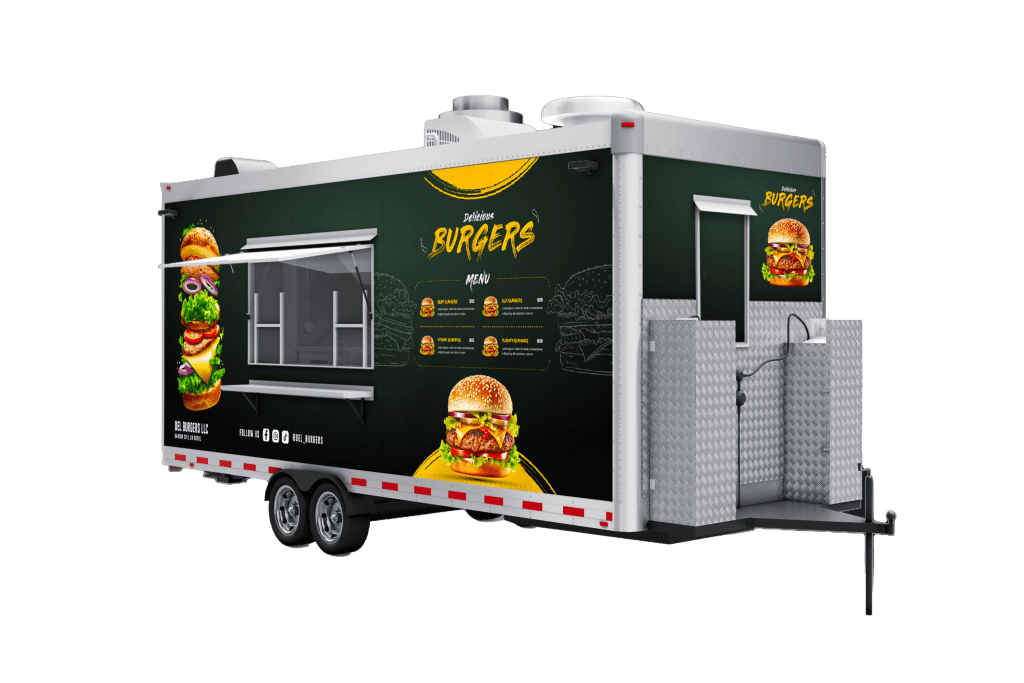
Our food trailers for sale in Cleveland are fabricated by the Golden State Trailers crew in Olivehurst, California. We build each one in-house and deliver it finished to your Cleveland base.
The menu comes first, because it sets the equipment. The equipment then fixes the floor plan, the plumbing and electrical loads, and the balance over the axles.
Grills and fryers mean a hot trailer, and in Cleveland, cooking on propane also brings a city fire permit. A coffee trailer serving drinks needs no cooking line, so it can be a cold build.
Catalog models among our food trailers for sale give you a starting layout. Custom food trailers start from a blank plan, and the eight sizes span 16 to 30 feet.
In the City of Cleveland, the Department of Public Health (CDPH) licenses mobile food units through its Food Program. Its name for a self-contained unit with mechanical refrigeration and full plumbing is a concession trailer.
Every application carries a scale drawing of the whole operation, plus a list naming each appliance’s maker and model number. CDPH approves all equipment before use, and a health inspector completes a pre-licensing inspection.
You approve a 3D render with every appliance in place. From it we draw engineering blueprints: electrical and plumbing for every trailer, gas for hot builds. We prepare those plan sets for the review and support you through it.
Check current requirements on the CDPH mobile food service page before you order.
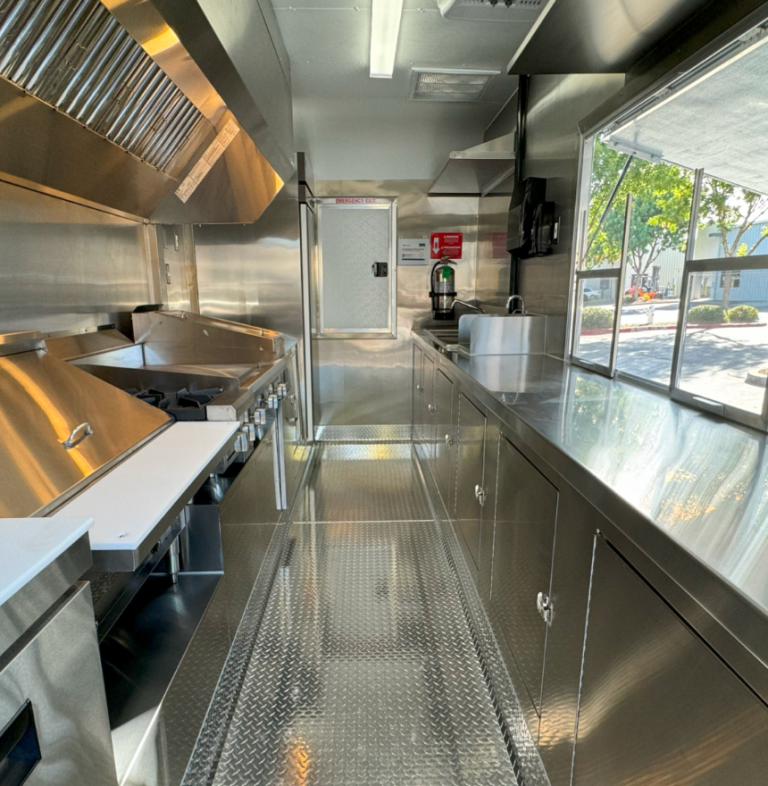
The department’s mobile packet lists the fixtures it expects, and each one has a place in our layouts:
Fire rules come from a separate office, the Fire Prevention Bureau of the Cleveland Division of Fire. A trailer that uses propane, flammable liquids, wood or charcoal needs its seasonal hazardous-substances permit.
The bureau inspects the unit by appointment before first use and again at each yearly renewal. For propane, bring its Certificate of Qualification application and a certified technician’s propane test paperwork.
The bureau’s form allows at most two 100-pound cylinders per area without prior approval, chained and upright. City code also holds vending units to NFPA 58, the national propane code. Confirm fire and propane rules on the Division of Fire permits page before you order.
Hot builds put a UL 710 compliant hood over the cooking line, with NFPA 96 as its standard. A 14×14 commercial-grade unit brings in its make-up air. Our build standards list these specs, and the 20 ft model names UL 300 fire suppression.
Cylinders sit in enclosed aluminum tank compartments. Their 400,000 BTU system switches tanks through an automatic changeover regulator, and every appliance has an individual shut-off valve.
Each trailer also needs a Mobile Food Shop Location Permit from the city’s Division of Assessments and Licenses. One application covers one unit, and on it you check every ward where you want to vend.
The permit asks for the health license, the fire certificate on propane units and liability insurance naming the City. A private lot also takes proof of ownership or the owner’s notarized permission.
City code keeps vending units longer than 6 feet off public sidewalks. A trailer sells from a street space or a private lot instead. On a public street, keep 100 feet from a fixed food business during its hours.
Walnut Wednesday brings mobile food to downtown’s Perk Park at East 12th and Walnut, 11:30 a.m. to 1:30 p.m. In University Circle, Wade Oval Wednesdays fill summer evenings, with trailers in the weekly vendor lineups.
On Tuesdays from May to September, Tremont’s farmers market runs 4 to 7 p.m. in Lincoln Park, rain or shine. Coffee, lemonade and ice cream vendors sell beside its produce, all menus that suit a cold trailer.
The location permit applies at special events too, City Council events included. See our farmers market food trailers for layouts planned around market service.
Cleveland’s July highs sit near 84°F in National Weather Service normals, and cooking adds heat inside. Each build carries 15,000 BTU of rooftop air conditioning, and the walls get enhanced insulation.
January lows average about 22°F, and snowfall totals roughly 64 inches a year. Snowmelt drains off the one-piece aluminum roof, which is crowned for runoff. In a Cleveland freeze, empty or protect the plumbing of a trailer that sits idle.
Fabrication follows our build process stage by stage, guided by the blueprints drawn from your approved design.
Every system is tested before shipping. Tests run from the brakes and structure to plumbing joints, gas lines, electrical load, hood airflow and fire suppression. The trailer ships only after every result checks out.
Handoff includes a hands-on lesson in each system, from the electrical panel and propane to the water tanks. The paperwork handed over includes blueprints, equipment manuals and your warranty card.
After your consultation, an itemized estimate lists the scope and equipment of your build. To start, request a quote and enter the menu you plan to license with CDPH under Project Details.
At Golden State Trailers, we build custom commercial food trailers around real operational needs. Every project is planned with equipment, workflow, systems, safety, and long-term reliability in mind. Our goal is to build food trailers that perform reliably in daily commercial use.