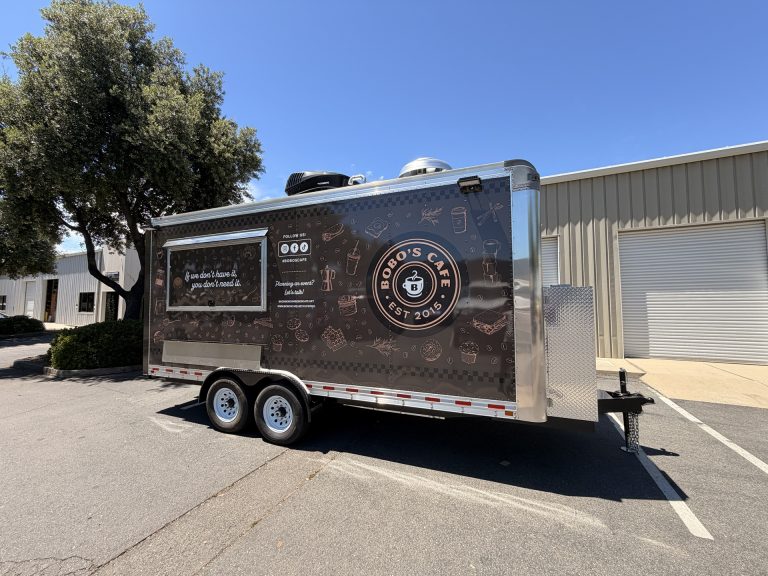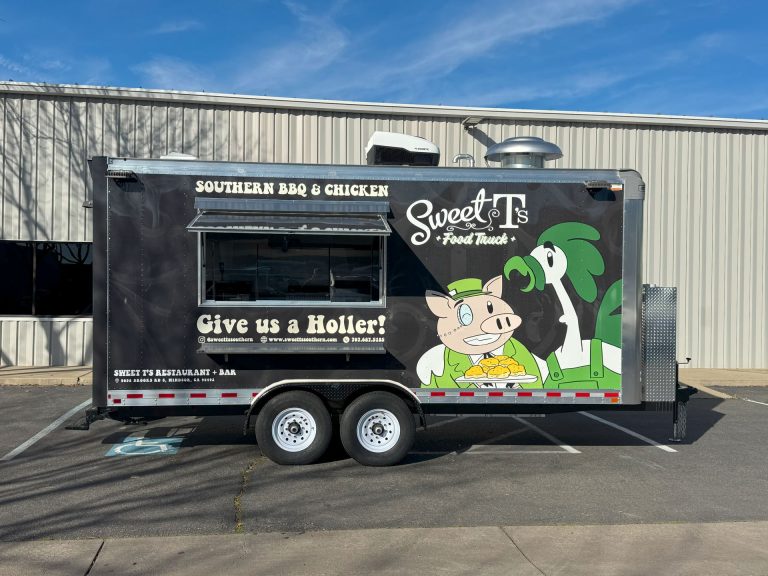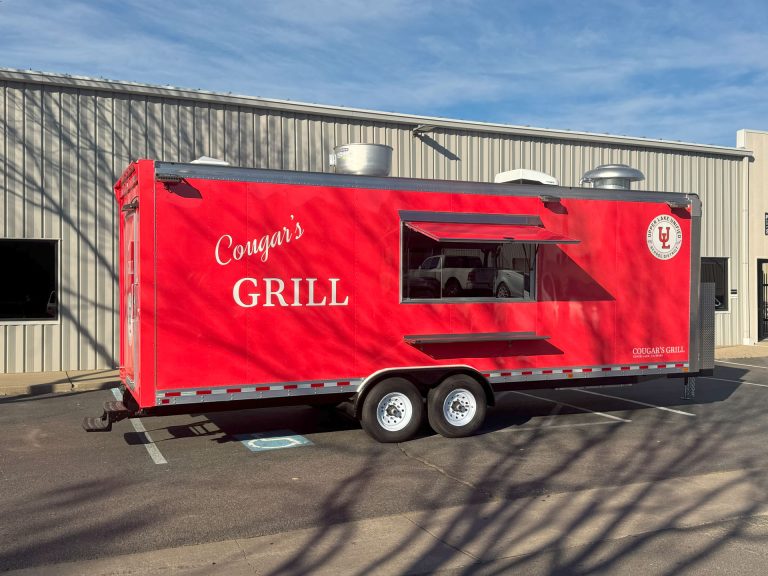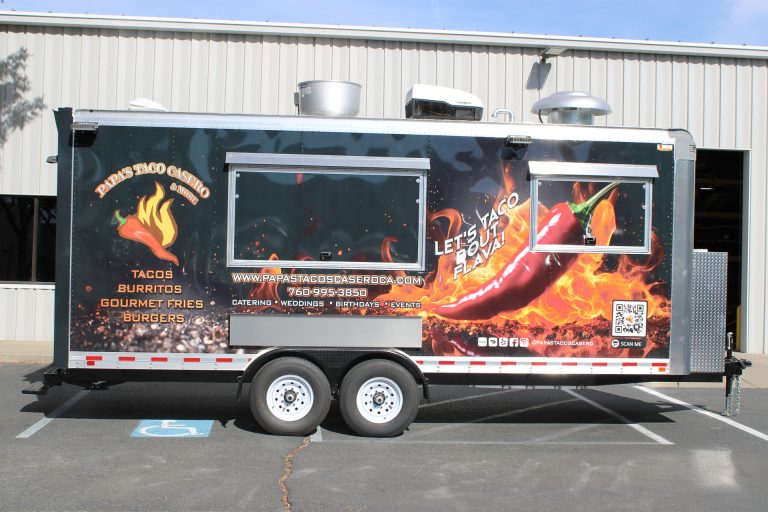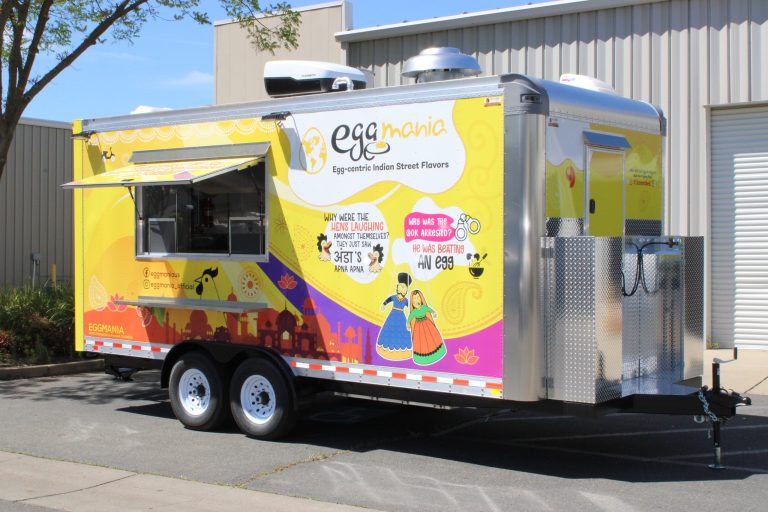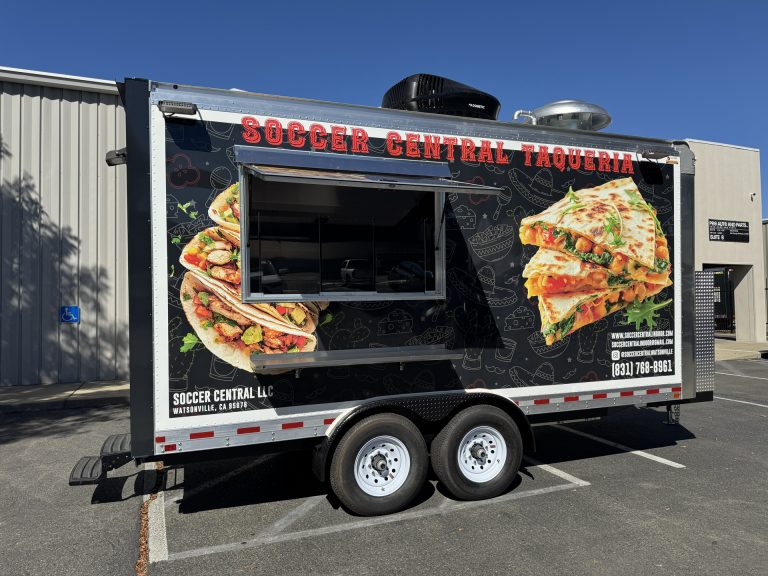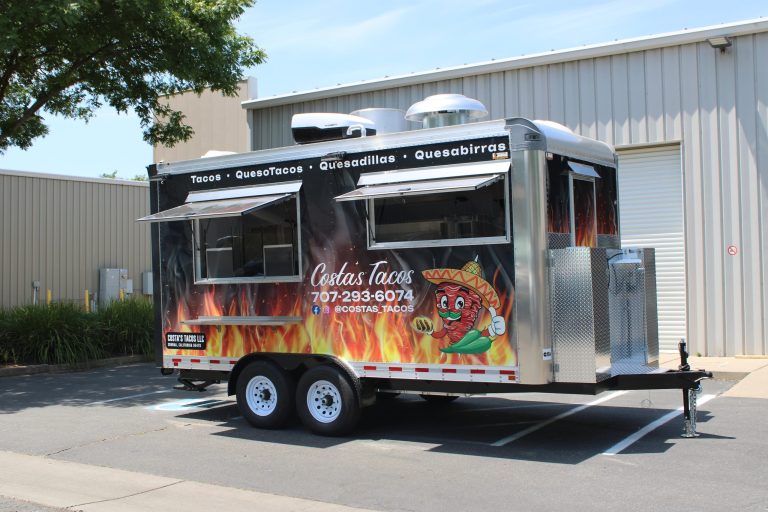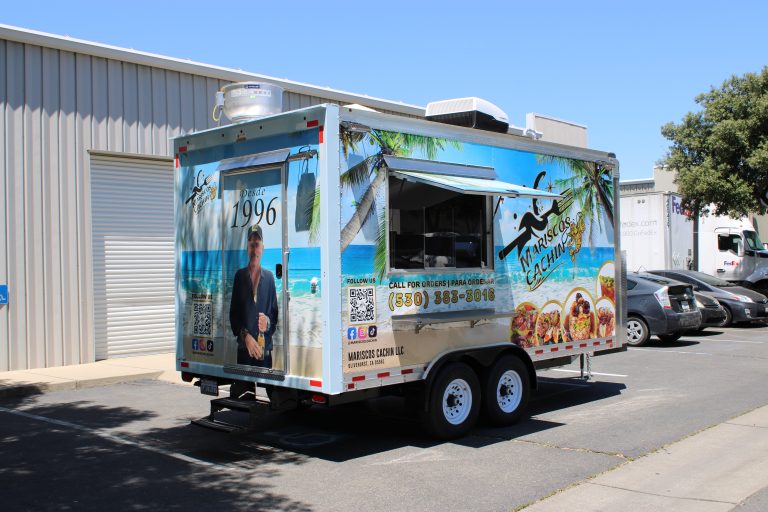


Fabrication happens in-house at our Olivehurst, CA shop, where a scheduled visit lets you see your trailer at any stage. Once it is finished, pick it up in person or have us deliver it to Buffalo. Delivery reaches all 50 states.
In Buffalo, the next step belongs to the Erie County Department of Health. Its inspector arranges a pre-operational inspection of the unit. A compliant report is the county's approval to operate, and ECDOH issues the permit within three business days.










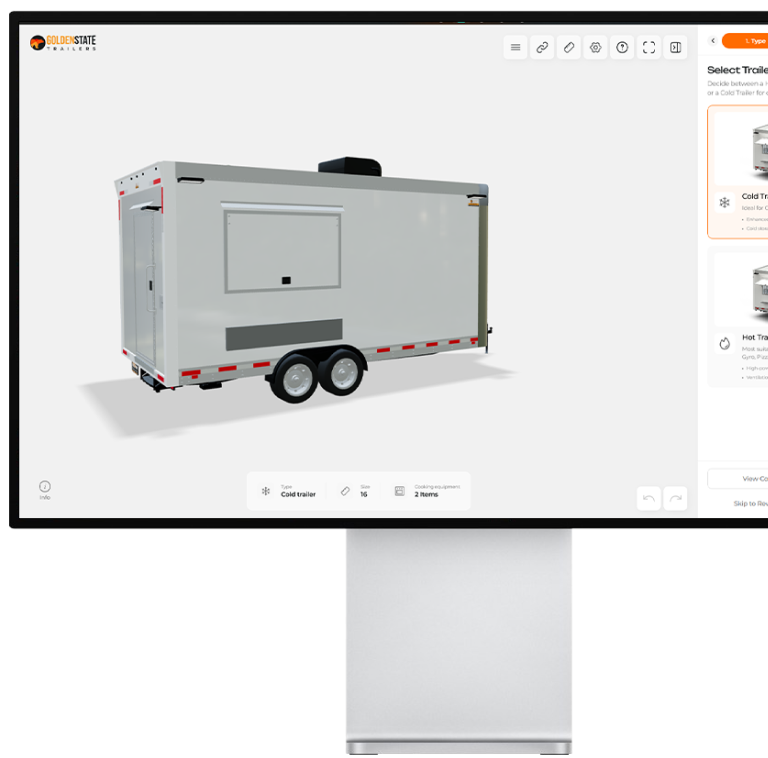
Our 3D builder is free to use and asks for no registration. Choose hot or cold and one of eight lengths, then place your kitchen equipment. The design saves, so you can edit or share it within 90 days.
Design around New York's water rule. The state code calls for at least 40 gallons of fresh water and a wastewater tank 15 percent larger. The whole system must also drain by gravity. Our standard trailers carry 56 to 80 gallons fresh and a 93-gallon gray tank.
We fabricate food trailers for sale in Buffalo at our Olivehurst, California shop, start to finish. Each layout starts from the menu, which sets the equipment, the floor plan and the utilities behind them.
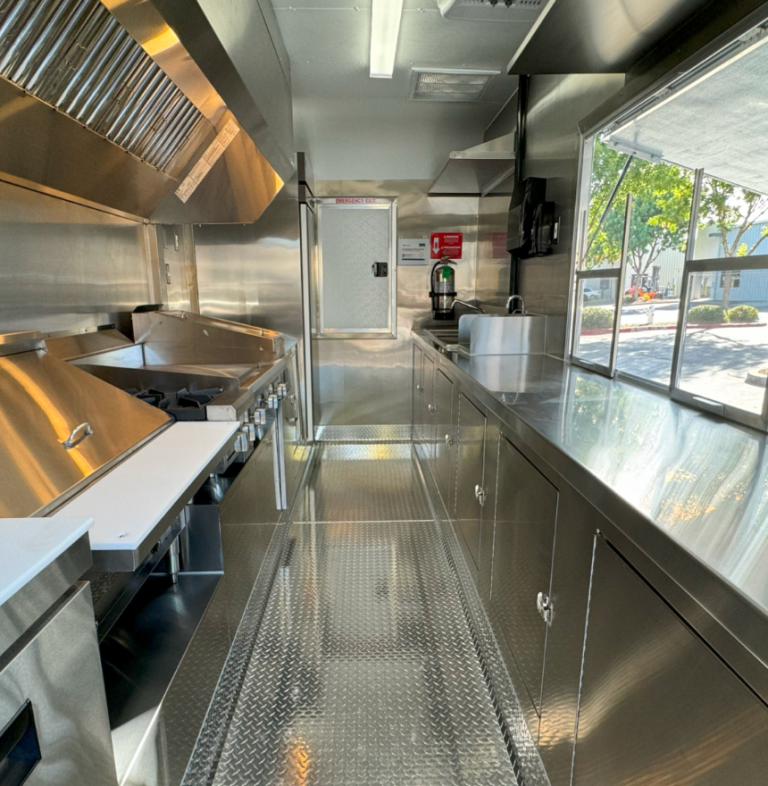
A coffee trailer is planned around water capacity and hot-water recovery. A grill or fryer line needs a hot trailer, which adds gas lines, fire suppression and a hood.
Per our build standards, that hood is UL 710 compliant, and its ventilation conforms to NFPA 96. The make-up air side runs through a 14×14 system, balancing what the hood exhausts.
Propane feeds a 400,000 BTU setup whose regulator changes cylinders automatically. Each appliance also keeps its own shut-off valve, while cold coffee or dessert builds leave the gas system out.
We also build catering trailers and multi-unit orders for franchises and schools, as well as corporate food service programs. Start from a model in our food trailers for sale catalog, then compare it with our custom food trailers. Both run in eight lengths between 16 and 30 feet.
In Buffalo, the health permit is a county matter rather than a city one. The Erie County Department of Health (ECDOH) inspects mobile food units across the county, Buffalo included. It applies the state Sanitary Code for mobile food service establishments.
A trailer that works many events through the year can hold an annual ECDOH permit. File the application at least 21 days before you open, with the full list of foods you plan to serve. Check current requirements on the ECDOH food sanitation page.
ECDOH then schedules a pre-operational inspection before your first service. The permit renews every year, in the same month it was first issued.
Each ECDOH mobile unit works with a commissary, the permitted kitchen where it is cleaned, supplied and serviced. The application asks for a letter from that kitchen’s owner, plus its name, address and contact person.
The state code sets the rhythm: a mobile unit returns to its commissary for service at least every 72 hours. Map the tow between your selling spots and that kitchen before you settle on a trailer length.
Selling on Buffalo streets or other public property takes a city mobile food vending license as well. The city’s Office of Licenses at City Hall handles it and asks for your ECDOH inspection certification.
A private lot is not covered by that license and falls under other City Code rules. Confirm vending rules with the Office of Licenses before you order.
License applicants, and those renewing, present each vehicle to the Buffalo Department of Fire. It checks the vehicle against the New York State fire codes, so build that visit into your opening plan.
Larkin Square hosts mobile food vendors with live music on summer Tuesday evenings. It also runs a weekday lunch rotation on Wednesdays and Thursdays through September.
Taste of Buffalo brings restaurants and mobile vendors to Delaware Avenue and Niagara Square each July. The Erie County Fair in Hamburg runs 12 days each August. Every vendor space stays staffed from 11 a.m. to 10 p.m.
A run that long sizes the trailer. Plan refrigeration for a full day of stock and power for every hour of service. Generators are among the builder options, and our festival trailers show matching layouts.
Buffalo averages about 95 inches of snow a year, and the overnight low reaches freezing on roughly 124 days. Cold shapes more of the spec here than summer heat does.
Snow and meltwater test the shell, so the roof is one solid aluminum piece with a crown that sheds water. Riveted aluminum siding is built to resist water intrusion. Insulation is enhanced with reinforced interior backing, and our 20-foot spec lists R13.
Water is the weak point in a freeze. Plan how the tanks and lines are drained or protected while the trailer sits idle.
Summer still counts in Buffalo, with July highs near 80°F and a hot line adding its own heat. Our standard build carries a 15,000 BTU roof air conditioner for those afternoons.
Engineering blueprints with electrical, plumbing and gas diagrams guide every build, and our build process walks through each stage. Those drawings become the basis of any plan set.
New York’s code lets ECDOH request plans of a mobile unit’s layout, equipment, plumbing and ventilation before it is built. Ask ECDOH early whether it will. If it does, our team prepares the plans for that review and coordinates with the reviewer throughout.
Nothing leaves our shop until every system passes testing, from electrical load and gas lines to brakes and structure. We deliver to Buffalo and to every other state.
After your consultation, you receive a detailed estimate of the scope and equipment. Request a quote to price your Buffalo build, adding the size, timeline and project details the form asks for.
At Golden State Trailers, we build custom commercial food trailers around real operational needs. Every project is planned with equipment, workflow, systems, safety, and long-term reliability in mind. Our goal is to build food trailers that perform reliably in daily commercial use.