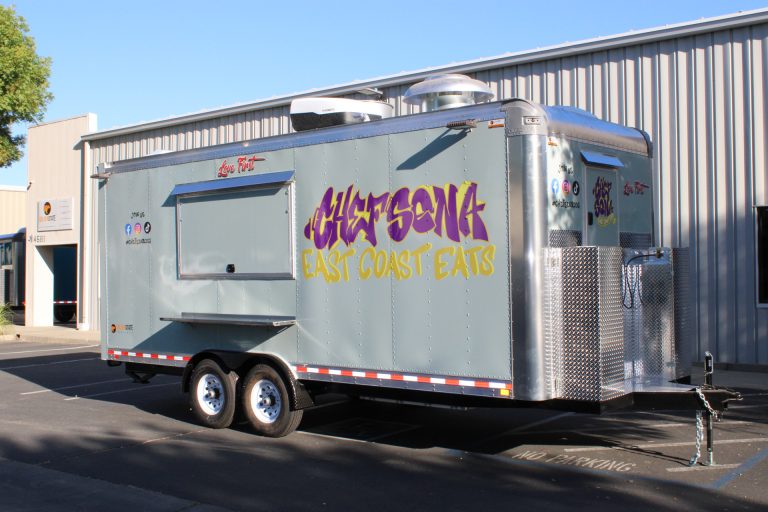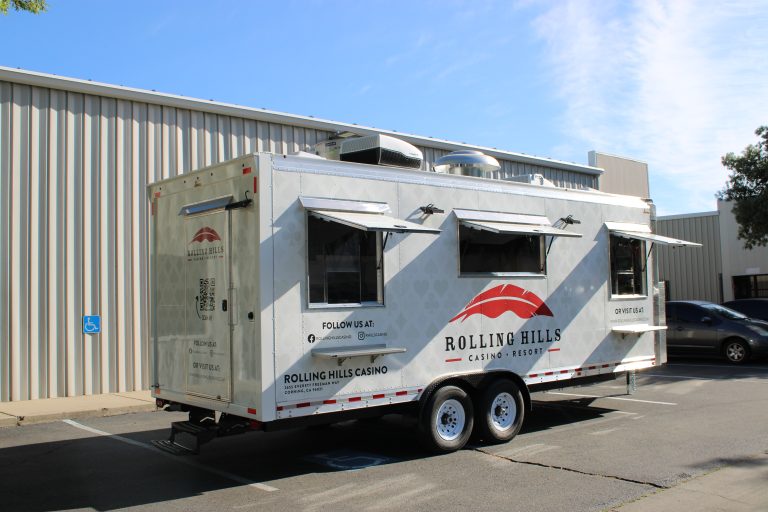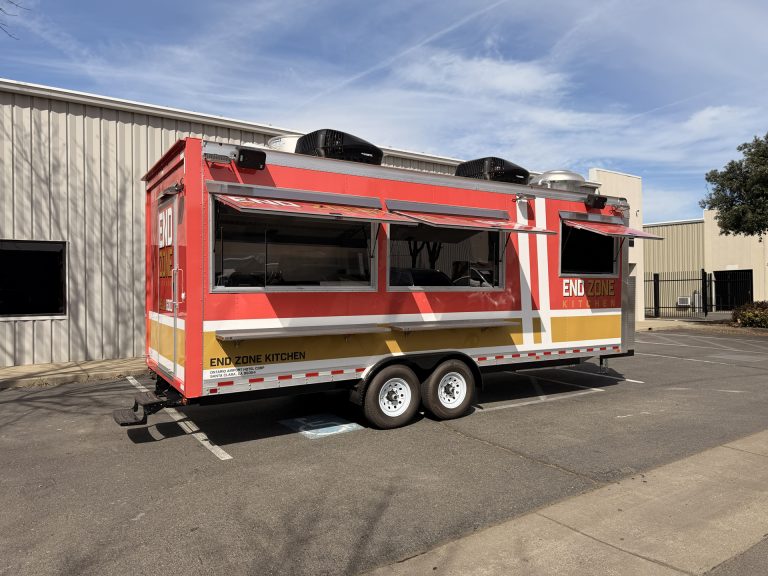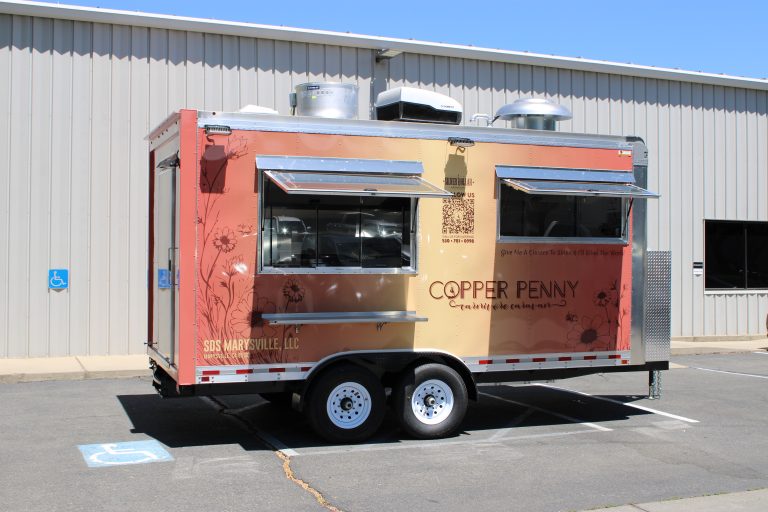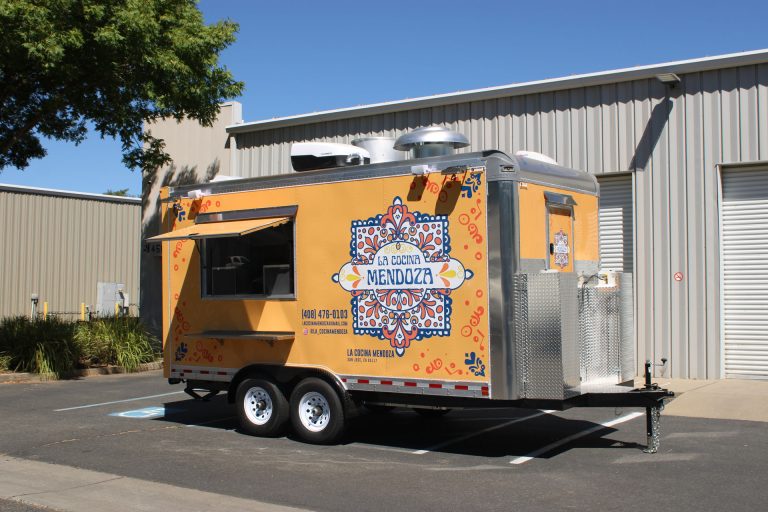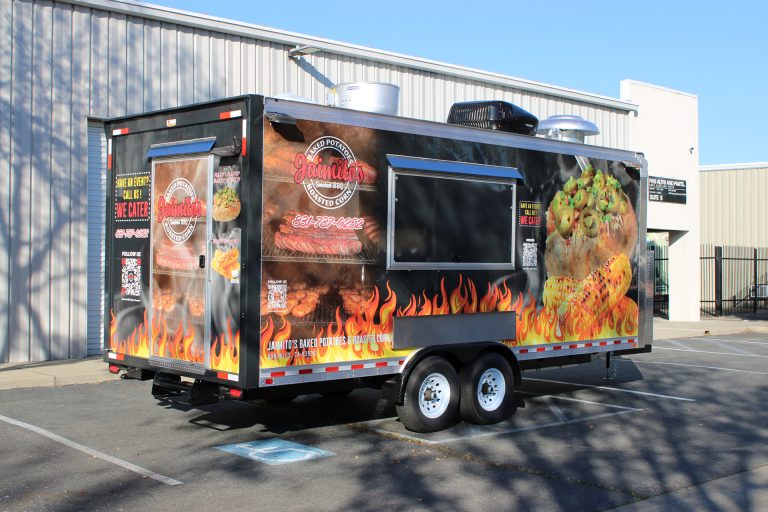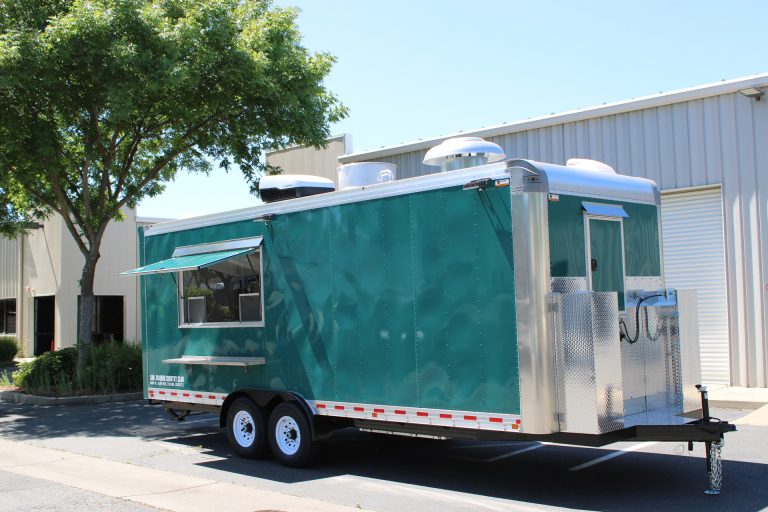


Your Albuquerque trailer takes shape at our own shop in Olivehurst, CA. Our team builds it from the welded steel frame up. Shop visits are by appointment and open at any stage of your build. Once it is finished, collect it at the shop or schedule delivery to Albuquerque. We deliver to all 50 states.
Before you open, the city's Fire Marshal's Office inspects the trailer, ahead of any health inspection. The Environmental Health Department then holds its pre-opening inspection at your commissary, with the water tanks full.






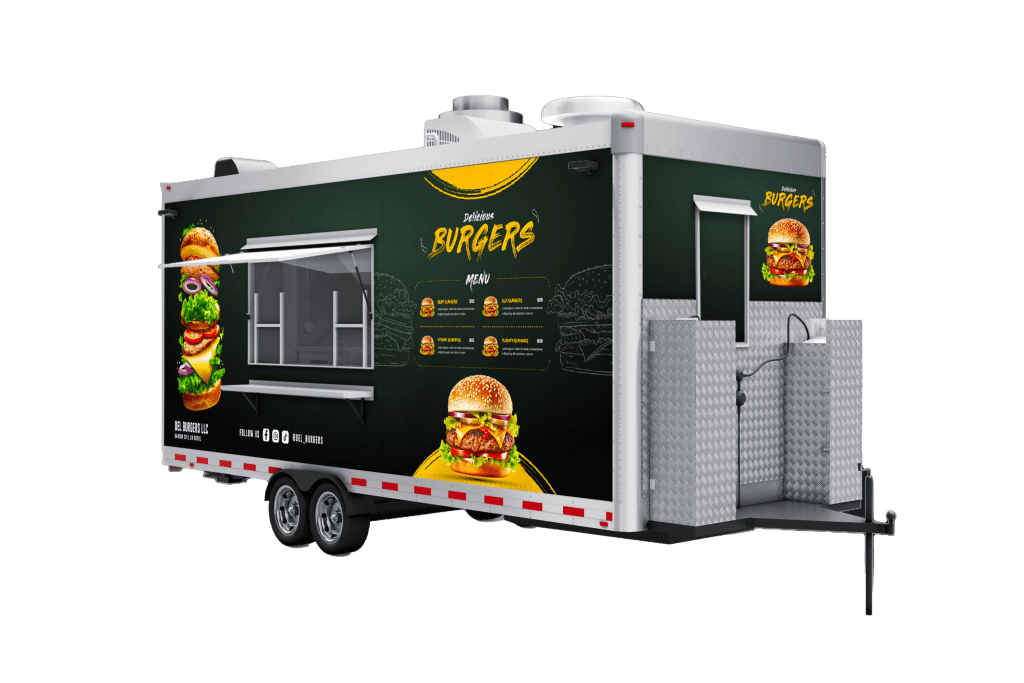




The 3D builder is free to use, without an account, and you may start over as often as you like. Start from hot or cold and a length, then fit kitchen equipment and extras such as an awning. The builder keeps each saved design for 90 days, open to edits and sharing.
Plan the exterior around one Albuquerque rule. The business name and address must appear permanently on both sides of the trailer. Each letter stands at least 3 inches tall, so reserve that space when you plan the wrap.
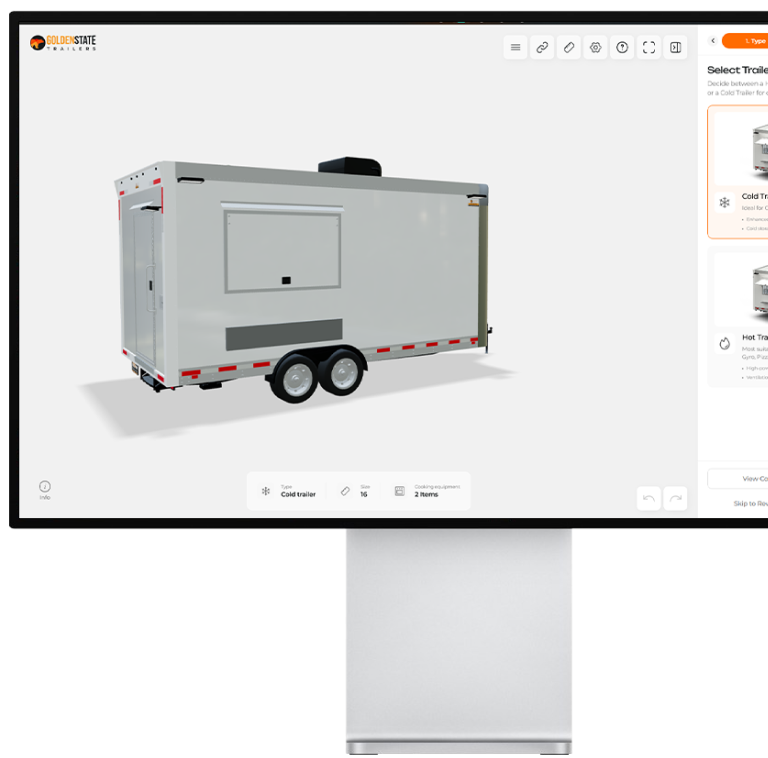
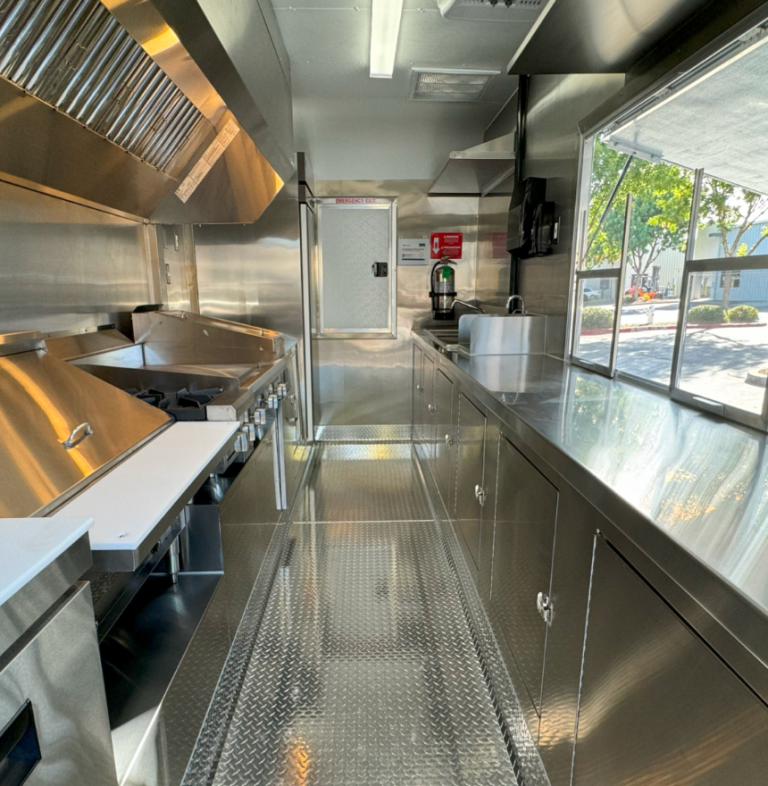
Golden State Trailers delivers each food trailer for sale in Albuquerque as a commercial kitchen built for daily service. Frame welding, plumbing, electrical and finish work all stay in-house at our Olivehurst shop.
The city’s mobile food guide says your menu determines the equipment you need. That equipment then drives the layout, sinks, tanks, power load and, on a hot build, propane.
Grills, fryers and griddles call for a hot trailer, as on our taco trailers. Coffee and other non-cooking menus fit a cold build such as our coffee trailers. See our food trailers for sale, browse custom food trailers and compare lengths from 16 to 30 feet.
At the Rail Yards Market, mobile food units set up alongside vendors of freshly prepared meals. Hours run from 10 a.m. to 2 p.m. on market Sundays.
Each October, the Albuquerque International Balloon Fiesta runs nine days at Balloon Fiesta Park. Its concessions are chosen from applications, not first come, and the application window runs from March 1 to April 15.
The Fiesta’s concession handbook bars generators on Concession Row and arranges propane through its selected supplier. Trailers there need spill-retaining construction, too. Plan power and fuel for concession trailers before the build.
Inside city limits, mobile food falls under the city’s Food Service and Retail Ordinance. Its rules list trailers as mobile food establishments, and the City of Albuquerque Environmental Health Department issues the health permit.
Before you buy or build, the department’s Plan Review Office asks to see your menu and an equipment layout drawing. We prepare the drawings and plan sets for that review and support you while it runs.
A trailer must be fully enclosed unless it sells only hot dogs and food in its original packaging. Ours are enclosed kitchens with 304 stainless steel interior walls.
A permit covers one unit, is not transferable and renews every year with the annual fee. Confirm current trailer rules in the department’s mobile food guide before you order.
These rules from the guide shape the layout we draw for your review:
Every mobile food unit in Albuquerque works from a commissary, a permitted food business that acts as its base. It stores food and supplies, takes garbage, grease and wastewater, and is where you fill the fresh water tanks.
The trailer reports there on each day it operates, and you and the commissary keep visit logs for the inspector. Choosing it is the first permitting step, since its address goes on your business registration and health permit.
A current commissary agreement listing its services is due before the pre-opening inspection. Before signing, check that the site has turning room for trailer and tow vehicle. Its drain should also reach the gray water valve.
The Albuquerque Fire Rescue Fire Marshal’s Office inspects every mobile food unit except push carts before its health inspection. Its fire permit is one of the documents you need to book the pre-opening inspection.
Pan frying, deep frying and griddle cooking produce grease-laden vapors, so those appliances need a Type 1 hood. No part of an appliance may extend past the hood’s outer lip.
The office’s Plans Check Division inspects each new trailer that carries a new hood suppression system. The Fire Marshal’s mobile vendor requirements call for a system that meets NFPA 17 and is serviced every 6 months.
The fire rules keep propane containers outside, with hoses listed for propane service and fittings that meet NFPA 58. Ours ride at the front in enclosed aluminum compartments.
Only hot builds carry the hood, fire suppression and gas lines; cold trailers skip them. On those builds, our construction standards specify an exhaust hood with UL 710 compliance, built to the NFPA 96 standard. Make-up air runs through a 14×14 system, and the propane system is rated 400,000 BTU with an automatic changeover regulator.
July afternoons in Albuquerque average about 91°F, and roughly 64 days a year reach 90°F. Cooking pushes the cabin hotter still, so we pair enhanced insulation with roof-mounted cooling rated at 15,000 BTU.
Lows drop to freezing or below on about 93 nights a year. An idle trailer on such a night needs empty tanks and drained water lines, or a heated place to wait.
The city gets under 9 inches of precipitation a year, and July, in the monsoon season, is the wettest month. Our crowned one-piece aluminum roof is shaped for runoff, and the riveted aluminum sides are made to resist water intrusion.
Fabrication begins when you approve your 3D render. From there, our process follows engineering blueprints for the electrical and plumbing, and for gas on hot builds. You get progress photos while the Olivehurst crew works.
Every trailer has its brakes, structure, plumbing and electrical load tested before shipping. On hot builds, the gas pressure, hood airflow and fire suppression get tested too. At handoff, we demonstrate each system, then hand you the blueprints, the appliance manuals and your warranty card.
To start on your Albuquerque trailer, request a quote. The form has fields for trailer size and timeline, plus a free-text box for menu and equipment notes.
At Golden State Trailers, we build custom commercial food trailers around real operational needs. Every project is planned with equipment, workflow, systems, safety, and long-term reliability in mind. Our goal is to build food trailers that perform reliably in daily commercial use.