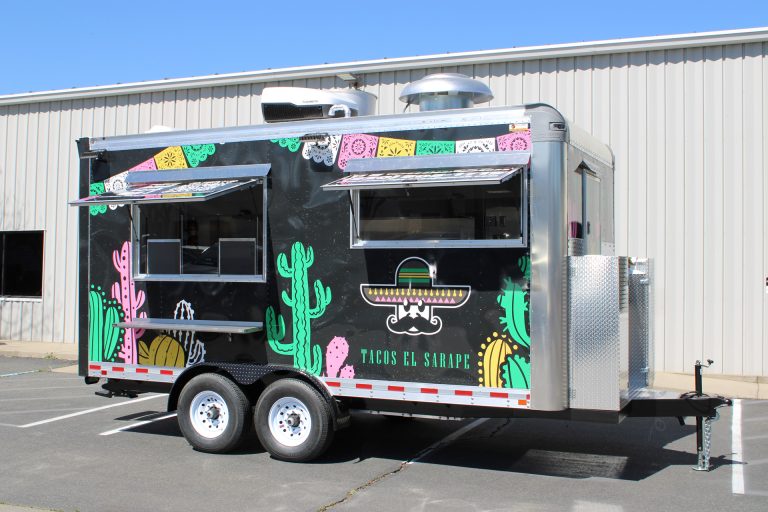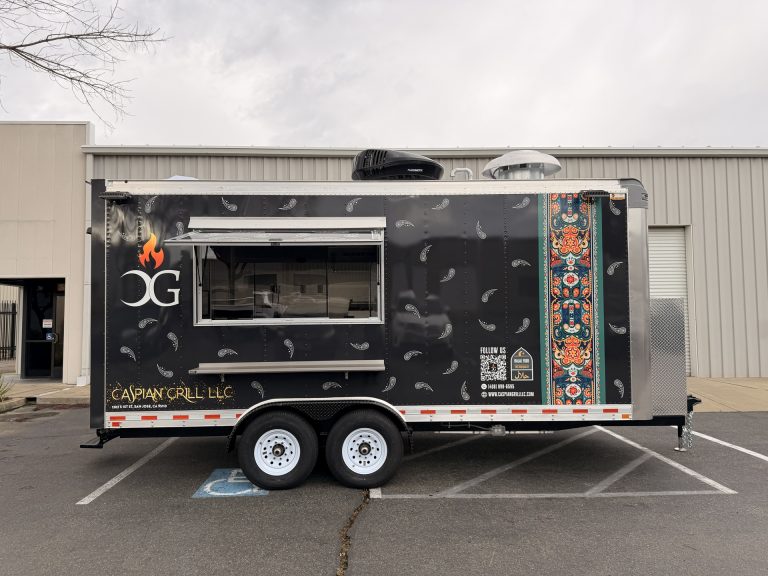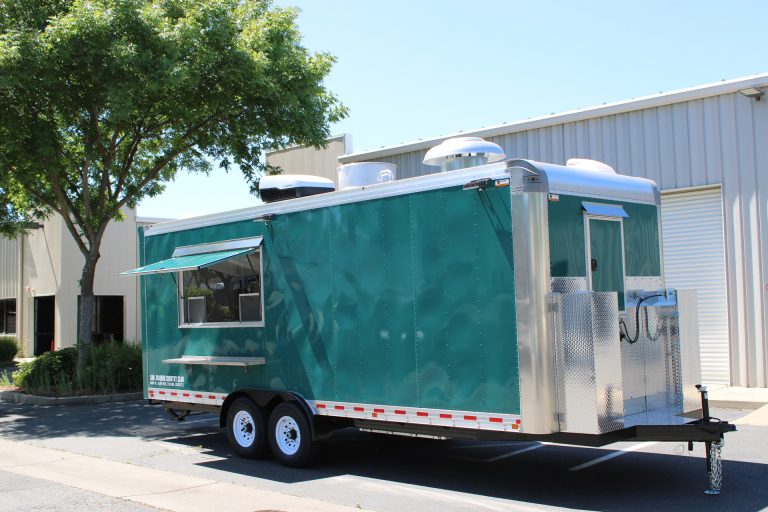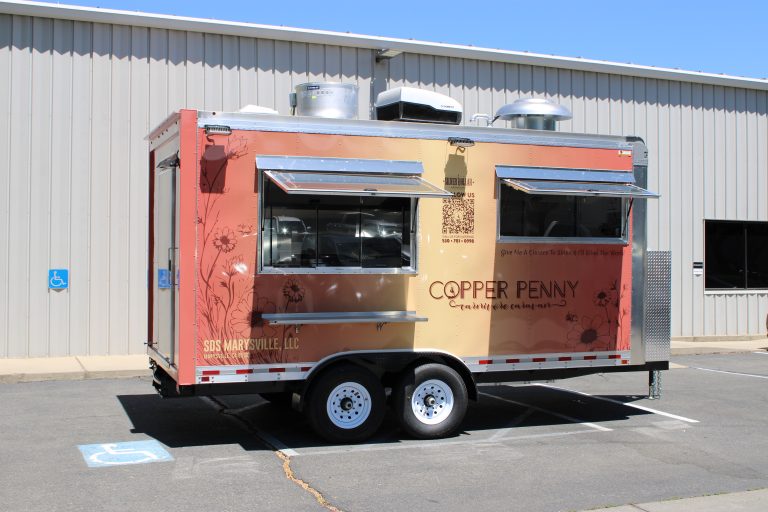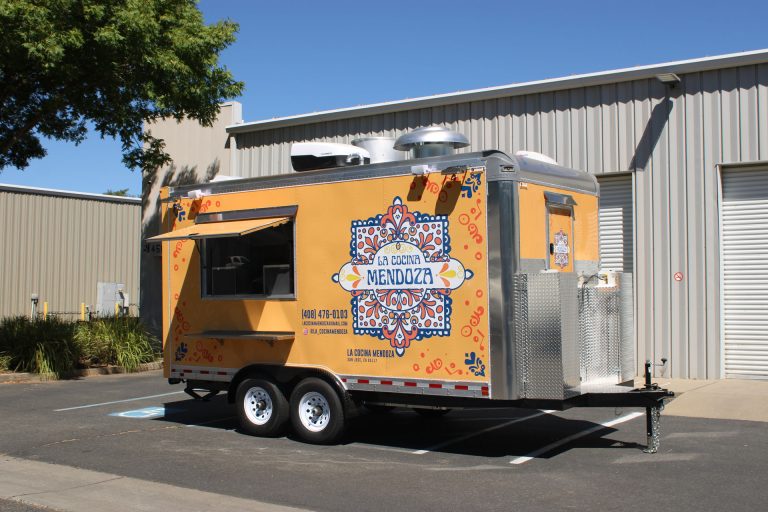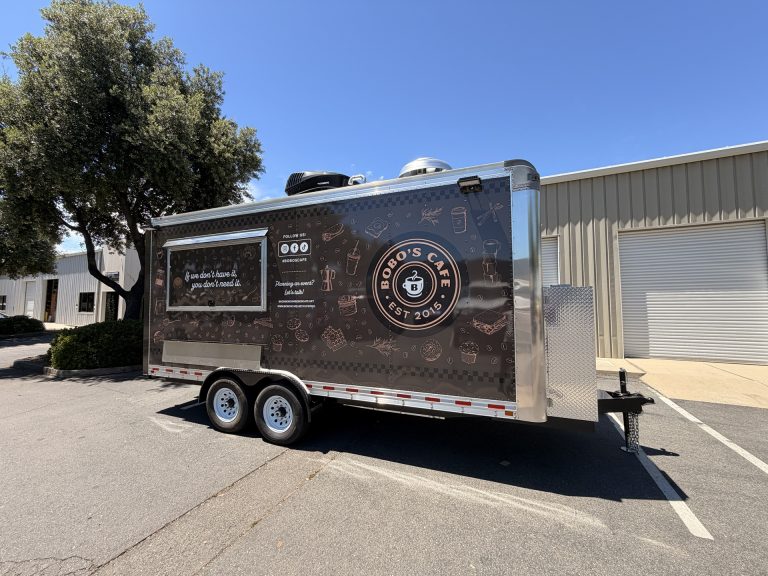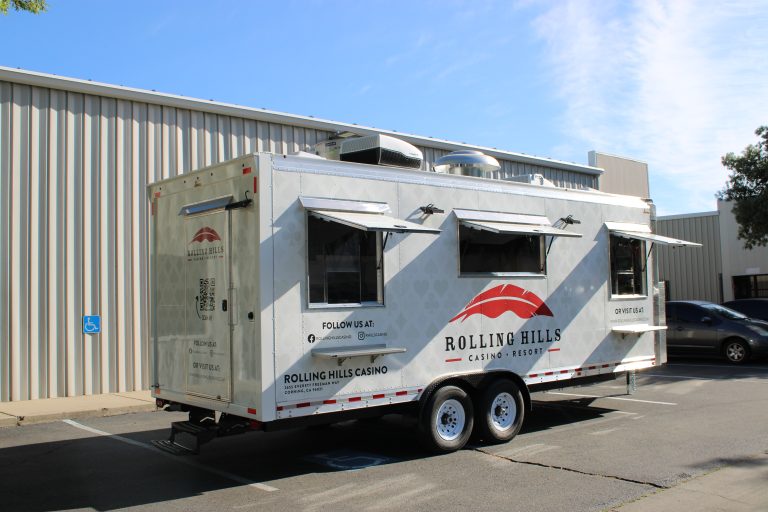


Your trailer is built from frame to finish at our Olivehurst, CA facility. Visit by appointment to see it at any stage. When production wraps up, the trailer can leave with you from Olivehurst or ride a carrier to New Orleans. We deliver to all 50 states.
After arrival, plan a stop at the New Orleans Fire Department (NOFD). It takes permit applications at 317 Decatur Street on weekdays and can usually inspect the unit during the same visit. On a propane build, a dealer licensed by the state also inspects and certifies the gas system.









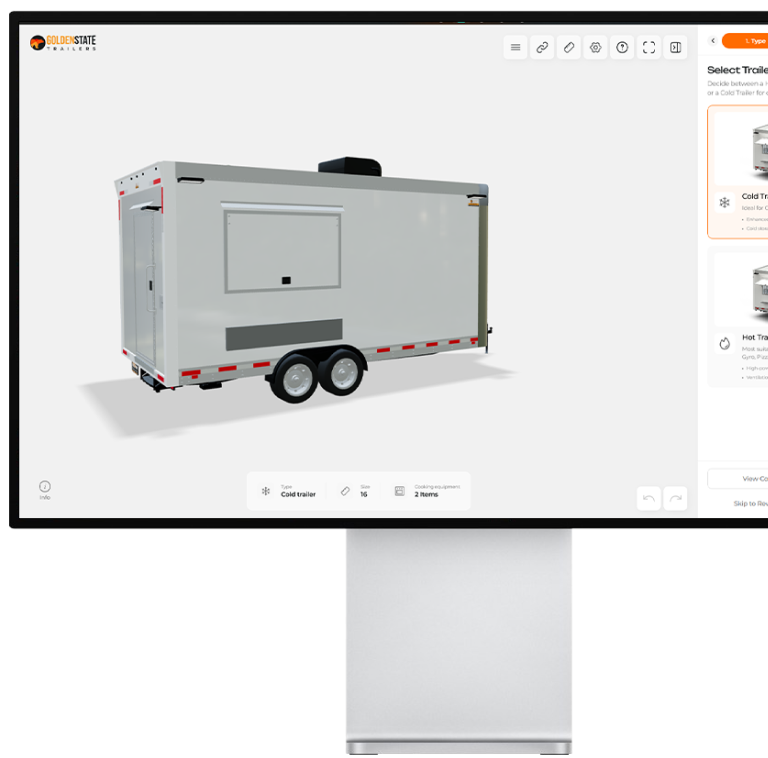
The 3D builder costs nothing, and you never create an account. Pick the kitchen type, hot for cooking or cold for drinks and desserts, then a length. Add refrigeration, prep and cooking equipment, then extras, for example a generator or an awning. Your work stays saved 90 days for edits or sharing.
Plan the hot line around two NOFD layout rules. Appliances under the hood must stay within its outer lip. A fryer needs 16 horizontal inches from a flame appliance, or an 8-inch-high baffle between them.
Golden State Trailers plans food trailers for sale in New Orleans one menu at a time. We fabricate the whole trailer in-house at our shop in Olivehurst, California. It reaches New Orleans fully equipped to the design you approved.
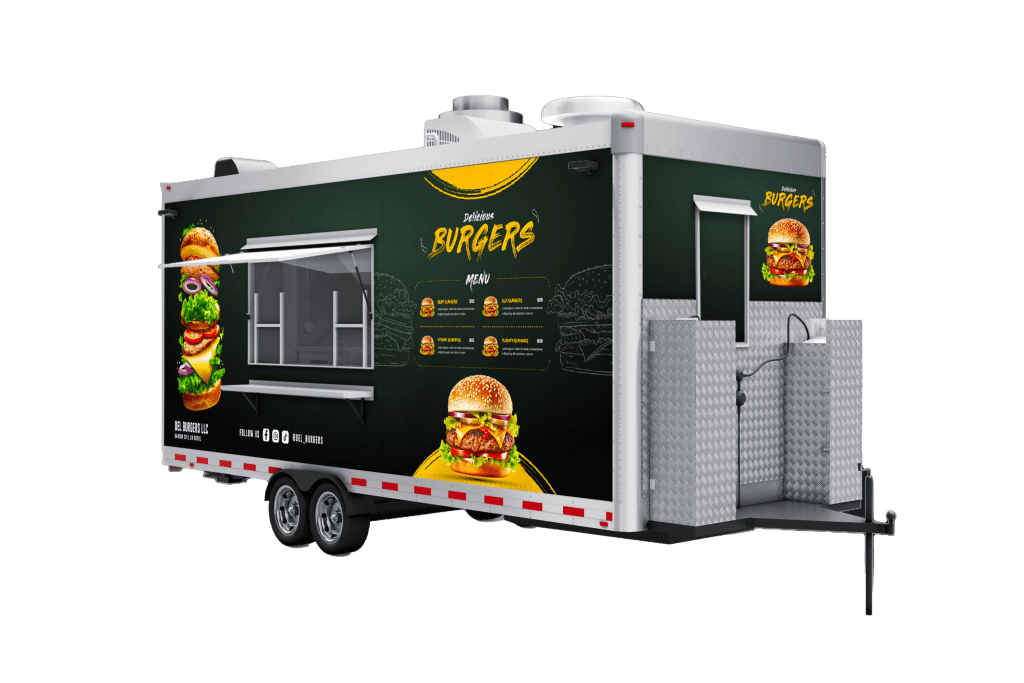
Every dish on the menu adds equipment, and that equipment fixes where the power, water and propane lines run. A Cajun and Creole trailer frying seafood is a hot build, with its cooking line under an exhaust hood. A snowball trailer is a cold build, planned around freezer space and water.
To compare starting configurations, open our food trailers for sale. For a one-off kitchen, see our custom food trailers. Franchise brands, schools and corporate dining programs also come to us for multi-unit projects.
The City’s Mardi Gras vending booklet lets fixed-location food vendors sell from trailers. Each trailer may run up to 30 feet long and 9 feet wide.
Spots on public streets open only at parade time, and a lottery sets the order of selection. Private property along a parade route also works, with zoning approval from Safety and Permits and a state health permit. Mardi Gras permits do not cover the French Quarter.
The size limit includes anything attached to the trailer, so judge a concession trailer for parade routes by overall length. Our 20-foot food trailer measures 24.5 feet overall and 8.5 feet wide.
Street vending outside Mardi Gras runs on a separate City permit, written for two-axle, self-propelled vehicles. Its permit guide limits trailers to vendors who held a mobile vendor permit before July 2013.
Special events carry their own permits, and each vendor needs one from the Bureau of Revenue. On-site cooking there also brings a fire watch from the New Orleans Fire Department (NOFD). Confirm trailer rules for events, private lots and catering with the Bureau of Revenue before you order.
Every mobile food unit in Louisiana needs a state health permit from the Louisiana Department of Health. For New Orleans vendors, the City lists the state health permit office on Poydras Street.
Under state rules, plans and specifications go to the state health officer for approval before construction begins. The City’s checklist asks for the state’s Mobile Unit Plan Review Questionnaire and a detailed, scale-drawn floor plan. Applications are reviewed within 10 days, and an inspection is then scheduled.
We prepare the drawings below. You file the questionnaire and floor plan in your own name, as the applicant.
State code calls for hot and cold water under pressure. The wastewater tank must also hold at least 15 percent more than the fresh tank. Our standard spec pairs a 93-gallon gray tank with fresh tanks of up to 80 gallons, which keeps that margin.
NOFD issues an operational permit for each mobile vendor unit and inspects it for food and fire safety. Its mobile vendor packet sets the equipment rules below.
A dealer licensed by the Louisiana Department of Public Safety inspects and certifies the propane system itself. On a hot build, we install the hood, suppression and gas piping ourselves; a cold build leaves all three out.
Our hot builds carry a UL 710 compliant hood made to NFPA 96, plus 14×14 make-up air. Suppression is UL 300 on our 20-foot model, and propane feeds a 400,000 BTU system with automatic changeover. Every appliance gets a dedicated shut-off valve, as our build standards list.
New Orleans reaches 90°F on about 85 days in a normal year, with July highs near 91°F. Cooking adds its own heat to the cabin, so every build includes a roof air conditioner rated at 15,000 BTU. Wall insulation is enhanced as well, and our 20-foot model lists it at R13.
Rain totals about 63 inches a year. Our one-piece aluminum roof is crowned so that water runs off, and the riveted aluminum walls resist water intrusion.
Hurricane season runs June 1 to November 30, and the City warns of high winds, flooding and power outages. A towable kitchen can be moved and secured before a storm if a tow vehicle is ready. Plan a secure place to park it, ideally with power.
Fabrication follows your approved render and its blueprints, with progress photos at each stage of our build process. Before shipping, we load-test the wiring and check the plumbing, brakes and structure. A hot build adds three more tests: gas pressure, hood airflow and the suppression system.
Handoff includes a walkthrough: firing up the cooking line, gas and power, water tanks and the suppression system. The file you receive holds blueprints, appliance manuals and your warranty card. Keep that file on board for the state health inspection.
When you want a figure, request a quote and list the length, timeline and equipment you have in mind.
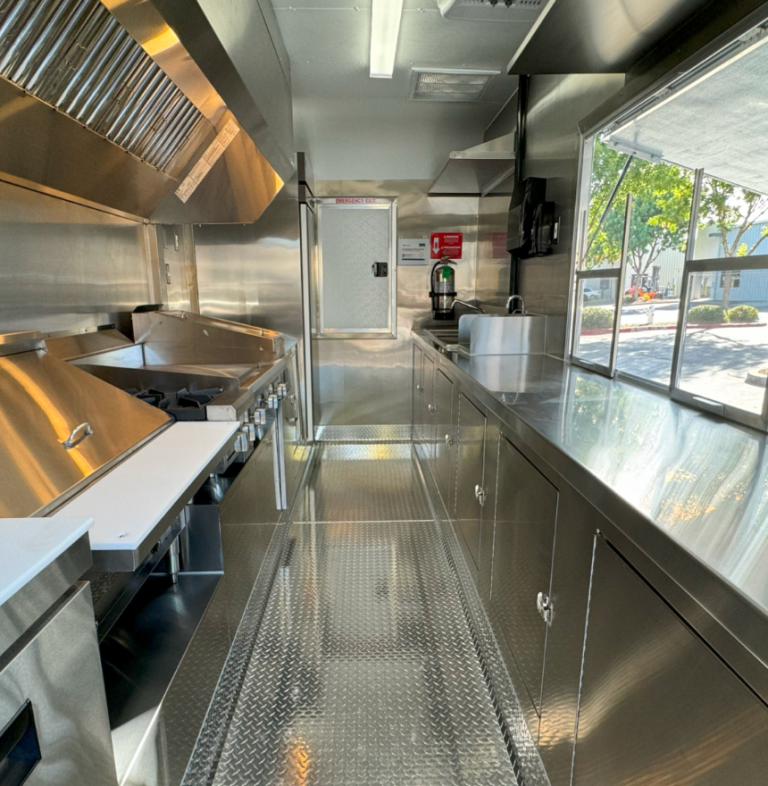
At Golden State Trailers, we build custom commercial food trailers around real operational needs. Every project is planned with equipment, workflow, systems, safety, and long-term reliability in mind. Our goal is to build food trailers that perform reliably in daily commercial use.