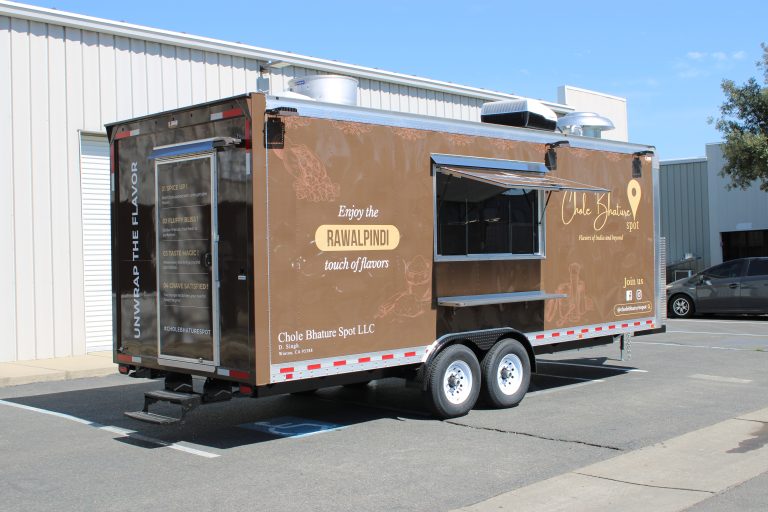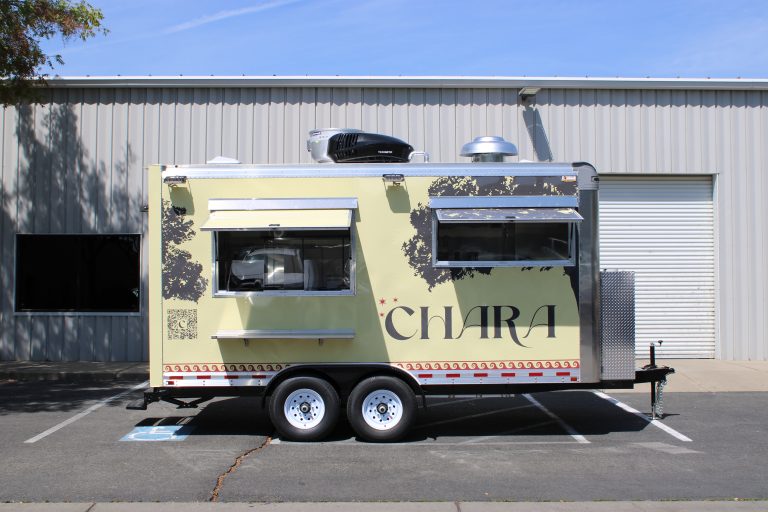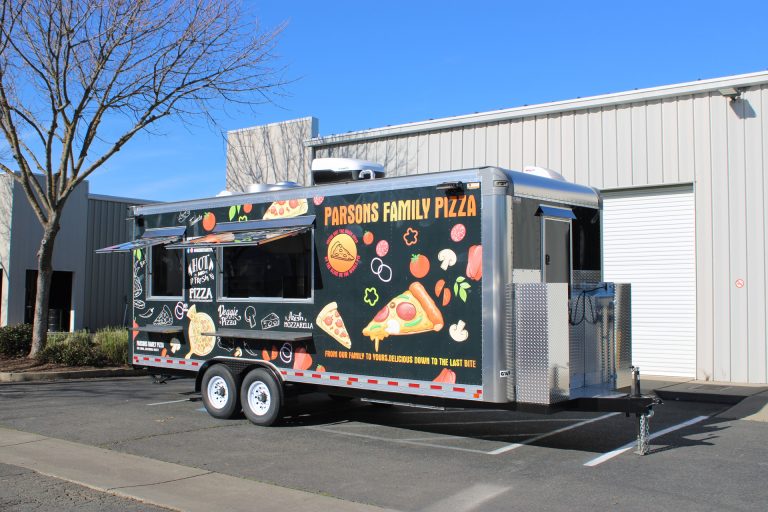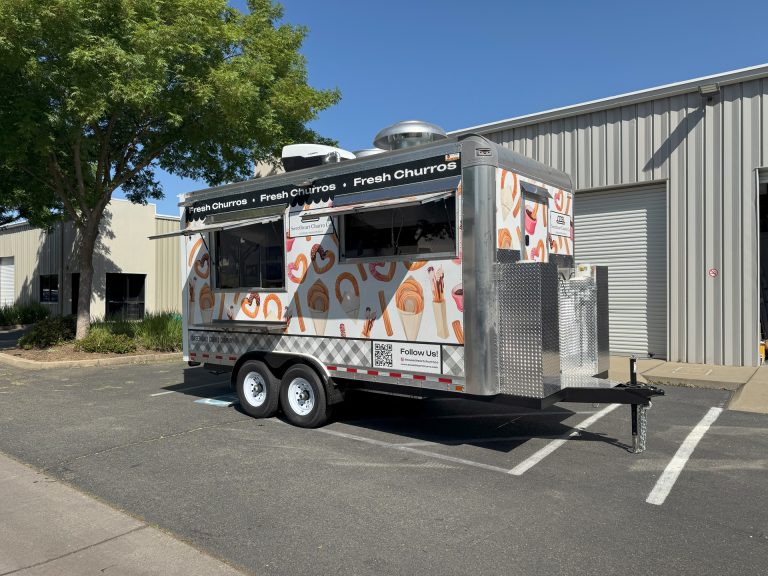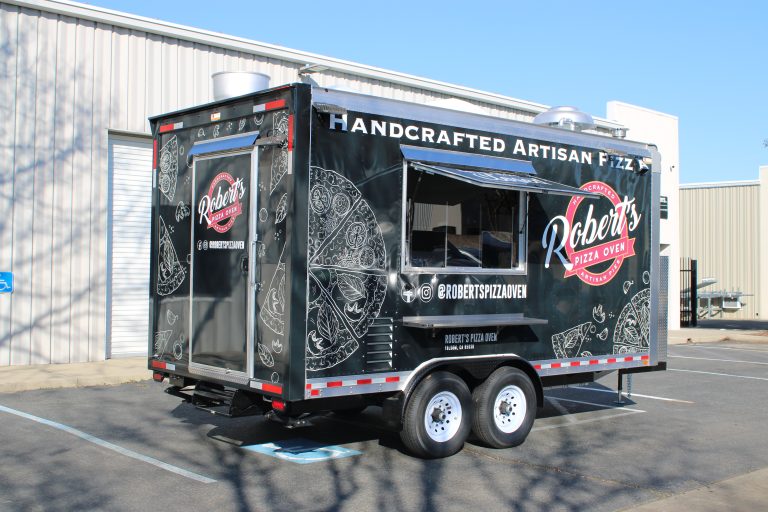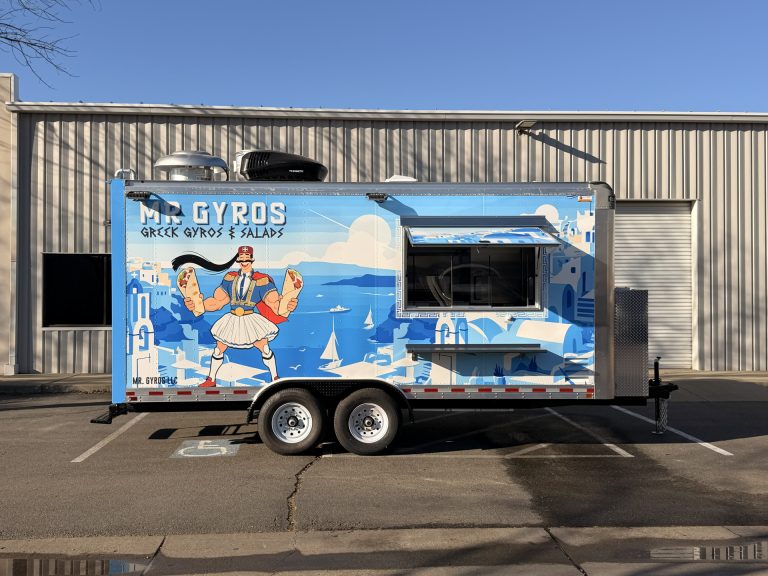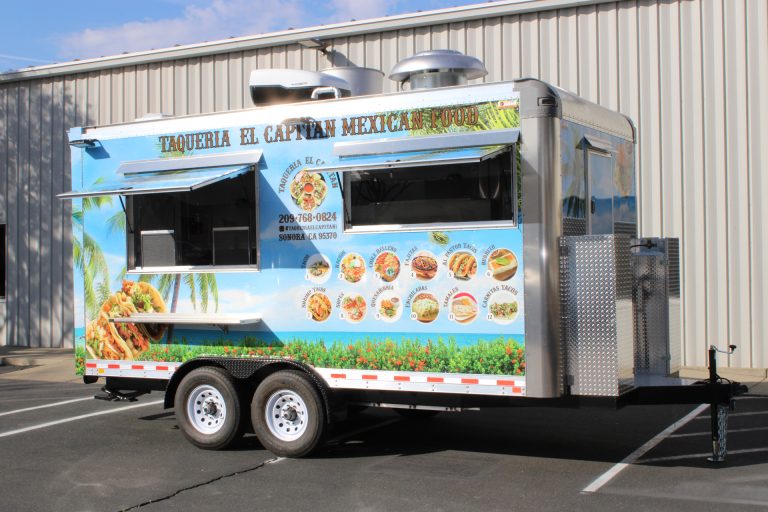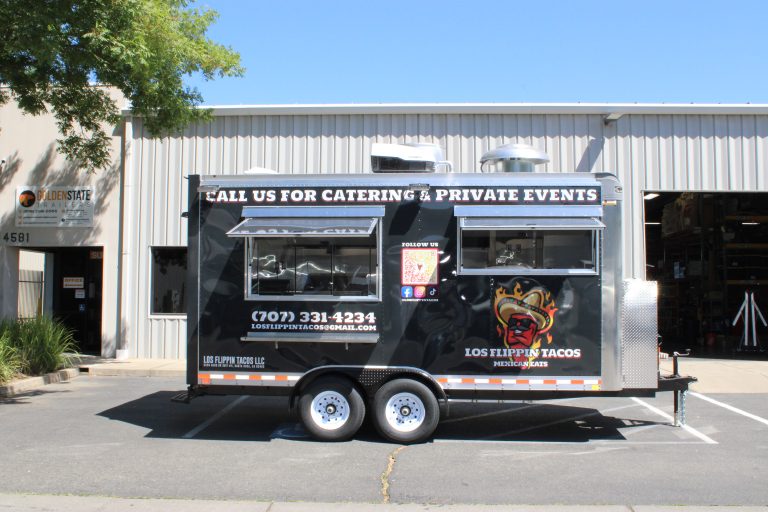


Our own crew builds the frame, the kitchen and every system in Olivehurst, CA. You can come see your trailer mid-build by appointment. Once production wraps up, collect the trailer at the shop or book delivery to Indianapolis. Our delivery covers all 50 states.
In Indianapolis, the next stop is an in-person pre-licensing inspection by the Marion County Public Health Department (MCPHD). The license fee is paid the same day.






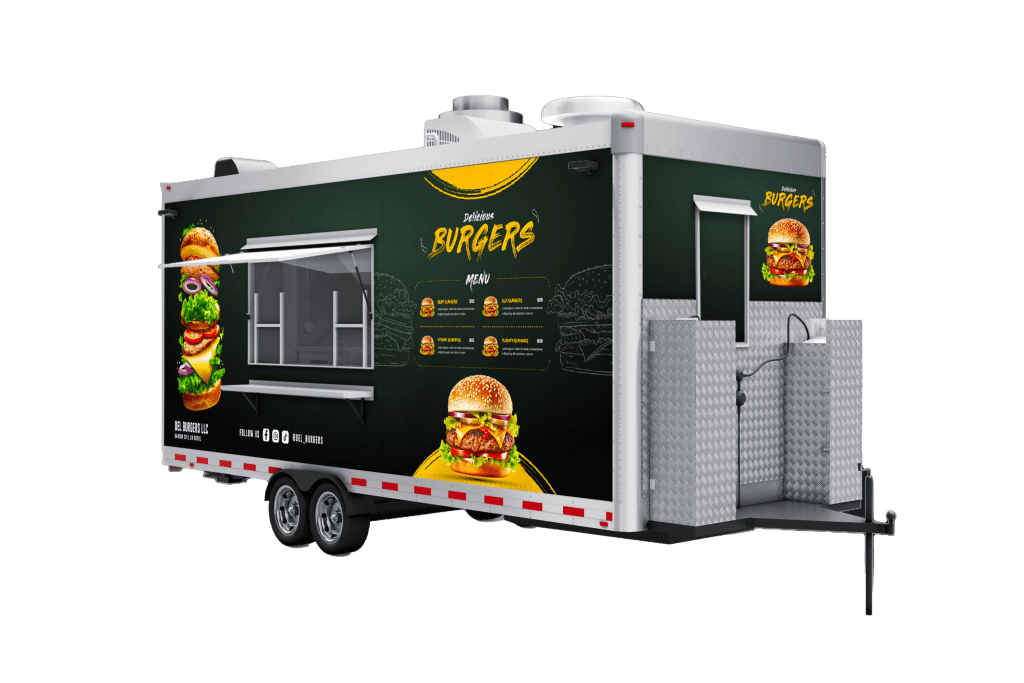



The 3D builder is free, needs no account and puts no cap on attempts. Choose hot or cold and a length from 16 to 30 feet. Then add the equipment and extras such as a generator. You have 90 days to reopen, edit or share a saved design.
Design around Marion County's power rule. Power must come from a generator or a plug-in at the site. The outlet connection must also be reachable with doors and windows closed. Use the comments box to say where that inlet goes.
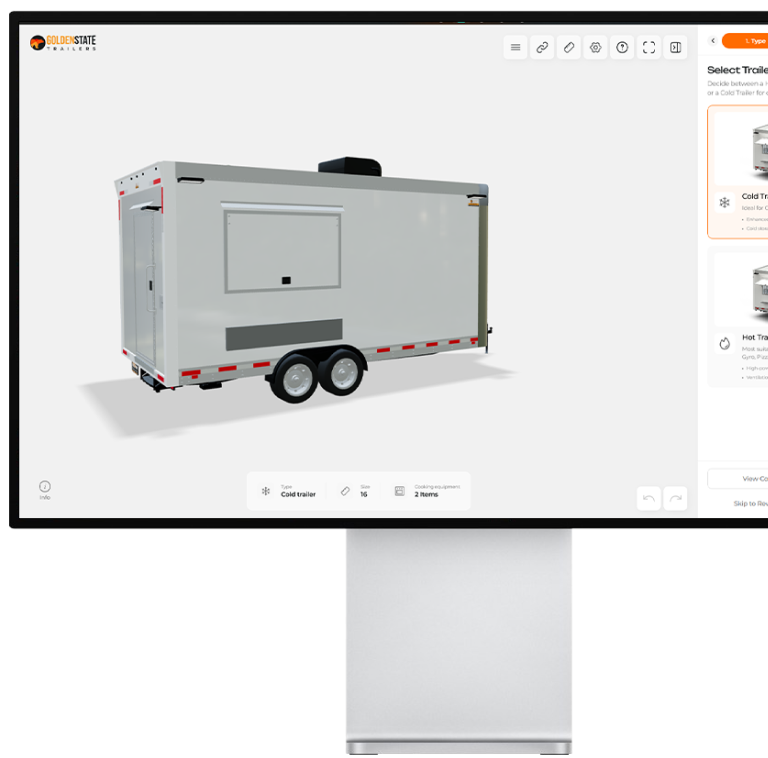
Golden State Trailers engineers and fabricates each food trailer for sale in Indianapolis under one roof in Olivehurst, California. We lay out every kitchen around its menu, then ship the finished trailer east to your site.
The Indiana State Fairgrounds hand food sales to exclusive licensed caterers, and outside concessionaires apply to sell during the Fair. The application asks for photos of each trailer, and we design and install wraps in-house. See our state fair food trailers before you apply.
On the northwest side, the Pike Farmers Market counts mobile food vendors among its sellers on summer Saturday mornings. Compare our farmers market trailers if that is where you plan to sell.
Our food trailers for sale show starting configurations, and our custom food trailers begin from your menu instead. Buyers elsewhere in the state can see food trailers for sale in Indiana.
MCPHD, the county health department, licenses mobile food units across Marion County, Indianapolis included. Its application lists the food trailer as a unit type of its own.
Before applying, get a Retail Merchant Certificate from the State of Indiana and any City of Indianapolis permits. For city zoning and vendor lottery questions, MCPHD points to the Department of Business and Neighborhood Services.
Send the packet at least 30 days before opening day, because MCPHD sets no fixed review time. An approved application is not yet approval to operate, since an in-person pre-licensing inspection comes first.
Licenses renew every year, and MCPHD may ask for proof of a Certified Food Protection Manager. Check current requirements on the county’s mobile licensing page before you order.
MCPHD reviews your plans before the inspection is scheduled. The packet calls for a scale floor plan, interior equipment photos, the menu and an exterior photo. A plumbing diagram must show tank sizes and positions.
Each set of our engineering blueprints carries electrical and plumbing diagrams, with gas drawn in on hot builds. We prepare the plan sets for this review and support you while MCPHD works through it.
The county’s requirements packet lists equipment that shapes the build. Bring these points to the 3D design review:
MCPHD requires a daily commissary visit from every unit it licenses. There the trailer is cleaned, takes on fresh water and empties its wastewater.
The county’s commissary and menu guide sorts menus into three types. Extensive prep, from scratch cooking to marinating and cook-and-cool, belongs at the commissary. On the trailer, the work is cooking and serving.
MCPHD then compares your menu with the equipment on the trailer and in the commissary, and may request changes. We size the on-board kitchen to the cooking and serving done at the window.
Choose a commissary with room to tow the trailer in and reach its water inlet and waste outlet. The application also asks for a storage address, and an Indianapolis ordinance keeps stored commercial vehicles out of residential areas.
MCPHD requires commercial mechanical exhaust over ranges, griddles, deep fat fryers and similar equipment. A grill or fryer menu points to a hot trailer, which carries the hood, fire suppression and gas lines. Non-cooking menus such as coffee or smoothies go in a cold trailer without them.
Our build standards specify the exhaust hood on hot builds: UL 710 compliant, to the NFPA 96 standard. Airflow is calculated for the equipment underneath, and a 14×14 make-up air system brings in replacement air.
Fire suppression is a UL 300 system, with its agent tank and gas shut-off in a stainless cabinet. The propane system carries a 400,000 BTU rating. An automatic changeover regulator swaps cylinders, and every appliance has its own shut-off.
July highs in Indianapolis average about 85°F, before a fryer line adds its own heat inside. Each build includes a 15,000 BTU rooftop air conditioner for that heat. The walls carry enhanced insulation, set over reinforced interior backing.
January lows average about 21°F, and a normal winter brings more than 25 inches of snow. Snowmelt runs off the crowned one-piece aluminum roof, and the riveted aluminum skin is designed to resist water intrusion.
Before a freezing night, drain or protect an idle trailer’s water lines and tanks. Plan where it waits between winter shifts.
After your sign-off on the 3D render, we draw the blueprints that guide fabrication, as our build process lays out. File the MCPHD packet during production.
Before shipping, our shop tests brakes, structure, electrical load, plumbing connections and gas line pressure. Hot builds add hood airflow and fire suppression tests. A trailer with an open item stays in Olivehurst until it clears.
At handoff, you see how to operate the cooking line, turn on gas and power and manage the tanks. Hot builds add a fire suppression walkthrough. We back the trailer with a 1-year bumper-to-bumper warranty, and the appliances inside stay covered by their makers.
Financing comes through our lending partners, or from a bank you pick. For pricing, request a quote, describe your menu in the Project Details box and pick your preferred timeline.
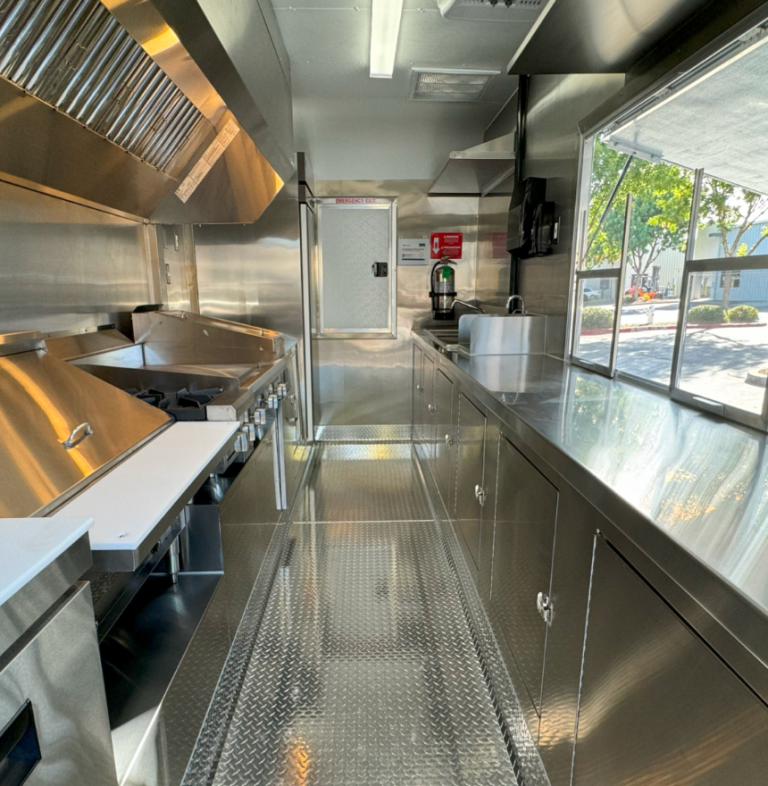
At Golden State Trailers, we build custom commercial food trailers around real operational needs. Every project is planned with equipment, workflow, systems, safety, and long-term reliability in mind. Our goal is to build food trailers that perform reliably in daily commercial use.