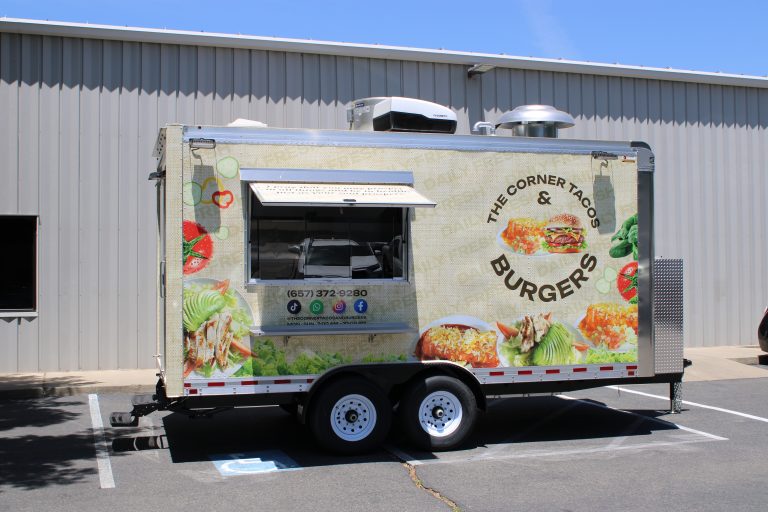
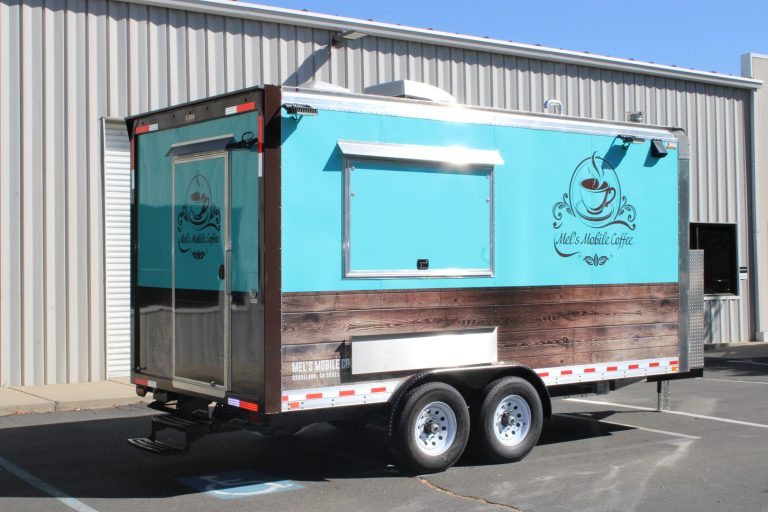
Every Tampa trailer is fabricated by our own crew in Olivehurst, CA. Shop visits are open by appointment during production. When the build wraps up, pick it up there or have it shipped to your site in Tampa. We deliver to all 50 states.
In Tampa, plan the trailer's base before it arrives. Under Florida's rules, mobile food units work from an approved commissary for water, supplies and waste. A private home cannot serve as that base.






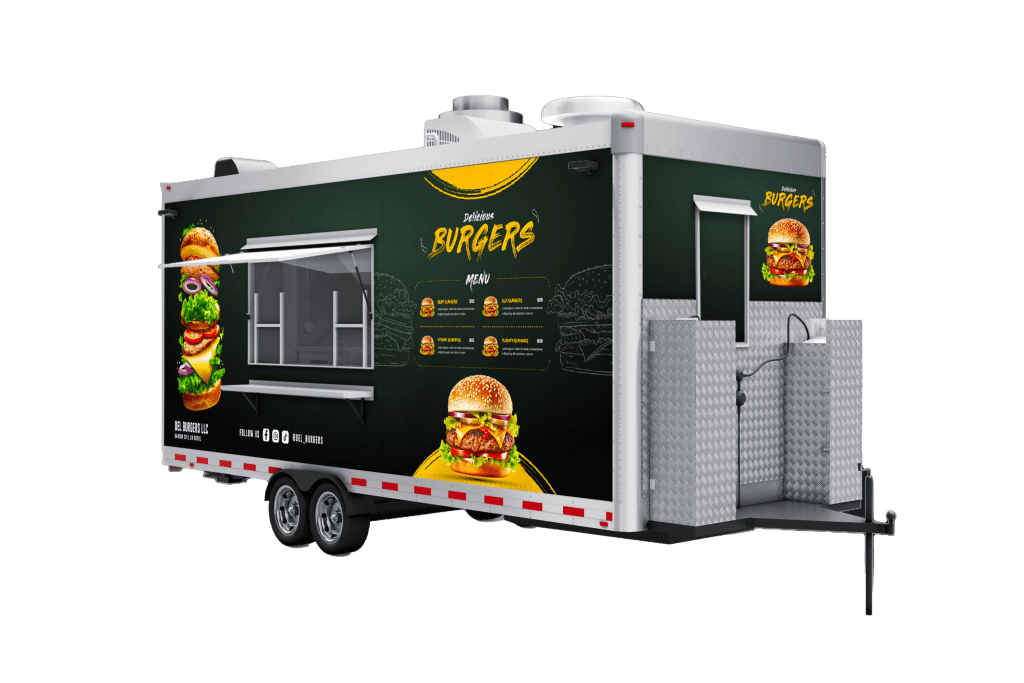


The 3D builder is free, and you do not register to use it. Choose hot or cold and a length, place the kitchen and service-side equipment, and add extras like an awning. The builder saves your design for 90 days so you can revise or share it.
If your menu cooks, choose Hot. For cooking units at City of Tampa events, the Fire Marshal requires a commercial hood and fire suppression. Plan both into the layout before you submit the build.
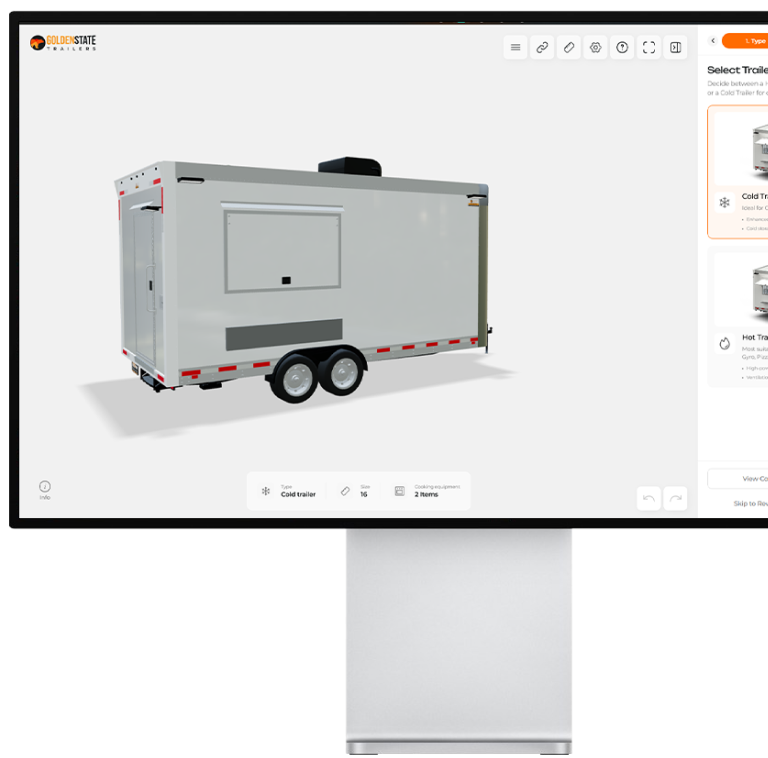
Golden State Trailers designs food trailers for sale in Tampa, builds them in Olivehurst, California, and delivers them to you. All fabrication stays in-house with our own team, and none of it is outsourced.
The menu decides the build. Cooking on a grill, fryer or stove calls for our hot build: hood ventilation, fire suppression and gas lines. Coffee, smoothies and ice cream run in a cold, non-cooking layout such as a coffee trailer.
We build eight sizes, from 16 to 30 feet. Projects range from a single trailer to multi-unit programs for franchises, schools and corporate food service. Starting layouts sit among our food trailers for sale, and fully tailored builds under custom food trailers.
Mobile food vendors gather in Lykes Gaslight Square Park downtown on the first Wednesday of each month. The mayor’s lunch event runs 11 a.m. to 2 p.m. A three-hour rush like that suits a tight assembly line and a window facing the crowd.
Ybor City’s Saturday Market runs every week of the year, with shorter hours from May through September. Prepared foods are part of its vendor mix.
In East Tampa, a food park on East Broadway Avenue opens daily with covered seating. Regular sites like these suit a concession trailer, which sets up once and serves through the shift.
The Florida State Fair comes to the state fairgrounds in Tampa in February, and vendor applications open in August. Outdoor vendors order power by hookup size, from 120-volt 20-amp up to 200-amp single-phase service. Plan the trailer’s full appliance load first, since that load decides the hookup you order.
Florida licenses mobile food units at the state level. Tampa operators apply to the Division of Hotels and Restaurants, within Florida’s Department of Business and Professional Regulation, or DBPR. The Florida statute on mobile food units covers vehicles that are self-propelled or otherwise movable, so a towed trailer counts.
A newly built unit goes through plan review before licensing. The owner submits plans to DBPR showing the menu, layout, work-area finishes and the placement of each piece of equipment.
We prepare those plan sets and support you through the review. They include engineering blueprints of the electrical and plumbing systems, plus gas lines on propane builds.
Florida counts added, removed or relocated equipment as a remodel that needs approved plans first. Settle the full menu during the 3D design review, before the drawings go in.
DBPR then holds an opening inspection before it issues the license. Confirm current forms with the division before you order, so the paperwork moves while we build.
On private property, Tampa’s vendor requirements allow one vendor per zoning lot and none on residential land. The property owner signs a notarized permission, and the trailer must leave required parking and loading spaces clear. Confirm current placement rules with the City before you commit to a lot.
For City-approved events, the Office of Special Events wants vendor documents on hand at all times. The list covers the state license, liability insurance proof and business tax records from any Florida city or county. It also asks for the owner’s Florida food manager certification.
Under state rules, extinguishers and propane equipment follow the Florida Fire Prevention Code, with approval from the local fire authority. In Tampa, the City Fire Marshal’s checklist for event vendors spells out the details.
A unit that cooks at a City of Tampa event needs a commercial hood with a fire suppression system. Cooking or another heat source adds a tagged, serviced 2A-10BC extinguisher, and grease-laden vapors add a Class K extinguisher.
A propane system needs yearly certification, with proof to operate at an event. Units at events also stand at least 10 feet apart. The Fire Marshal’s office may inspect a unit at any time while it operates.
On our hot trailers, the hood and suppression come built in. Our build standards specify a UL 710 compliant hood that conforms to NFPA 96, plus 14×14 make-up air. Propane runs through a 400,000 BTU setup with auto changeover, and each appliance gets its own shut-off valve.
Winters stay mild, with a normal January high near 71°F, so heat and rain set the climate priorities. Normal highs run about 90 to 91°F from June through September, and the cooking line adds more. Each build includes a 15,000 BTU roof air conditioner and walls with enhanced insulation and reinforced interior backing.
About 50 inches of rain fall in a normal Tampa year, mostly from June through September. A crowned, one-piece aluminum roof sheds it, and the riveted aluminum exterior is designed to resist water intrusion. An optional awning keeps the line out of sun and rain.
Production starts once you approve the 3D render, as laid out in our build process. Our team welds the all-steel frame and fits the 304 stainless steel interior walls at the shop.
Before the trailer leaves, we test its brakes and structure, electrical load, plumbing, gas pressure, hood airflow and suppression. At handoff, we walk you through the water tanks, propane, power, cooking equipment and fire suppression. The equipment manuals and your warranty card come with it.
To price your build, request a quote. The form takes a trailer size and a timeline, and its project box holds your menu notes.

At Golden State Trailers, we build custom commercial food trailers around real operational needs. Every project is planned with equipment, workflow, systems, safety, and long-term reliability in mind. Our goal is to build food trailers that perform reliably in daily commercial use.