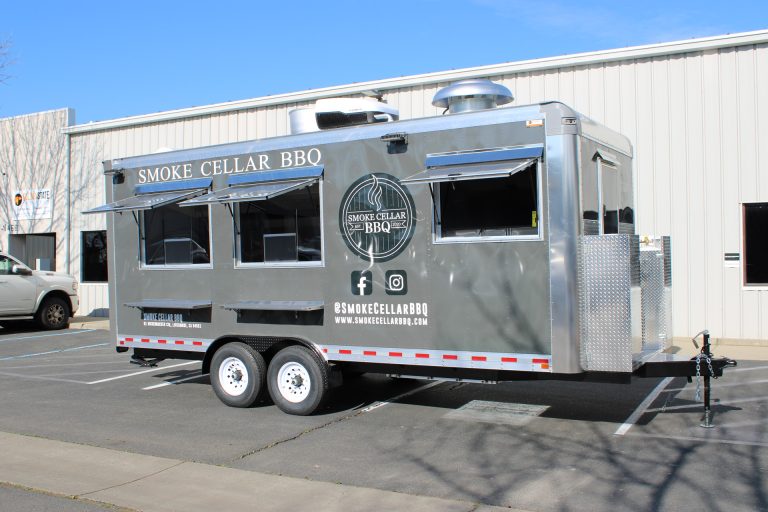
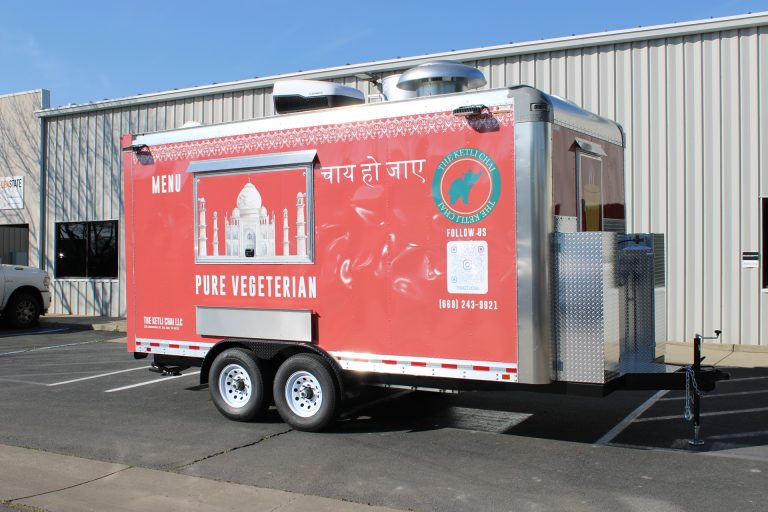
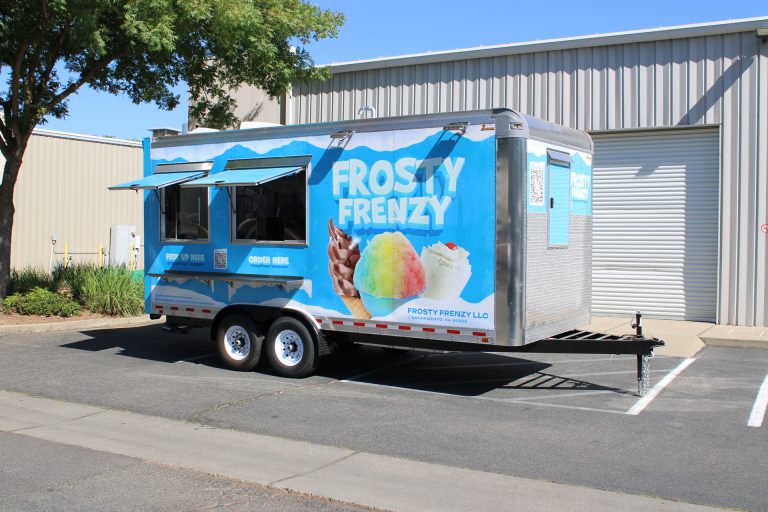
Welding, wiring and plumbing all happen on our own shop floor in Olivehurst, CA. Visits are welcome by appointment while your trailer is in production. Finished trailers ship to all 50 states, Florida included, or you can collect yours at the shop. Every shipment comes with tracking and setup guidance.
Once it reaches Orlando, the trailer goes to Fire Station 1, the Orlando Fire Department's headquarters, for its fire inspection. That visit comes after the city issues your tax receipt.






Our 3D builder costs nothing and asks for no registration. Choose the trailer type and length, then place the kitchen equipment and the service-side items. Options such as a generator follow. You can return to the design, change it or send it to a partner within 90 days.
The state's licensing agency, DBPR, counts a unit as self-sufficient if it stores food, preps and washes dishes on board. That status lifts the state's commissary requirement. If you aim for it, leave room in the layout for storage, prep work and dishwashing water.
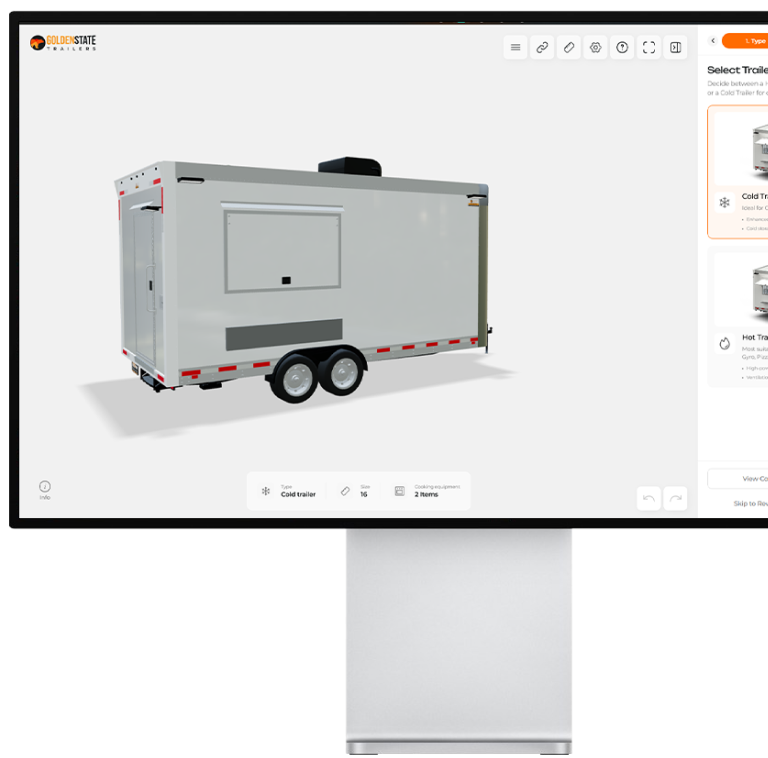
Our custom food trailers for sale in Orlando are fully equipped commercial kitchens. Every one is fabricated at our shop in Olivehurst, California, to the design you approve.
The menu comes first. It sets the equipment list, and the equipment sets the floor plan. Together they decide the power and water on board, plus propane on a hot build.
At a semi-permanent food park spot, the host’s power, water and waste setup shapes the layout. Confirm those hookups with the host before you sign off the design.
Compare layouts among our concession trailers, custom food trailers and food trailers for sale. We build eight lengths, from 16 to 30 feet. Projects run from a single trailer to multi-unit work for franchises, schools and corporate food service.
Florida licenses food trailers and other mobile food units at the state level, not through the city or Orange County. For cooked or prepared meals, the state license is the Mobile Food Dispensing Vehicle license. Florida’s Department of Business and Professional Regulation (DBPR) issues it through its hotels and restaurants division.
DBPR reviews the plans of every newly built unit before it issues the license. Its guide asks for a labeled equipment plan, a sample menu and a side photo of the unit. It also asks for your commissary or your water and sewer site.
We prepare the plan set from our engineering blueprints and support you during the review. You file with DBPR and supply the menu and site details. Settle the menu and equipment before the plans go in, since the plan DBPR reviews lists that equipment.
The guide recommends filing the license and plan review together on one combination application. Confirm current state requirements in the DBPR mobile food vehicle guide before you order.
Inside city limits, every mobile business needs a City of Orlando Business Tax Receipt before it operates. Permitting Services issues it, and the city’s mobile vending guide lists your state license among the documents. If you also need an Orange County receipt, the county Tax Collector asks for the city’s first.
The city also decides where you may set up. Vendors stay on paved, improved surfaces, 5 feet back from public rights-of-way and 50 feet from residential zones. Vending is not permitted in the Semoran and Semoran Gateway Special Plan areas, so plan sites elsewhere.
With the receipt, one vendor may use a single location for up to 2 days. A stay of 3 days or more at one spot needs a separate city approval, called a determination.
Camping World Stadium events add one document. Permitting Services needs written permission from the event organizer or the company managing vendors before it issues the receipt. On event day, you serve inside the designated vending area.
Your menu decides whether the trailer is hot or cold. Cooking with a grill, fryer or stove calls for a hot build, with gas lines, a hood and fire suppression. A coffee trailer or an ice cream trailer can run as a cold build without them.
Our build standards put a UL 710 compliant exhaust hood, conforming to NFPA 96, on every hot trailer. A 14×14 make-up air system brings fresh air back in, and our 20 ft spec lists UL 300 fire suppression. Propane cylinders sit in enclosed aluminum compartments, and an automatic changeover regulator keeps the 400,000 BTU gas system supplied.
DBPR’s rule for these units ties fire extinguishers and propane equipment to the Florida Fire Prevention Code. The code applies as the local fire authority approves it.
Inside Orlando city limits, the local fire authority is the Orlando Fire Department. It inspects mobile food vendors in the city every six months, and each inspection costs $25.
Once your Business Tax Receipt is issued, schedule the fire inspection with the department’s Fire Marshal Office. Confirm trailer rules with that office before you order. The six-month schedule is a city rule, so outside city limits, ask the fire authority that covers your site.
Orlando’s July high averages 92°F, and a hot line pushes the temperature inside the trailer higher. Each build comes with a roof-mounted air conditioner rated at 15,000 BTU. Its walls carry enhanced insulation with a reinforced interior backing.
July also averages more than 7 inches of rain. The roof is one piece of crowned aluminum, so water runs off, and the riveted aluminum skin is built to resist leaks.
The Atlantic hurricane season runs from June 1 to November 30. Our trailers ride on axles with electric brakes and are designed for safe highway towing. Before the season, settle where yours will shelter from a storm and which tow vehicle will move it.
Fabrication begins only after you sign off the 3D render, and our build process page shows every stage. Before release, we pressure-test the gas lines, check each plumbing connection and load-test the electrical system. Fire suppression, hood airflow, brakes and the structure are checked as well, all before the trailer ships.
We deliver to Orlando through our logistics partners, and you can see how food trailer delivery works. At handoff, you get a walkthrough of the gas, power, water tanks and fire suppression. The blueprints, equipment manuals and warranty card come with it.
When your menu and size are clear, request a quote and share them in the form with your timeline.

At Golden State Trailers, we build custom commercial food trailers around real operational needs. Every project is planned with equipment, workflow, systems, safety, and long-term reliability in mind. Our goal is to build food trailers that perform reliably in daily commercial use.