The easiest way to enter the bubble tea market is to launch a boba food trailer. Boba originated in Taiwan in the 1980s and quickly became popular thanks to a simple combination of cold tea, milk, and chewy tapioca balls. In the US, boba is most often purchased by people aged 18-35, and many outlets note that the drink does not require complex preparation and can be sold throughout the day. It is this repeat demand that makes boba a stable product for boba food trailers.Check out our
Boba Food Trailer page and choose the format that suits your idea and location.
Why Boba Works as a Mobile Business
Bubble tea has stable demand. Customers return for new flavors and combinations with toppings, especially boba tapioca pearls, which are a key part of the drink. A boba food trailer requires less investment than a cafe and allows you to quickly enter the market after obtaining a mobile food facility permit.The operational part is also simpler. A single POS system helps control orders, delivery speed, and popular menu items. Sales are easily boosted through social media marketing, as bubble tea is an Instagram-worthy drink.
Understanding the Bubble Tea Market Today
Bubble tea originated in Taiwan and became popular in the US beverage market. Its format and visual presentation stimulate impulse purchases among the target audience. Students generate the highest demand. Therefore, bubble tea works best near campuses and at festivals.The bubble tea menu is based on a limited set of ingredients: boba tapioca pearls,
milk and fruit teas, and flavored syrups.
Market Opportunity for Boba Food Trailers
Where do boba trailers perform best? Boba trailers perform best near colleges, at festivals, fairs, and night markets, as well as in downtown areas with active evening traffic, where sales are highest.A trailer allows you to try selling at different locations and events. We recommend starting with weekend work and gradually moving on to daily service. Talk to different suppliers, analyze
prices and menu structure. This data will help you assess the real potential of the market.
Key Decisions Before You Build
Before launching a boba food trailer, you need to agree on the menu, the number of employees, and the sales volume per hour. Bubble tea with classic milk tea or with an emphasis on fruit drinks requires different equipment and storage. Hourly sales determine the size of the trailer, the number of refrigerators, and workstations. The width of the aisles and the flow of movement depend on the number of people in the team.Agreeing on the menu, number of employees, and hourly sales determines the layout, electricity requirements, and workflow. A POS system is used to process orders and control customer flow. A clear setup with the right staff movement logic reduces the load during peak hours. This approach simplifies the inspection process after obtaining a mobile food facility permit and avoids technical problems after launch. Start building your own food trailer today in
3D Builder.
Essential Equipment for a Boba Food Trailer
Most boba trailers require commercial blenders and tea brewers, separate equipment for making boba tapioca pearls, machines for sealing cups, and refrigerated storage for milk, syrups, and pearls.Using NSF-certified units simplifies inspections and helps you pass health department inspections on the first try.
Permits and Legal Requirements
Most locations require a business license, approval from the health department, a mobile food facility permit, and food safety certification.These requirements vary by state and county. Therefore, we check them before finalizing the trailer design. Our team builds in compliance with these requirements so that you can avoid delays and repeat inspections.
Marketing Your Boba Food Trailer
Boba sells through the eyes. Therefore, actively engage in social media marketing. Shoot short videos with customers, the process of sealing cups, and ready-made drinks. Instagram directly affects the daily sales of the boba trailer.
 Team Building Success at Golden State Trailers: A Redfin Adventure
At Golden State Trailers, we believe in the power of community and adventure, which is why we’re excited to announce our recent feature in Redfin’s latest article! Sacramento, CA, a city rich in history and culture, offers the perfect backdrop for new adventures, team building, and success. Whether it’s exploring the picturesque Old Sacramento Waterfront […]
Team Building Success at Golden State Trailers: A Redfin Adventure
At Golden State Trailers, we believe in the power of community and adventure, which is why we’re excited to announce our recent feature in Redfin’s latest article! Sacramento, CA, a city rich in history and culture, offers the perfect backdrop for new adventures, team building, and success. Whether it’s exploring the picturesque Old Sacramento Waterfront […]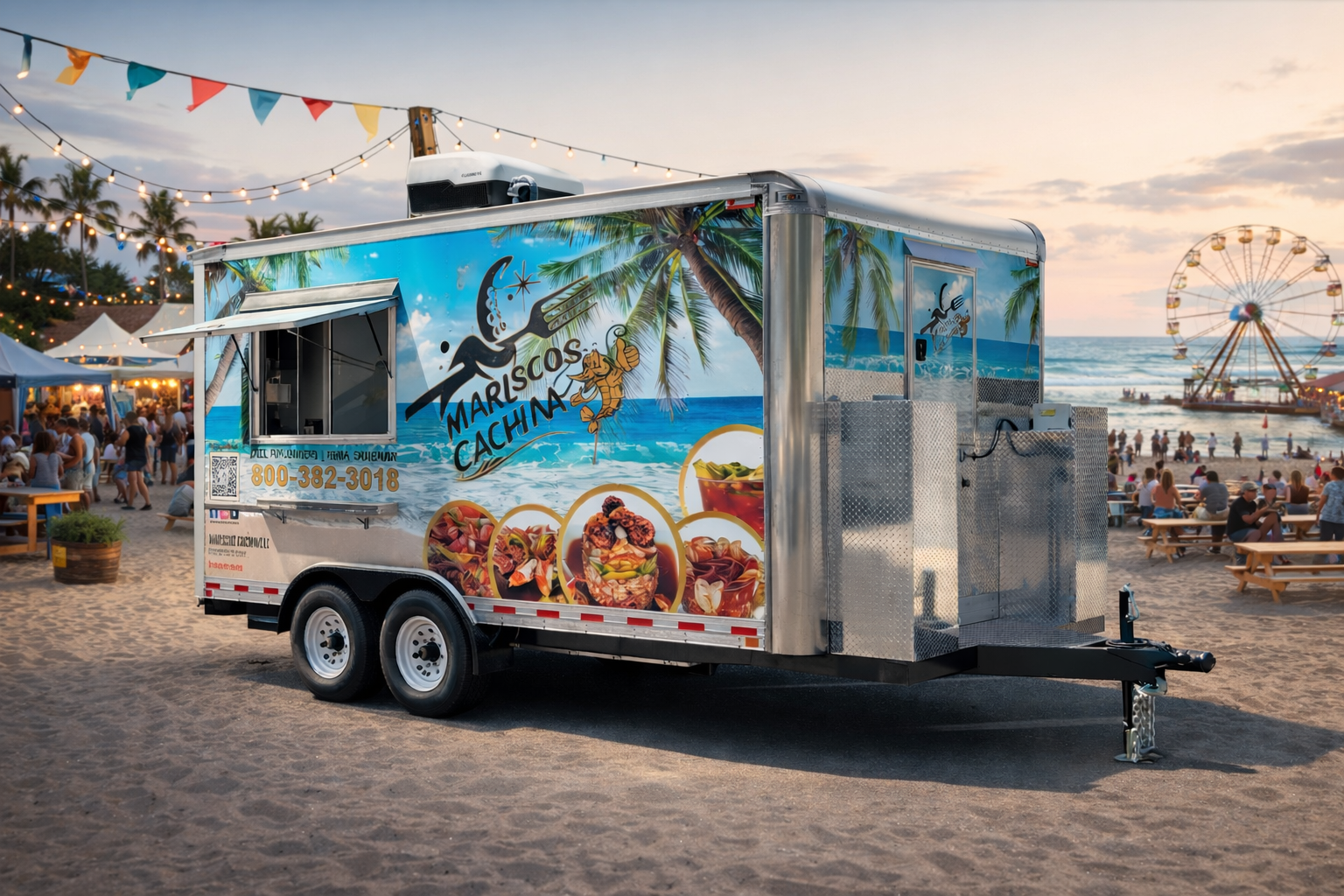 How to develop Seafood & Fish Food Trailer in the US?
Why Choose a Seafood Fish Food Trailer? A seafood food truck is a mobile commercial kitchen. It is designed for daily work with fish and seafood. Such trailers are used in street food, at festivals and in tourist areas. The entire work cycle is carried out inside the trailer, from the storage of chilled and […]
How to develop Seafood & Fish Food Trailer in the US?
Why Choose a Seafood Fish Food Trailer? A seafood food truck is a mobile commercial kitchen. It is designed for daily work with fish and seafood. Such trailers are used in street food, at festivals and in tourist areas. The entire work cycle is carried out inside the trailer, from the storage of chilled and […]