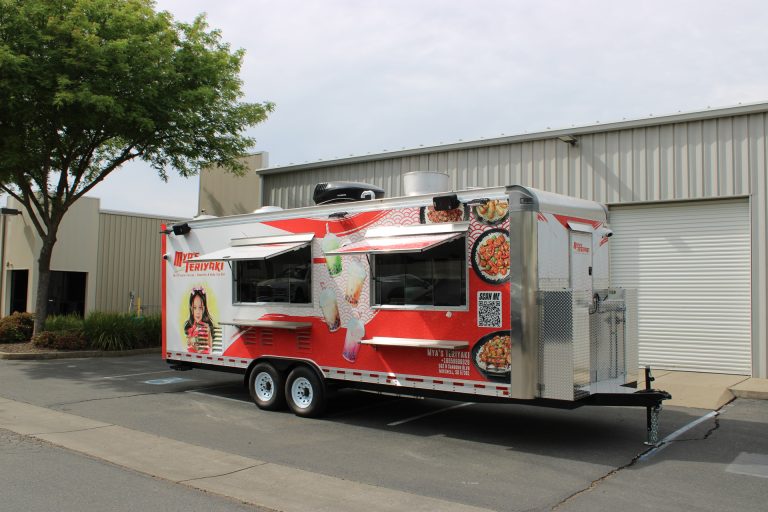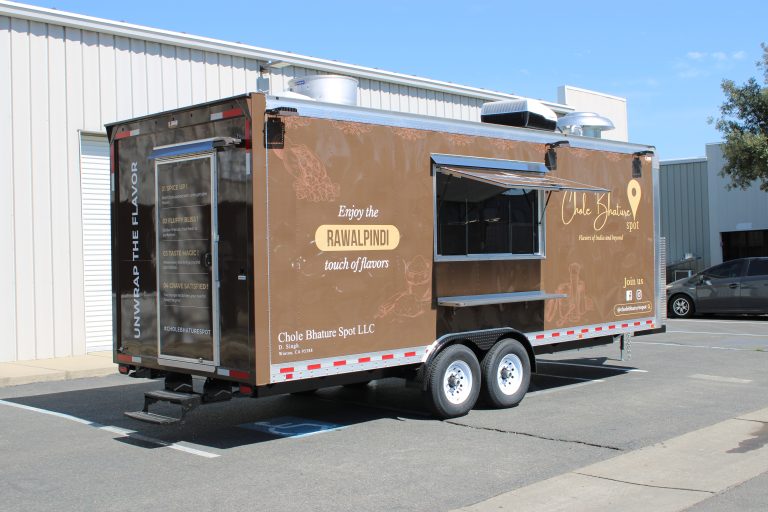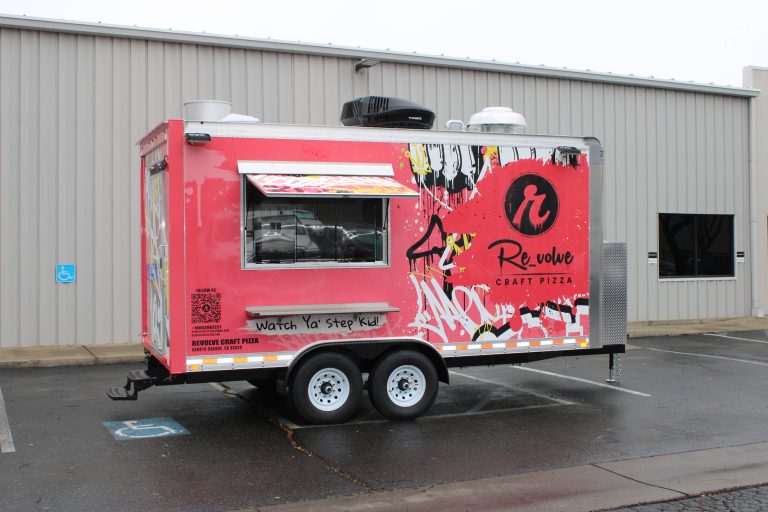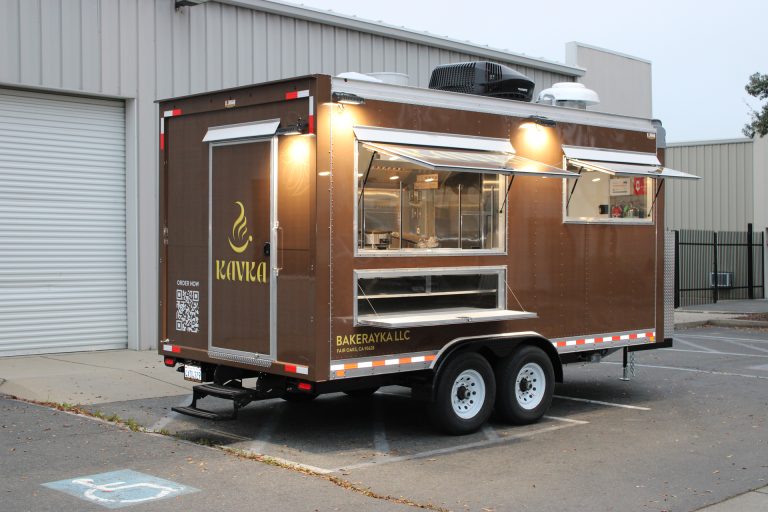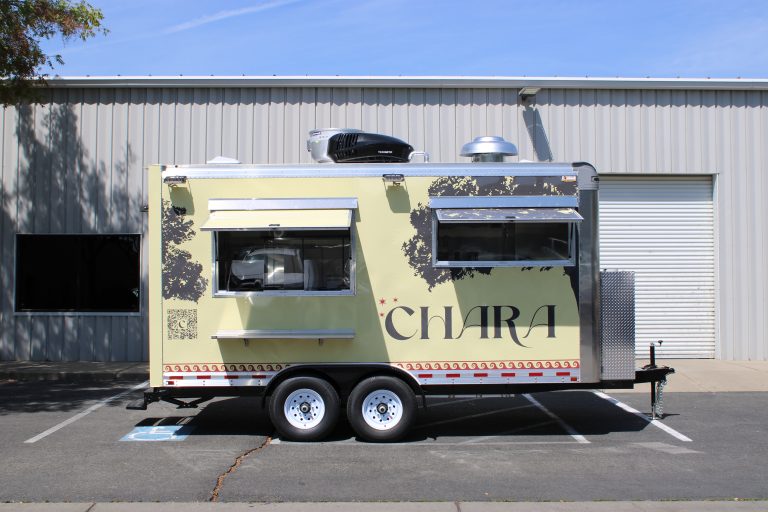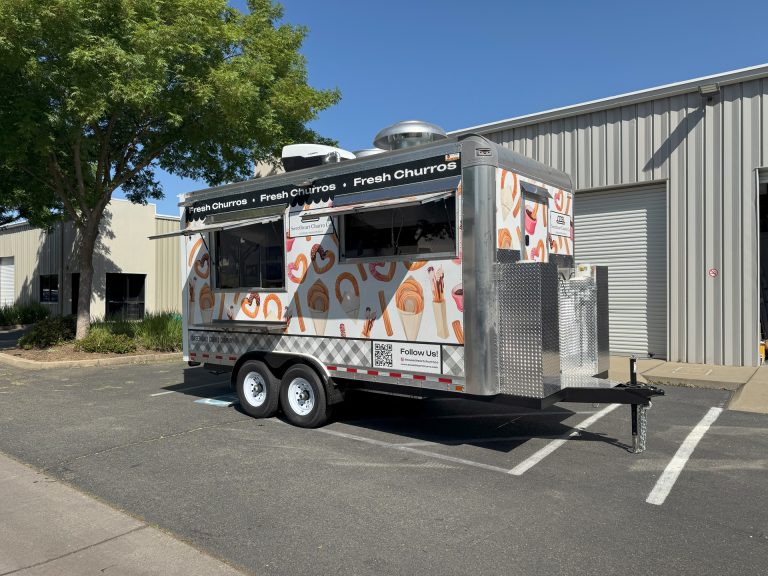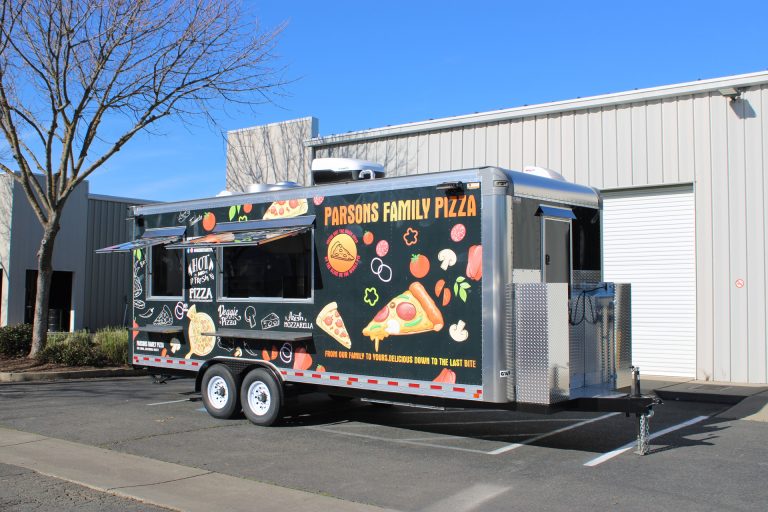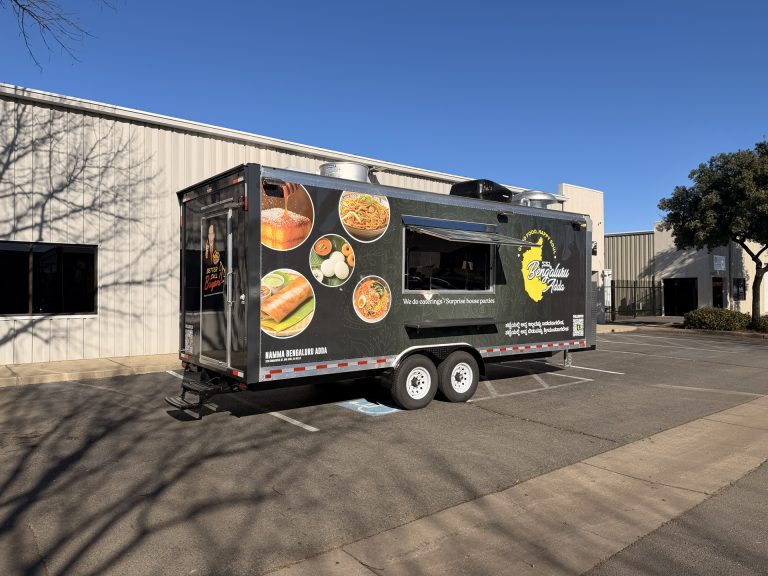


Our own team builds every trailer at the shop in Olivehurst, CA. You may visit by appointment while yours is in production. When production ends, choose a pickup at the shop or shipment to Milwaukee. We deliver to all 50 states.
In Milwaukee, the trailer then works from a licensed service base with water filling, wastewater disposal and cleaning. Wisconsin expects it back at that base at least every 24 hours, unless a special event supplies those services.






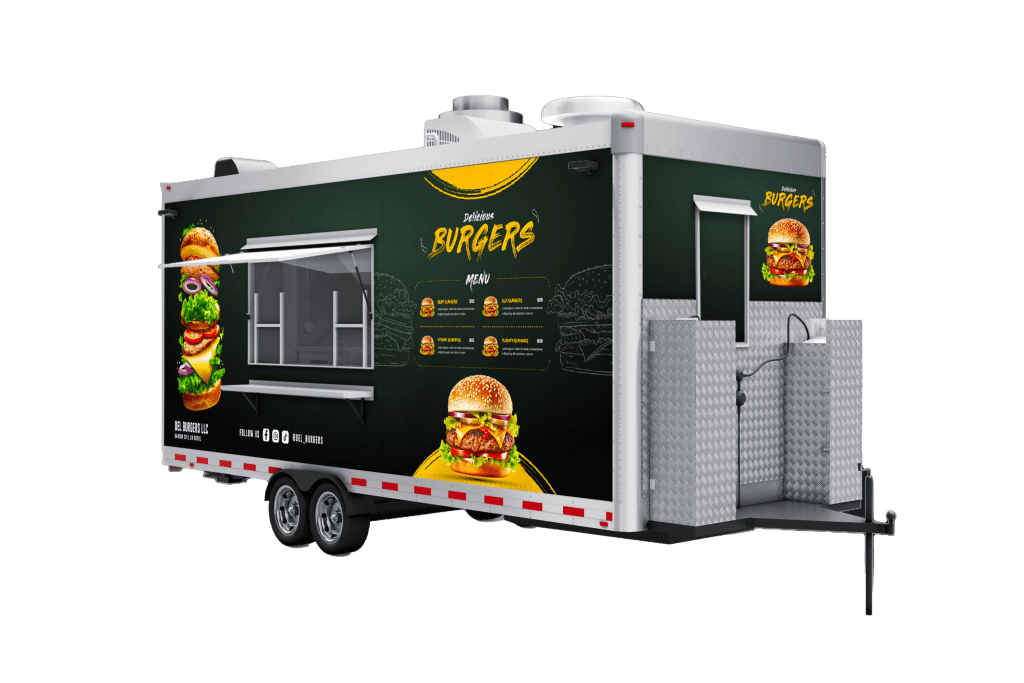



Our 3D builder charges nothing, asks for no login and allows unlimited tries. The first choice is hot or cold, the second a length from 16 to 30 feet. Next, fill the kitchen side with equipment and extras; the mandatory commercial sinks come pre-installed. A saved build stays open to edits and sharing for 90 days.
Plan power for the Milwaukee Night Market, where each vendor gets one standard outlet on a shared 20-amp generator circuit. It is meant for approved items only, so consider a generator from the builder's options.
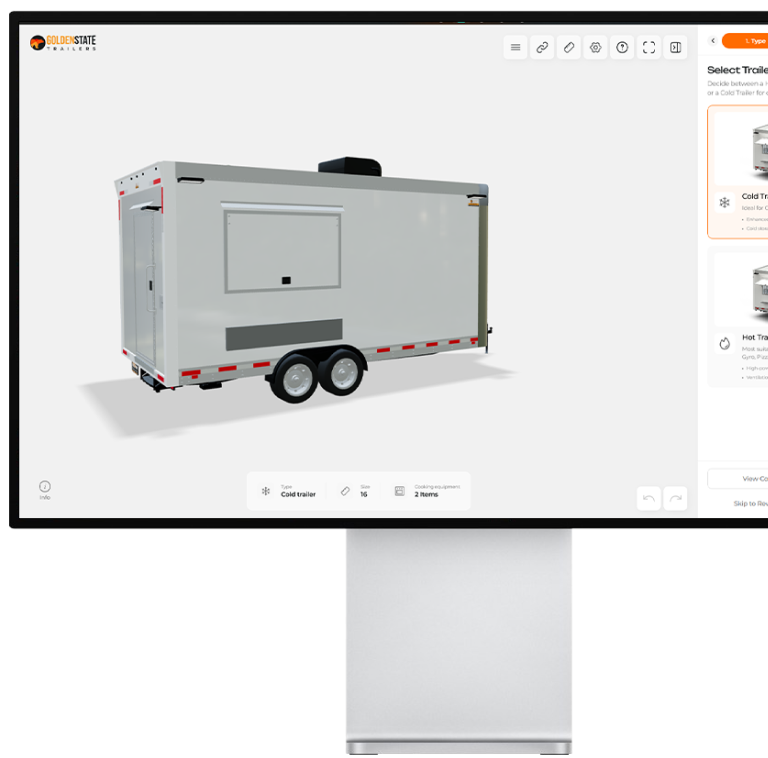
At Golden State Trailers, every one of our food trailers for sale in Milwaukee is fabricated in Olivehurst, California. The menu comes first, since it fixes the equipment, and the equipment fixes the layout and utilities.
A menu built on the grill or the fryer means a hot trailer. Espresso drinks and soft serve fit a cold build, as in our coffee trailer and ice cream trailer types. Multi-unit orders also come in from franchise groups, schools and corporate food service programs.
Our food trailers for sale listing shows starting layouts, with more configurations under custom food trailers. Our food trailer sizes and equipment overview compares lengths from 16 to 30 feet.
On a cooking trailer, the state’s Department of Safety and Professional Services regulates ventilation. Wisconsin’s mobile food establishment requirements refer ventilation questions there.
For a fryer line, we fit a UL 710 compliant hood, and its installation follows NFPA 96. A 14×14 make-up air system and fire suppression sit beside it.
The gas side runs 400,000 BTU of propane on automatic changeover, with a shut-off valve at each appliance. Cold trailers go without the hood, suppression and gas lines.
Inside city limits, the Milwaukee Health Department licenses and inspects food businesses for the state. It acts as the local agent of DATCP, the Wisconsin Department of Agriculture, Trade and Consumer Protection.
Wisconsin counts a trailer as a mobile food establishment, and each one holds two licenses. One covers the unit itself, the other its service base.
A plan review comes before the license. It usually takes drawings, the menu, the equipment list, water and wastewater tank sizes and details of the base. We draw the blueprints and plan set that review relies on, and we support you while it runs.
A unit and base that held no license the previous year are inspected before they open. Confirm current requirements on DATCP’s mobile food page before you order.
Settle these in the 3D render:
Under state rules, a mobile unit returns to its service base at least every 24 hours. The exception is a special event that supplies those services on site.
The base has to support all of the trailer’s work, with water filling, wastewater disposal and cleaning facilities. If you prep food or wash wares there, it must also meet the Wisconsin Food Code.
Plan the base and the trailer together. Size on-board refrigeration and dry storage to carry a full service day between base visits.
A state food license does not exempt a trailer from the City of Milwaukee’s mobile seller’s license. On private property, the Department of Neighborhood Services issues an occupancy permit for food sales on that lot.
Street vending runs through two kinds of zones. Time-limited zones, Downtown included, close to food sales overnight, while density-limited zones cap the units on each block face. You apply for a density-limited space through the city’s licensing division.
A trailer may not park within 50 feet of a restaurant without a drive-through unless the Common Council waives it. Confirm current zones, hours and setbacks with the City Clerk’s License Division before you choose a spot.
In Walker’s Point, Zócalo Food Park runs an incubator for operators starting out. Established vendors can bring the unit they already run, and the park also hosts events.
Downtown, the Westown Association runs the Milwaukee Night Market on West Wisconsin Avenue on summer evenings. Trailers load in before the tents go up, and each vendor parks its own trailer in its booth space. The market’s vendor rules also call for the city’s Temporary Event Food Dealer License from the City Clerk’s License Division.
January highs in Milwaukee average 31°F, and a normal year brings about 49 inches of snow. Frost-free weather usually runs only from late April to late October.
Before a hard freeze, an idle trailer needs its tanks emptied and its water lines drained or protected. The one-piece aluminum roof is crowned so meltwater runs off, and the riveted aluminum skin resists water intrusion.
July highs sit near 82°F, and the grill or fryer then heats the cabin further. Against that heat, our trailers carry 15,000 BTU of roof-mounted air conditioning. Enhanced insulation on reinforced interior backing lines the walls.
Fabrication follows your sign-off on the 3D render and its engineering blueprints, and our build process walks through every stage. Nothing leaves Olivehurst untested. We check the brakes, structure, plumbing and electrical load, then gas line pressure, hood airflow and suppression on hot builds.
Handoff covers each system in turn: cooking equipment, gas, power, both water tanks and the suppression controls. The blueprints, equipment manuals and warranty card travel with the trailer.
The price tracks size, equipment and layout, and a detailed project estimate arrives after your consultation. Our build standards list what each system includes. When the layout is clear, request a quote and choose size, timeline and budget in the form.
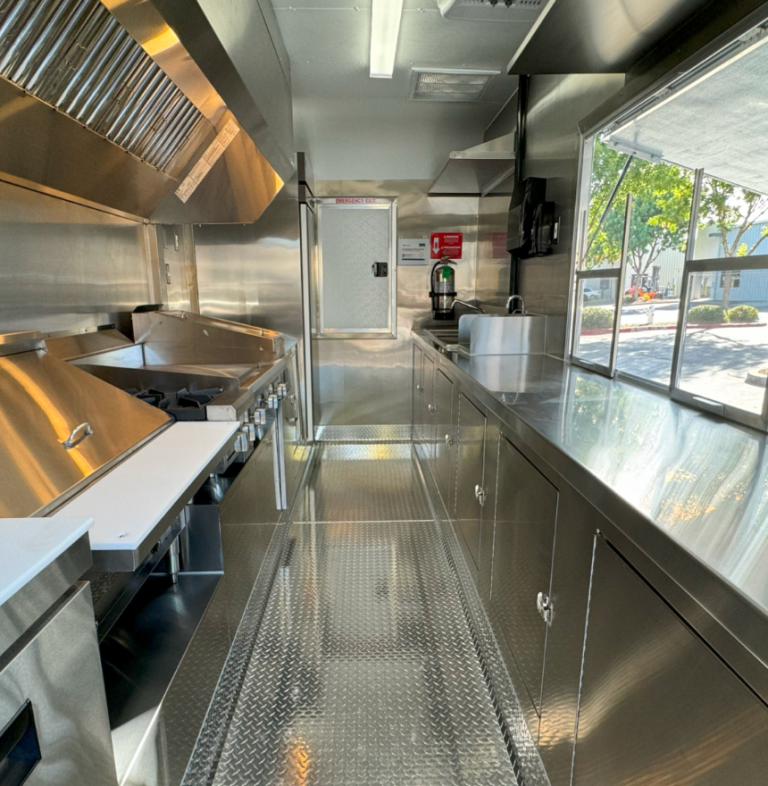
At Golden State Trailers, we build custom commercial food trailers around real operational needs. Every project is planned with equipment, workflow, systems, safety, and long-term reliability in mind. Our goal is to build food trailers that perform reliably in daily commercial use.