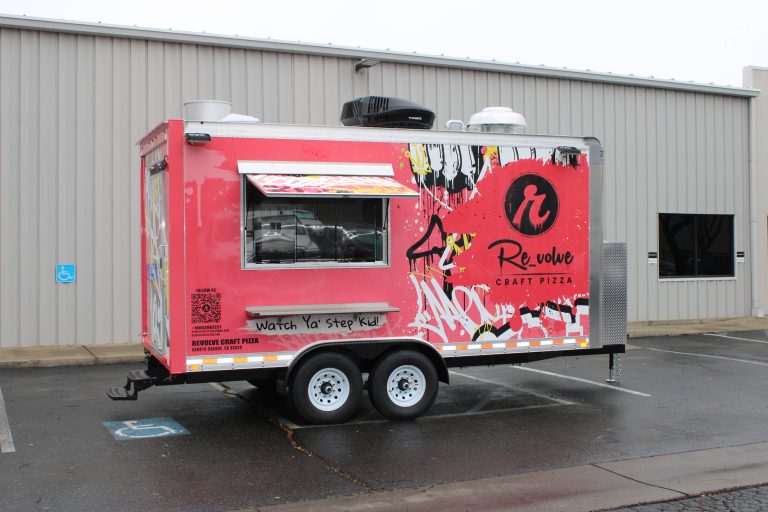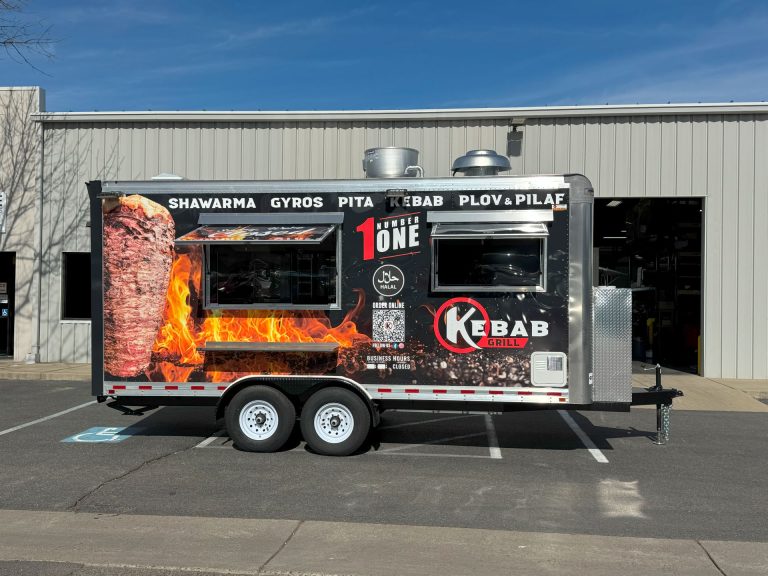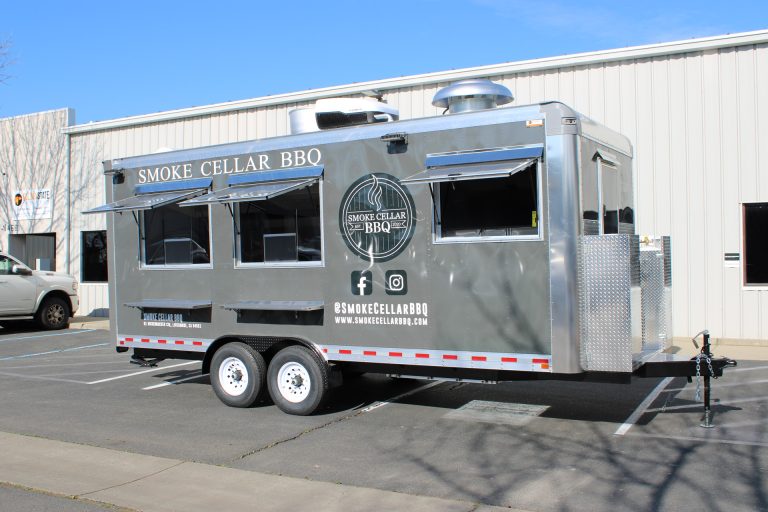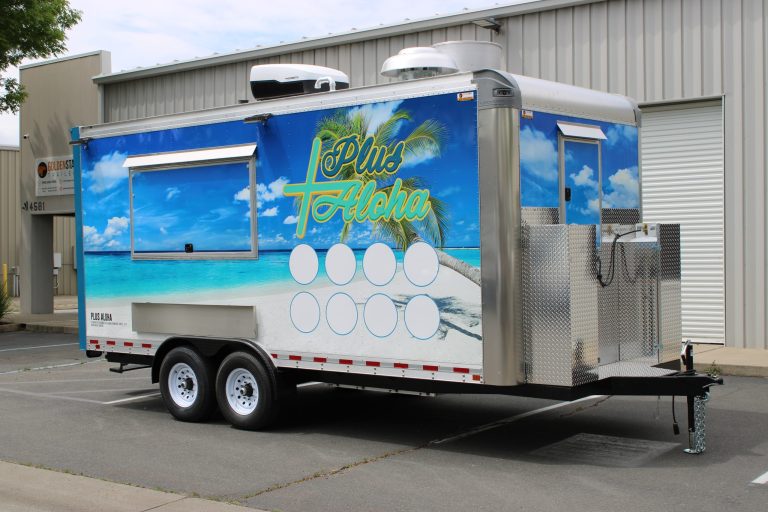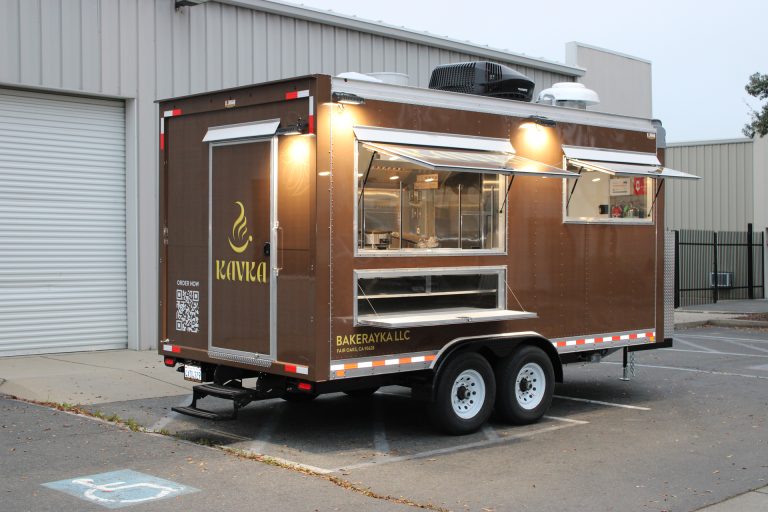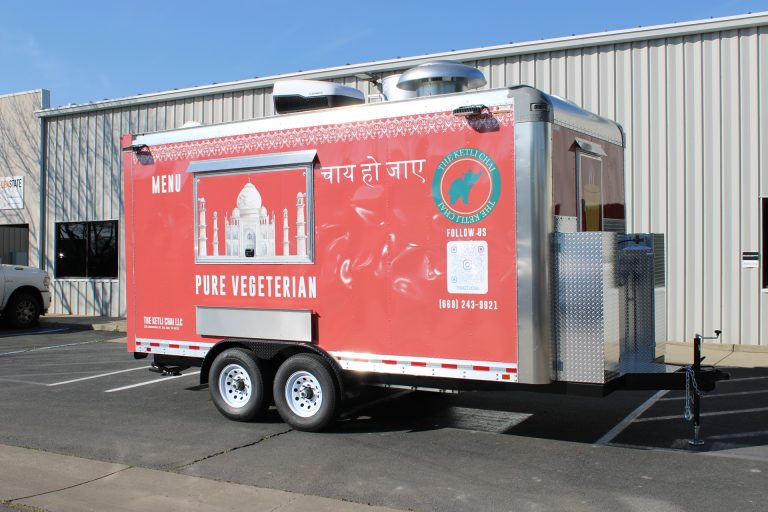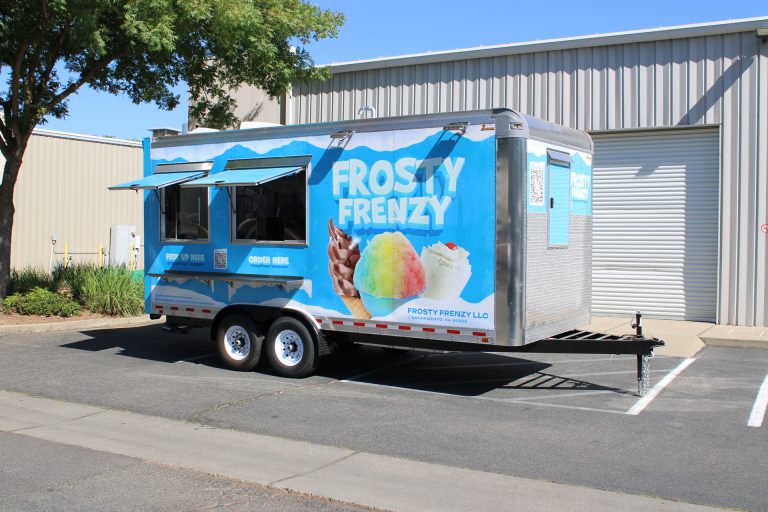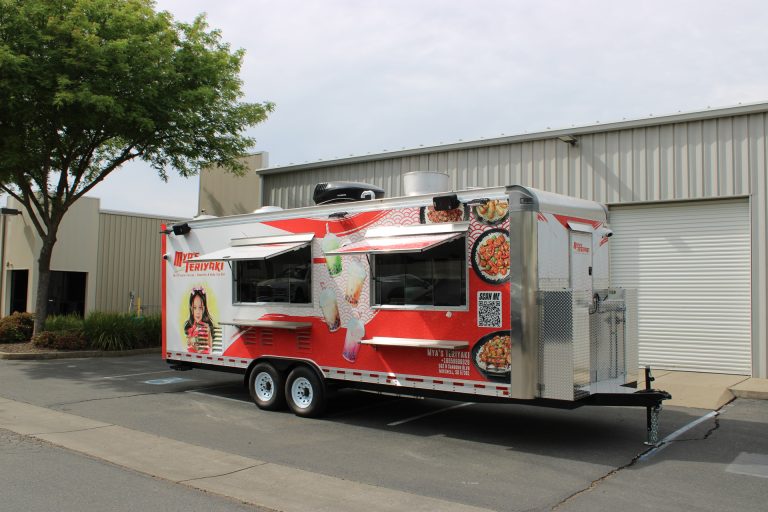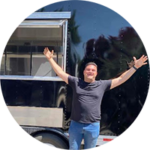


Our own team fabricates every trailer at our Olivehurst, CA shop. You may visit by appointment during any stage of the build. Finished trailers leave by pickup at the shop or by delivery to Fairfax, and we deliver to all 50 states.
In Fairfax, the next step is the county Health Department's pre-occupancy inspection. Your Certified Food Manager attends, and all equipment must run, from refrigeration to the sinks and water heater. The permit and decal follow once the unit meets every requirement.









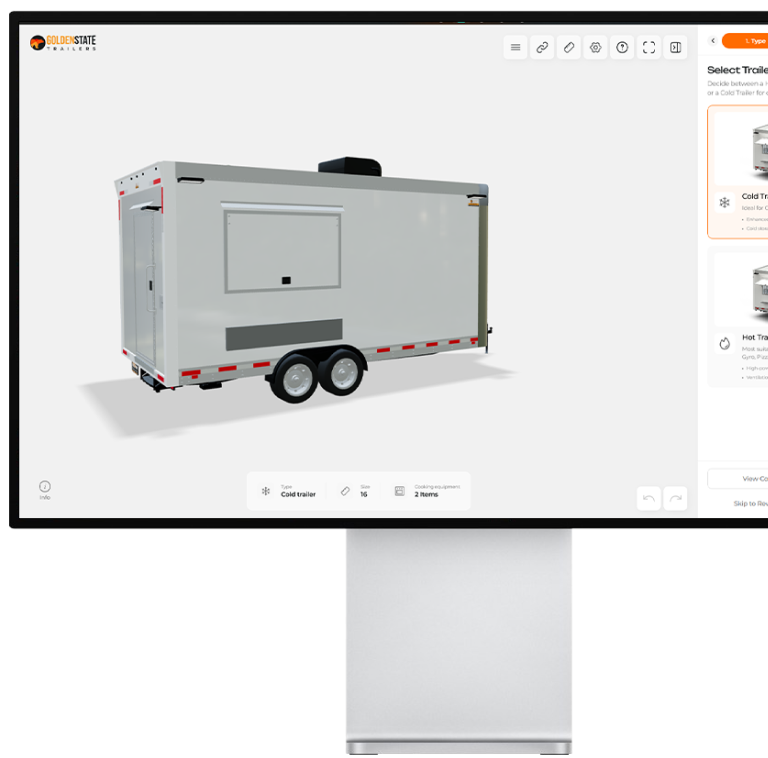
Our 3D builder is free and works without registration. Begin with a hot or cold kitchen, set its length, place your equipment and add extras. Required sinks come pre-placed on the service side, and the design stays saved for 90 days.
Plan the power for City of Fairfax events, which supply no electricity and disconnect any generator that runs too loud. To work them, pick a generator under the builder's options. Note in the comments that it must be sound-insulated.
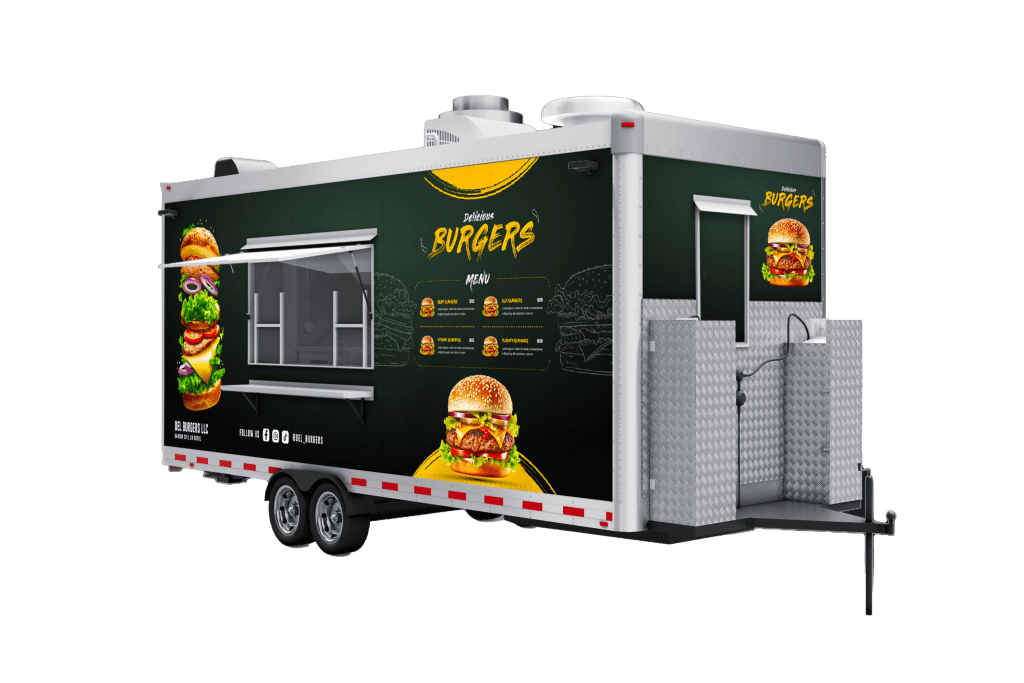
Our food trailers for sale in Fairfax start as all-steel frames welded at our own Olivehurst, California, shop. The same Golden State Trailers crew wires and plumbs each one before we ship it east to Northern Virginia.
The menu comes first. A fryer line and an espresso bar need different equipment, which then sets the layout, power draw and water.
Browse our custom food trailers and the models under food trailers for sale to compare layouts. Our catering trailers follow the same menu-first planning for private events. We also build multi-unit projects for schools, franchise groups and corporate food service teams.
Nearby Washington Dulles Airport averages July highs near 88°F. Roughly 33 days in a typical year reach 90°F, most of them in July and August. A 15,000 BTU rooftop air conditioner cools the cabin, and the walls carry insulation with reinforced interior backing.
The one-piece aluminum roof is crowned so water runs off. The area also averages about 100 nights a year at or below freezing. Plan where an idle trailer’s water lines get drained or protected.
This page covers the independent City of Fairfax, ZIP 22030, which Fairfax County surrounds. One agency, the Fairfax County Health Department, issues mobile food permits on both sides of the city line. Zoning, the business license and fire permits split there.
Inside the City, the Zoning Division issues a permit for mobile food vending. Zoning approval comes first, then the annual City business license from the Commissioner of the Revenue. Confirm trailer rules with the City Zoning Division before you order.
Outside city limits, a private commercial lot needs county zoning permits for both the property owner and the operator. The county’s Department of Planning and Development issues both.
The Health Department reviews the plans for any new mobile food unit before construction begins. Approval arrives by email through the county’s PLUS portal, and construction may start once it does.
The drawings are to scale, with a top view of the equipment layout, model numbers, materials and finishes. A side view shows the electrical and plumbing. We prepare the plan sets for that review from our engineering blueprints, gas diagrams included, and support you throughout it.
When the trailer is complete, a pre-occupancy inspection comes before the Food Establishment Permit is issued. Check current requirements on the county’s mobile food unit permit page before you order.
The county’s mobile food unit guidelines set equipment rules that shape the layout:
County rules tie every mobile unit to an approved base of operation. Your plan submission includes a signed commissary agreement. The trailer reports there at least once per operating day for cleaning and servicing.
Between shifts, it stays at the commissary or another site the Health Department approves. A private residence cannot serve as the base. Size the tanks and on-board storage around that daily routine.
Cooking on a grill, griddle or fryer makes yours a hot trailer, with ventilation, fire suppression and gas lines. County guidelines require the hood to extend at least 6 inches past the cooking equipment on every open side.
Our build standards pair 14×14 make-up air with a commercial-grade exhaust hood, UL 710 compliant, that conforms to NFPA 96. The propane side is rated 400,000 BTU, with an auto changeover regulator and a separate shut-off on each appliance. A coffee or dessert menu can run cold, without a hood or propane.
Inside the City, Fire Prevention Code permits, propane among them, come from the Fire Department / Code Administration. Confirm propane rules with City Code Administration before you order.
At permitted festivals elsewhere in the county, the County Fire Marshal inspects mobile units. Handling or using more than 10 gallons of propane there takes an operational permit.
The City takes food vendors for its July 4th parade and evening show, the Fall Festival and Rock the Block. That series runs in Old Town Square on fourth Friday evenings, May through October. Every event runs rain or shine, and City businesses get priority.
Each vendor space is 18 by 20 feet, and a unit longer than 20 feet buys two. Compare our trailer sizes against that limit. The application asks for a menu with prices and at least two photos of your concession trailer.
No electricity is supplied, and a generator that runs too loud is disconnected, so bring a sound-insulated one. The panel we install has 24 circuits and a 125-amp rating, on 50-amp, 240-volt service. Size the generator from your appliance list.
Production follows our build process step by step. Before shipping, we test its brakes, structure, gas pressure, plumbing, electrical load, fire suppression and hood airflow.
Handoff includes a walkthrough of every system and the documents: your warranty card, the equipment manuals and the blueprints. Keep that set with the trailer, since the county can inspect mobile units at any time.
Request a quote once your menu is set. Our team will contact you to talk through size, equipment and layout.
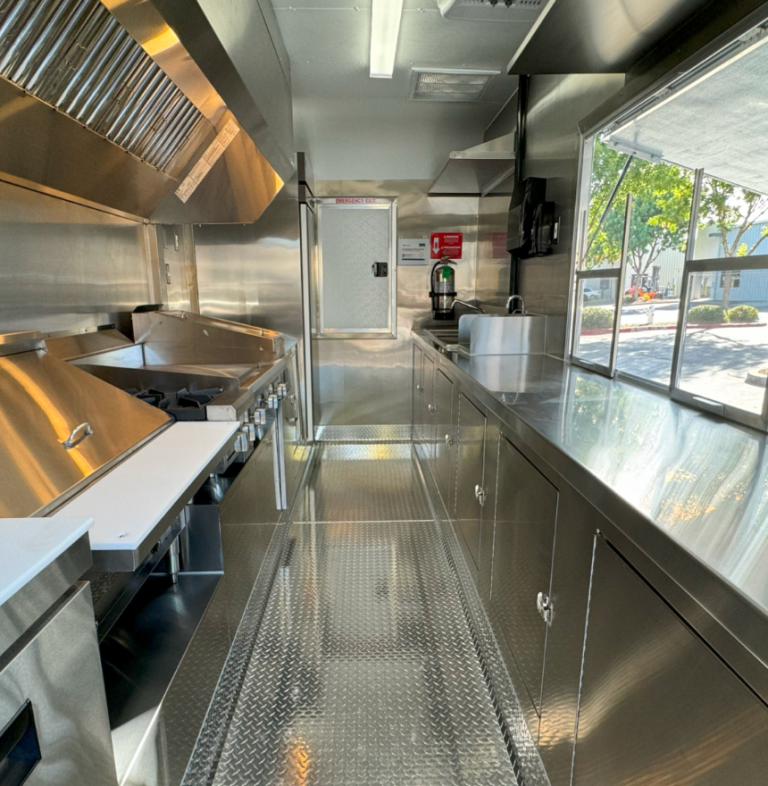
At Golden State Trailers, we build custom commercial food trailers around real operational needs. Every project is planned with equipment, workflow, systems, safety, and long-term reliability in mind. Our goal is to build food trailers that perform reliably in daily commercial use.