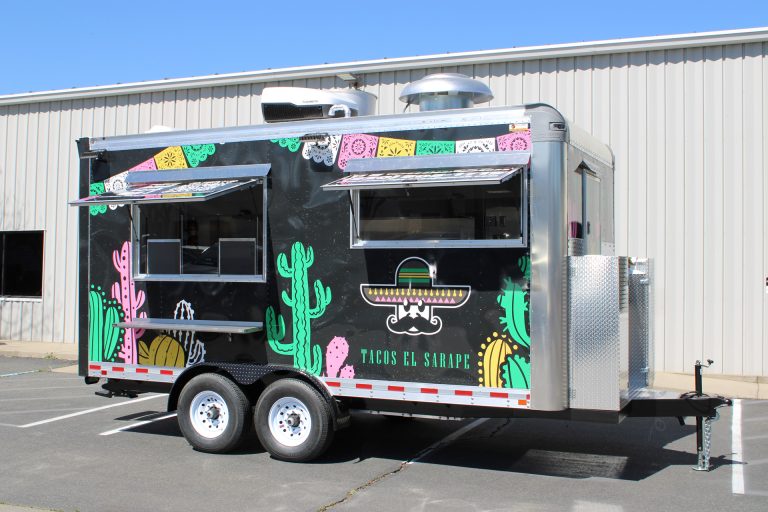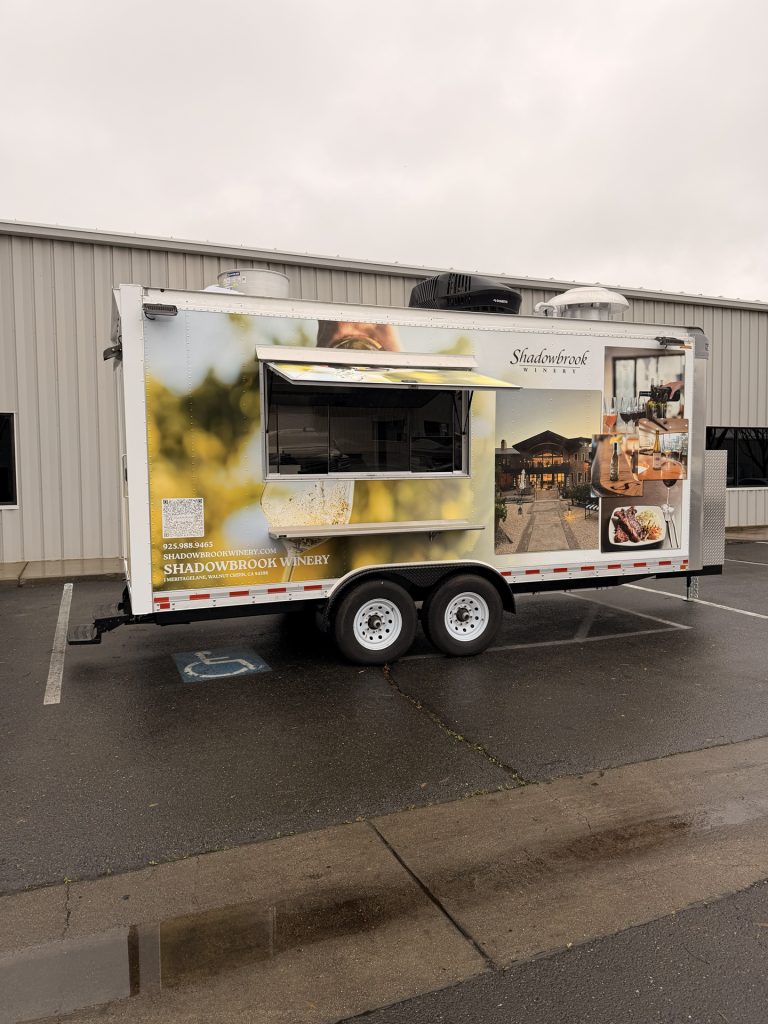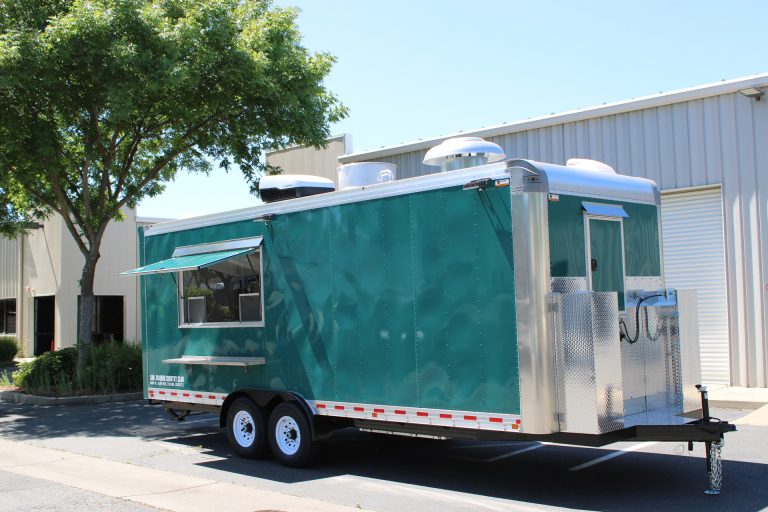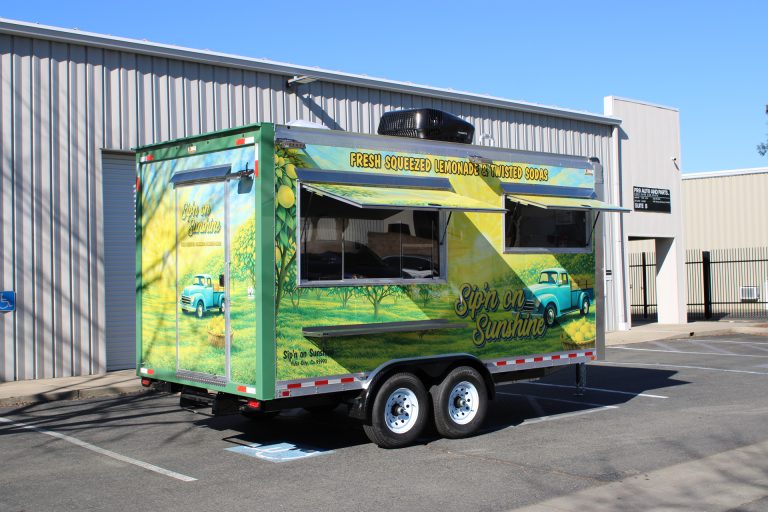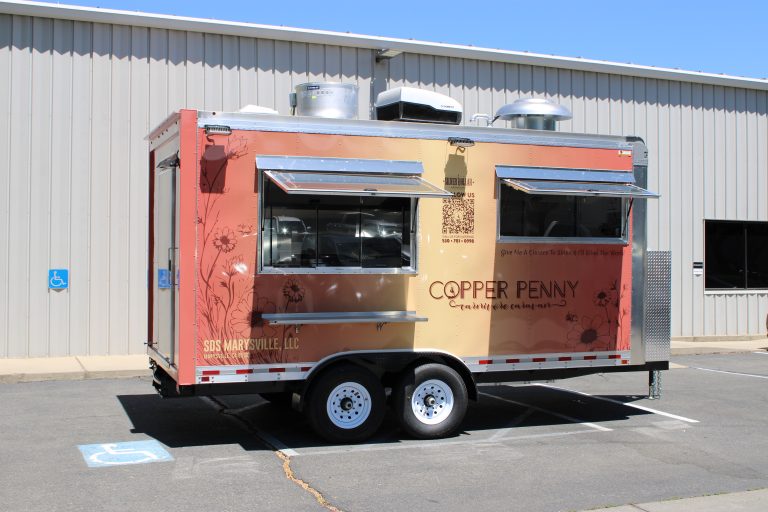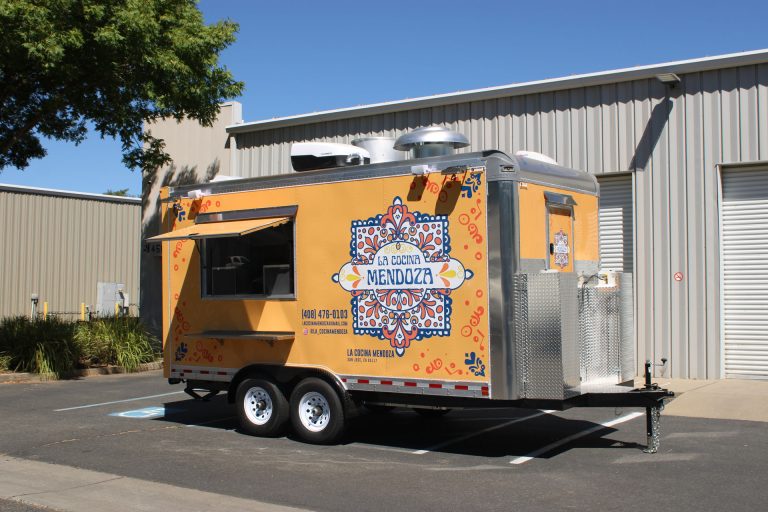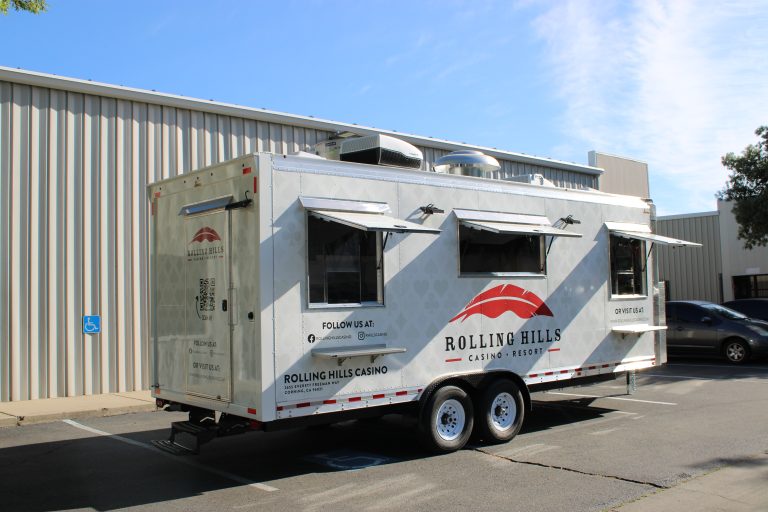


Our team welds the frame, runs the wiring and plumbs each trailer at the shop in Olivehurst, CA. With an appointment, you can watch yours come together at any stage. Finished trailers leave with you at pickup or on a carrier bound for Charlotte, with tracking and setup guidance.
In Charlotte, the trailer works from a permitted commissary. Under North Carolina rules, the county office that inspects that commissary issues the operating permit, which stays on the unit.




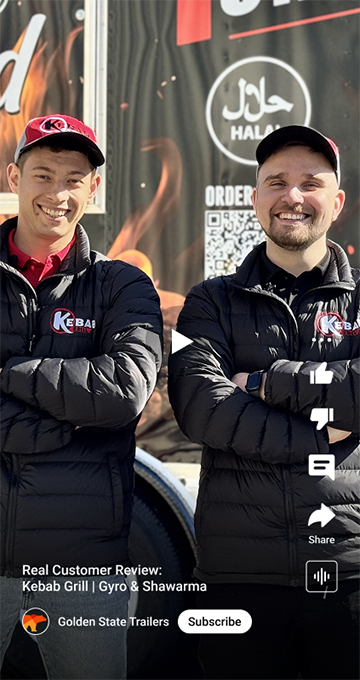
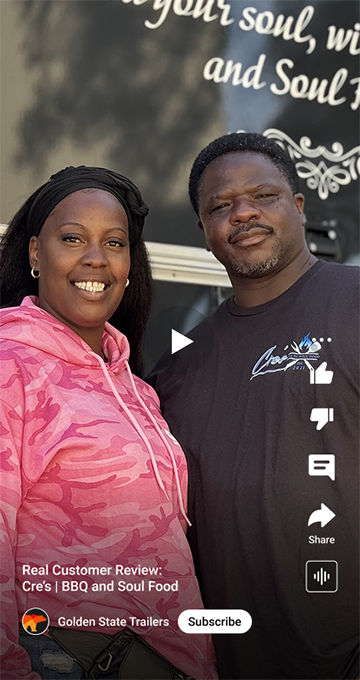
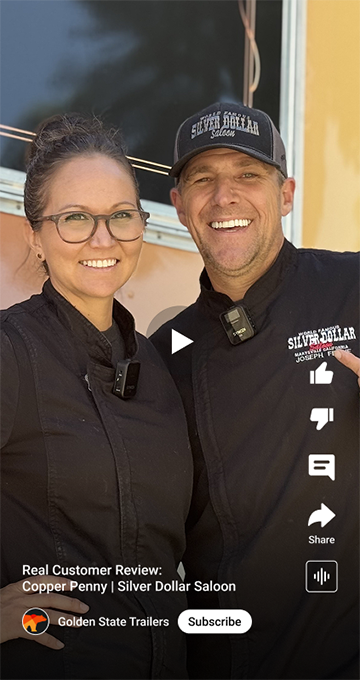
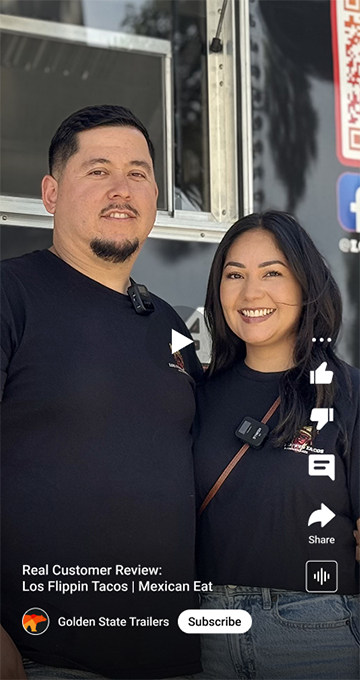


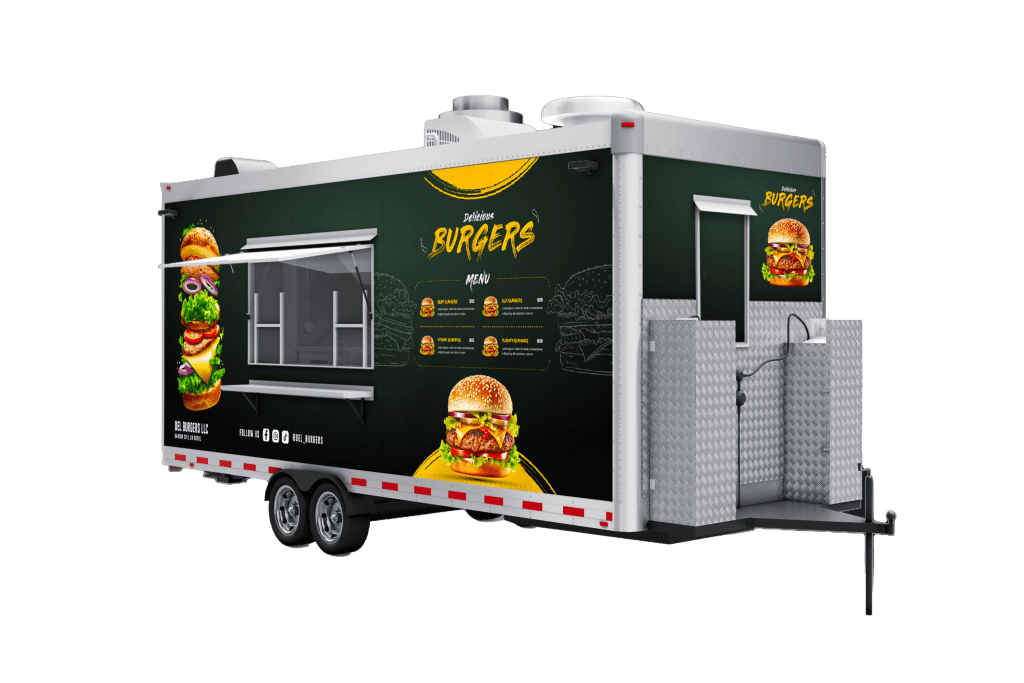




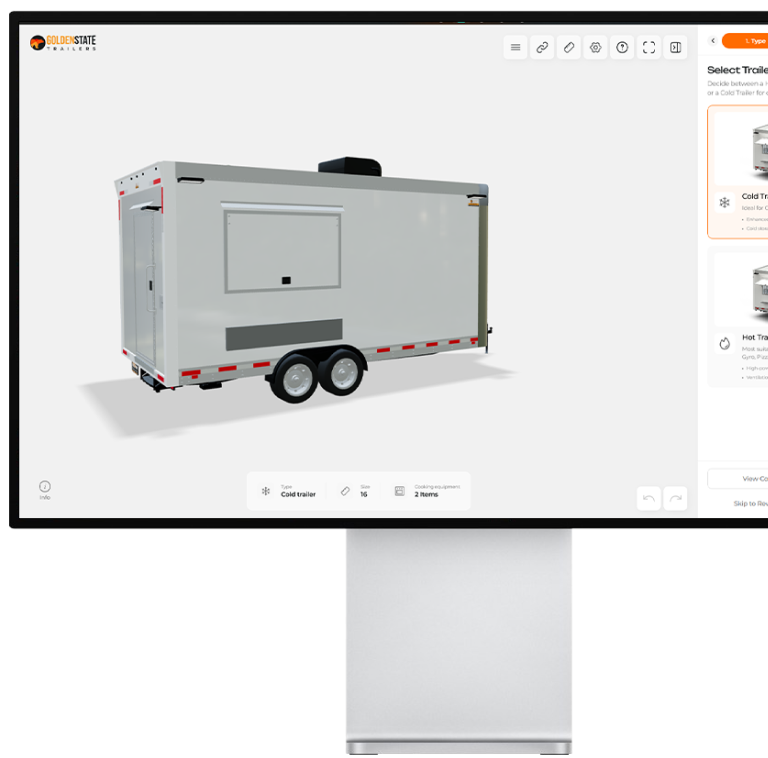
Plan a layout in our 3D builder for free, without an account and with no cap on versions. Start from a hot or cold trailer in any of eight lengths, then place the kitchen and service-side items. Saved designs stay open for 90 days to revise or share.
Festival in the Park asks every concessionaire in Freedom Park to bring a silent power source. If you plan to sell there, choose the power setup before you submit the build. Generators sit among the builder's extras, so ask the organizers which setup meets their rule.
Every trailer we sell is custom-built in-house by Golden State Trailers at our Olivehurst, California shop. Our food trailers for sale in Charlotte leave that shop equipped to the design you approve. From there, each one is delivered to Charlotte.
Planning starts with the menu, because it fixes the appliance list. The appliances then fix the floor plan, the power and water on board, and propane on a hot build.
We build a single trailer for an independent operator and multi-unit orders for franchises, schools or corporate food service. For starting layouts, browse our store’s food trailers for sale, plus our custom food trailers and concession trailers. Our food trailer design and equipment guide covers the lengths we build, from 16 to 30 feet.
North Carolina’s public health rules count a towable food trailer as a mobile food unit. That means a unit built to move, with no fixed utility hookup except onsite power. Mecklenburg County Public Health applies those rules in Charlotte through its Environmental Health Division.
The county requires a plan review before a new unit is built and opened for service. Its plan review page keeps a separate packet for mobile food units.
Equipment on the trailer and at its commissary decides which menu items the county approves. Settle the full menu before the plans go in.
Our engineering blueprints carry the electrical, plumbing and gas diagrams. From those drawings we assemble the plan set for Mecklenburg’s reviewers and support you through their review. You apply to the county as the operator, with your menu and commissary.
State rules tie the operating permit to your commissary. The office that inspects the commissary issues it, and the permit is kept on the trailer. Before you serve in any North Carolina county, Mecklenburg included, give its health office a current list of your locations.
Ask the county how far ahead to file, so its review and our production schedule line up. Confirm current requirements with Mecklenburg County Public Health before you order.
The City of Charlotte decides where a trailer may set up. Its Unified Development Ordinance counts a food trailer towed by another vehicle as a mobile food vendor. Each vendor needs a city zoning use permit, valid 365 days and renewable every year.
A vendor stays out of required setbacks and sight distance triangles and keeps driveways and building entrances clear. In the Neighborhood 1 and 2 districts, a trailer may serve only as an accessory to an established nonresidential use.
If four or more vendors share one site, its owner files a site plan. City zoning, transportation and fire staff review it.
Before signing for a lot, check for room to back in, level the trailer and park the tow vehicle. Confirm zoning for your site with the City of Charlotte before you order.
Charlotte Douglas International Airport runs a mobile food vendor program at its Airport Overlook. Vendors serve lunch and dinner shifts Friday through Sunday, weather permitting, and apply for each season through the airport. Confirm trailer rules with the airport before you apply.
Festival in the Park brings concessionaires to Freedom Park. Its application counts any towed unit with sides as a trailer. Charlotte SHOUT!, the Uptown arts and food festival, takes mobile food vendor applications every year.
If a multi-day festival keeps the trailer on site overnight, plan how it locks up. Size the cold storage for the full run. See our festival food trailers page for event builds.
Your menu settles the first build choice: hot or cold. Grills, fryers and stoves bring a hood, a suppression system and gas piping. A coffee, smoothie or ice cream menu skips all three in a cold trailer.
That hood, per our build standards, is UL 710 compliant and meets NFPA 96. Replacement air enters through a 14×14 make-up air system.
Our 20-foot spec pairs the hood with UL 300 fire suppression. Propane flows from a 400,000 BTU system whose regulator changes cylinders automatically.
At permitted events, the Charlotte Fire Department rules for prepared food sites call for propane cylinders secured against tipping. At multi-day events, tanks are closed at the cylinder each night unless attended.
For daily service outside events, confirm fire and propane requirements with the Charlotte Fire Department before you order.
July highs at Charlotte Douglas Airport average about 90°F, before a fryer or grill adds its own heat. To keep the crew comfortable, each build gets a 15,000 BTU roof-mounted air conditioner. The walls carry enhanced insulation with reinforced interior backing.
The same station averages about 58 nights a year at or below 32°F. Our 20-foot spec lists R13 insulation. A trailer parked between events on such a night needs its water drained or kept from freezing.
Charlotte also averages about 44 inches of rain a year. The roof is solid aluminum in one piece, with a crown that sends that rain off the edges.
Each stage of the build is laid out on our process page. Before shipping, we test the brakes, structure, gas line pressure, plumbing connections and electrical load. Hot builds also get hood airflow and fire suppression checks.
At handoff, you learn each system from our team: cooking equipment, gas, power, water tanks and fire suppression. File the blueprints, manuals and warranty card in the trailer, next to your county permit.
Once your menu is set, request a quote and add your trailer size, timeline and equipment notes in the form.
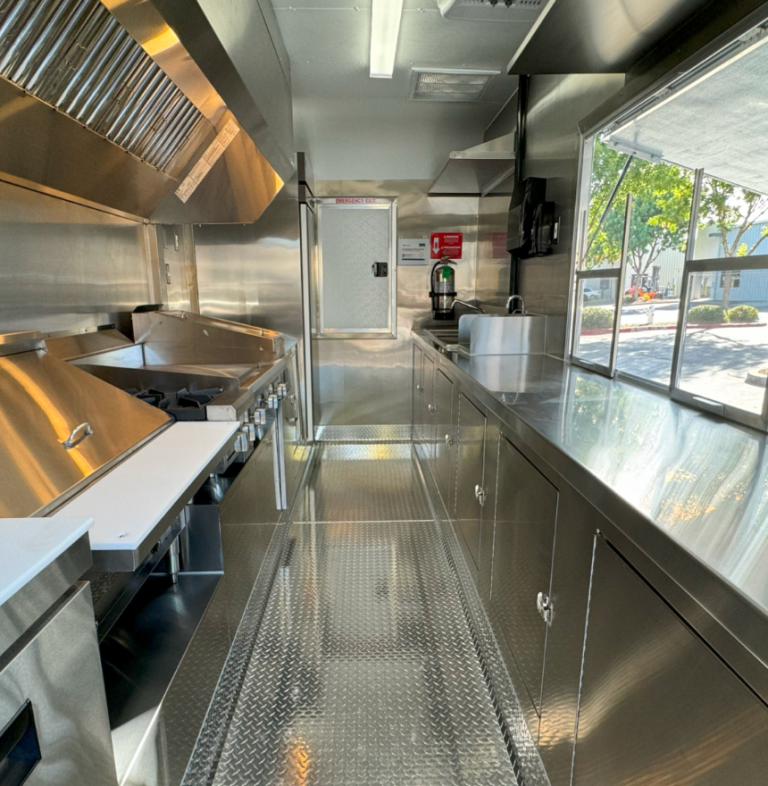
At Golden State Trailers, we build custom commercial food trailers around real operational needs. Every project is planned with equipment, workflow, systems, safety, and long-term reliability in mind. Our goal is to build food trailers that perform reliably in daily commercial use.