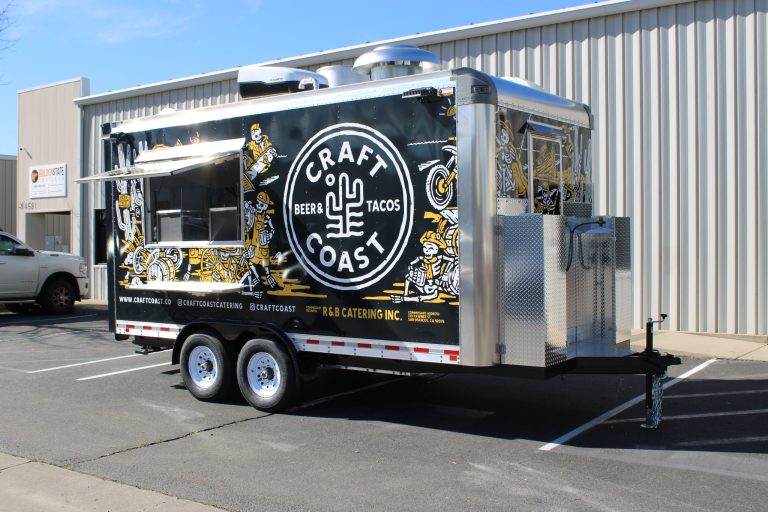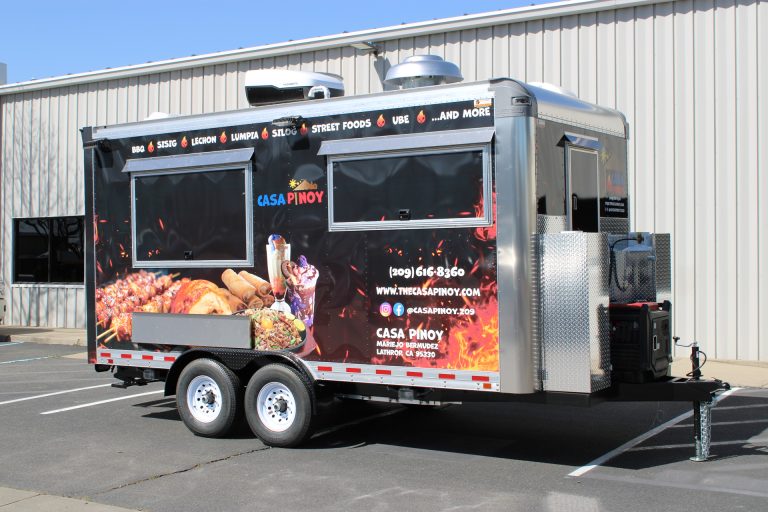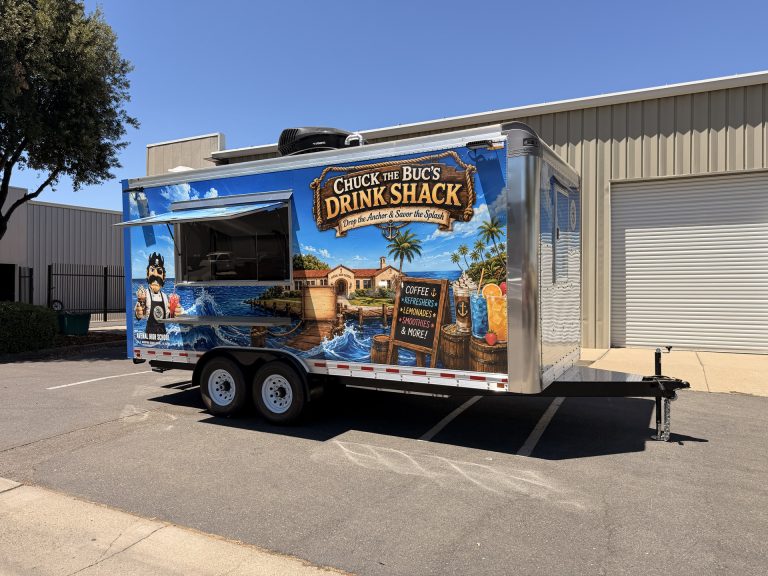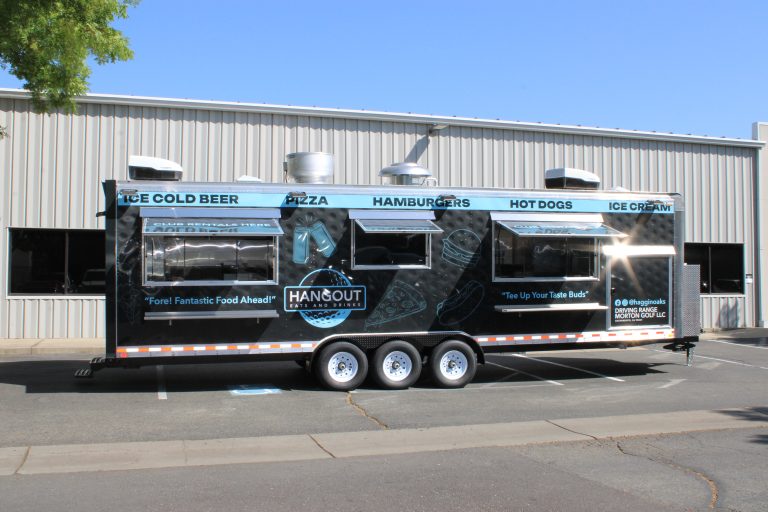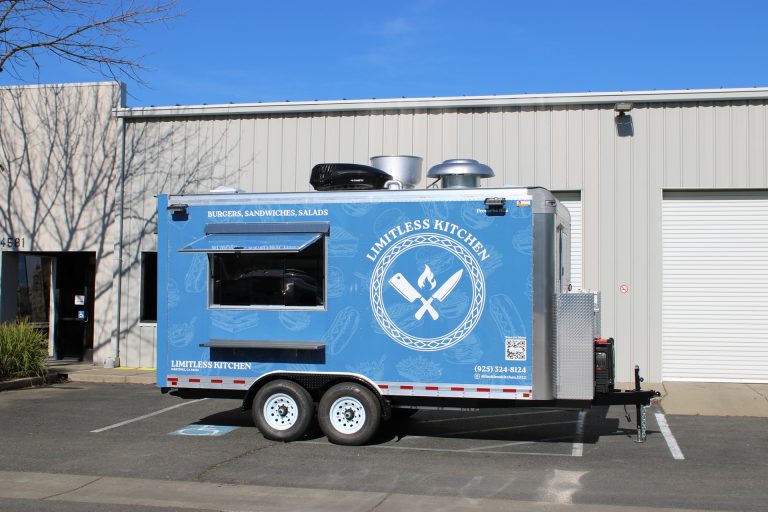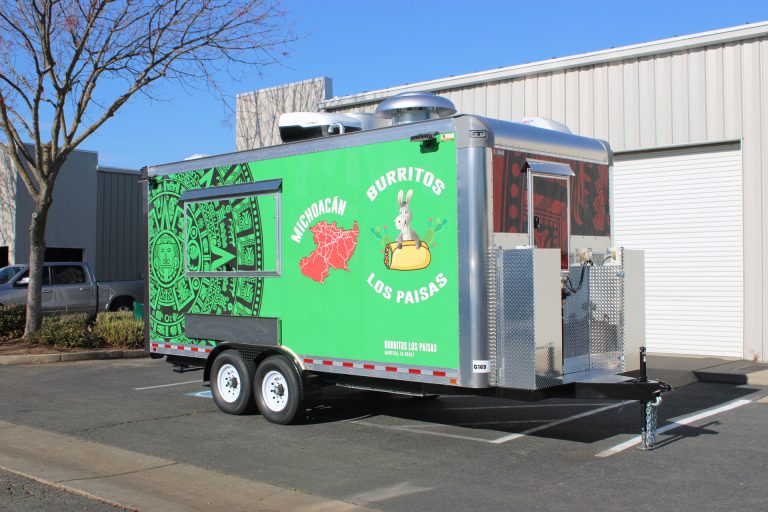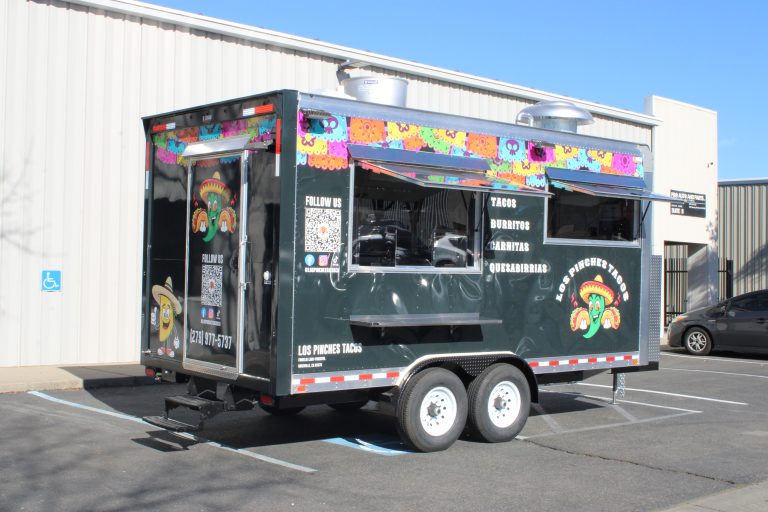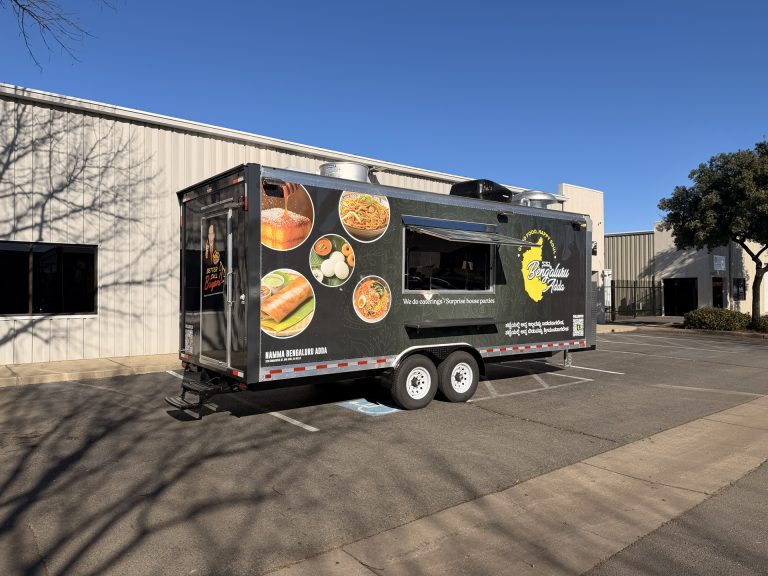


Your trailer is built at our Olivehurst, CA shop, open to your visits by appointment while production runs. The finished unit can be picked up there or delivered to St. Louis. We deliver to all 50 states.
The Fire Safety Unit's inspector meets the trailer inside city limits, at a location you both agree on. Inspections run on weekdays between 10 a.m. and 3 p.m. A trailer based in St. Louis County that sells in the City still comes into the City for it.






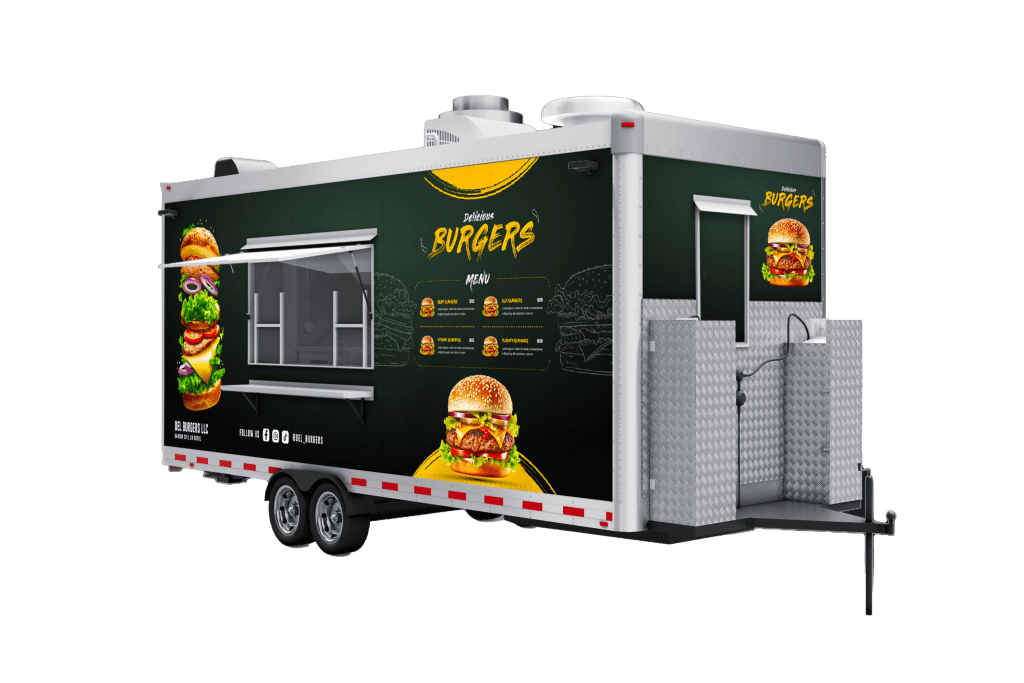




Our 3D builder is free, works without registration and never caps the number of attempts. Set the trailer type and one of eight sizes. Equipment for the kitchen side and the service side comes next, then the extras. Your saved design can be reopened, revised or shared for 90 days.
One City fire rule shapes the exterior: fabric awnings and canopies must be certified flame retardant. An awning is among the builder's additional options, so flag that rule in the Additional comments box.
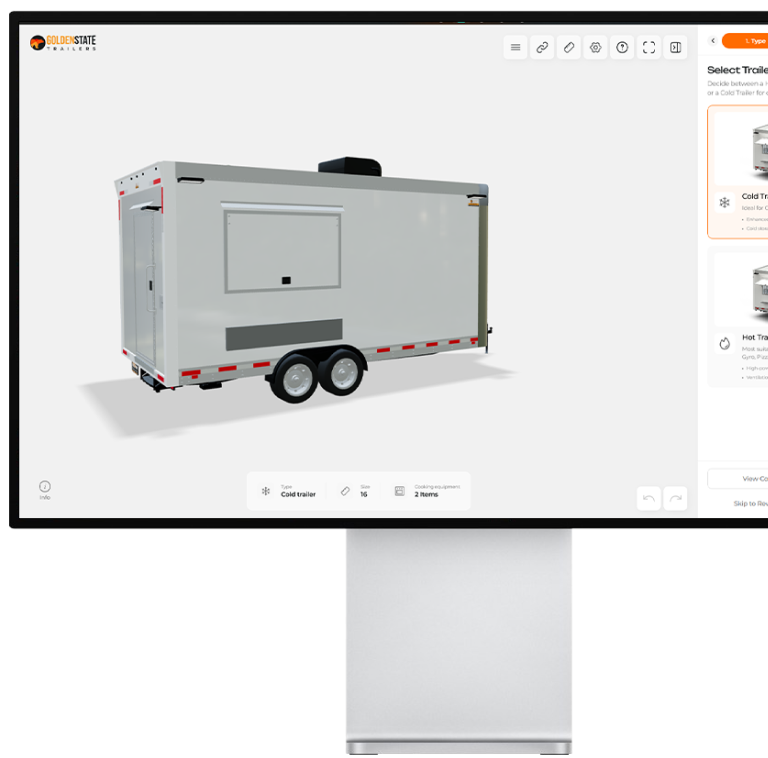
At Golden State Trailers, each food trailer for sale in St. Louis takes shape in-house, in our Olivehurst, California shop. Work starts from a welded all-steel frame, and the trailer ships to your site once every system passes our tests.
Your menu sets the equipment list, and that list sets the layout, power draw, water and ventilation. A smoker or fryer line calls for a hot trailer with a hood. A coffee trailer is a cold build, sized around its water supply and electrical load.
Our food trailers for sale and concession trailers show starting layouts, each built fully equipped to the layout you approve. Any of them can serve as the base for one of our custom food trailers. Eight lengths are available, 16 feet up to 30 in 2-foot steps.
Saint Louis University lets approved mobile food vendors serve at designated campus spots. A student group or department has to invite them first. SLU’s application asks for proof of insurance and a City permit where one applies.
In the Grand Center Arts District, the multi-stage MATI music festival has invited mobile food vendors to apply. Festival lines favor an assembly menu, so plan hot holding beside the serving window and a large menu board.
The Board of Aldermen has passed a bill for five mobile vending areas, including Downtown, Grand Center and Cherokee Street. Ask the Street Department whether those areas are in force before you plan selling days.
The City of St. Louis is independent of St. Louis County, and the offices below cover sites within city limits. For a County site, ask St. Louis County and the municipality which permits apply.
The License Collector’s office issues the City business or vending license. The health permit comes from the City’s Department of Health. The Street Department issues vending permits to mobile vendors, who also need that license and a health inspection.
The department’s permit page says its permit also applies at special events, in City parks and on private property. Confirm trailer rules with the Street Department before you order.
Ask the Department of Health whether it reviews plans before the build. If plan review applies, we prepare the plan set and coordinate with the reviewers alongside you.
Each food trailer doing business in the City registers with the Fire Safety Unit and is inspected every year. The first inspection comes before opening day, with propane on board or not.
Every unit needs a carbon monoxide detector and an ABC fire extinguisher. A contractor registered with the City must have serviced that extinguisher within the past 12 months.
The inspector asks you to bring the required equipment reports and certifications. The dated service records come from licensed contractors:
From our shop, the trailer comes with blueprints of its electrical, plumbing and, on propane builds, gas systems. Each installed appliance ships with its manual.
Any menu that gives off grease-laden vapors must cook under a Type 1 hood with an automatic fire-extinguishing system. The Fire Safety Unit adds a Class K extinguisher for those units. Cold builds for coffee or frozen desserts produce no such vapors and carry no hood.
Our build standards spell out the hot-build hood: UL 710 compliant, conforming to NFPA 96, fed by 14×14 make-up air. Fire suppression is UL 300, and gas leak detection is part of the propane system.
The Fire Safety Unit allows two propane tanks per trailer at most, none over 100 lb. Tanks are sized to the appliances and held by metal straps or a ventilated steel compartment. Our 400,000 BTU system has automatic changeover, and we settle tank count and mounting with you during 3D design review.
Normal July highs at Lambert airport run near 90°F, and June and August come close. A cooking line stacks more heat on top, so our builds include a 15,000 BTU rooftop air conditioner. The 20 ft food trailer page lists R13 insulation among its specs.
Normal lows from December through February sit below freezing, and most snow falls December to March. Drain the water system of a trailer that sits unused before a hard freeze. The crowned one-piece aluminum roof lets snowmelt drain away.
Our build process puts your approval of the 3D render before any steel is cut. Before the trailer leaves, we test its electrical load, plumbing connections, brakes and structure. Hot builds add gas pressure, hood airflow and suppression tests.
At handoff, we walk you through every system, including propane and suppression on a hot build. To get a price, request a quote and put menu notes in its Project Details box.
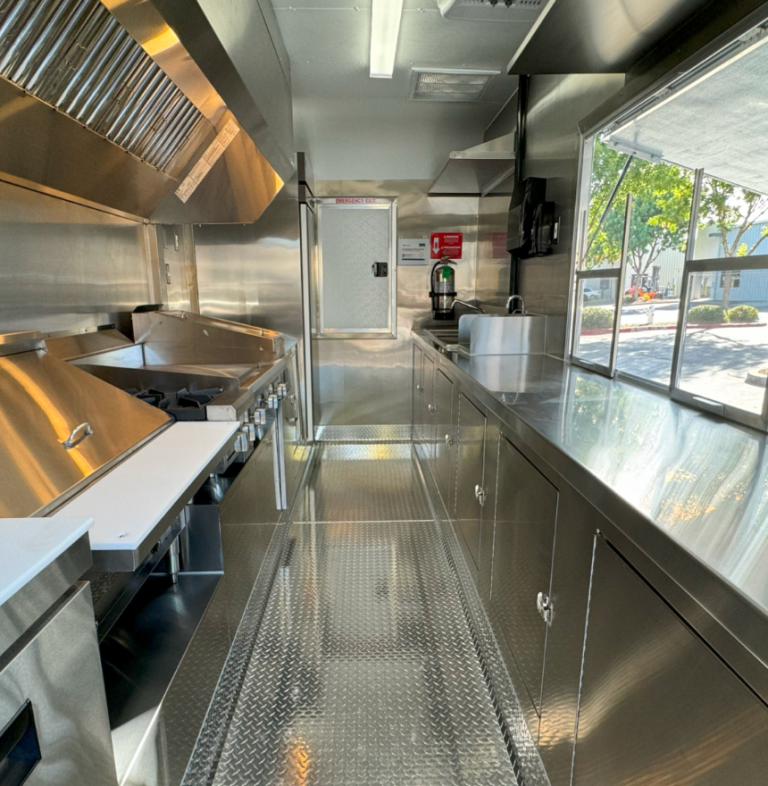
At Golden State Trailers, we build custom commercial food trailers around real operational needs. Every project is planned with equipment, workflow, systems, safety, and long-term reliability in mind. Our goal is to build food trailers that perform reliably in daily commercial use.