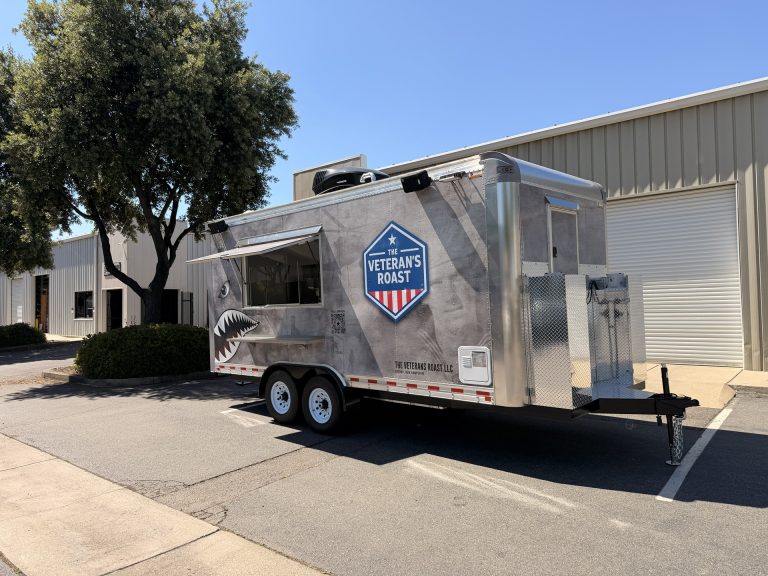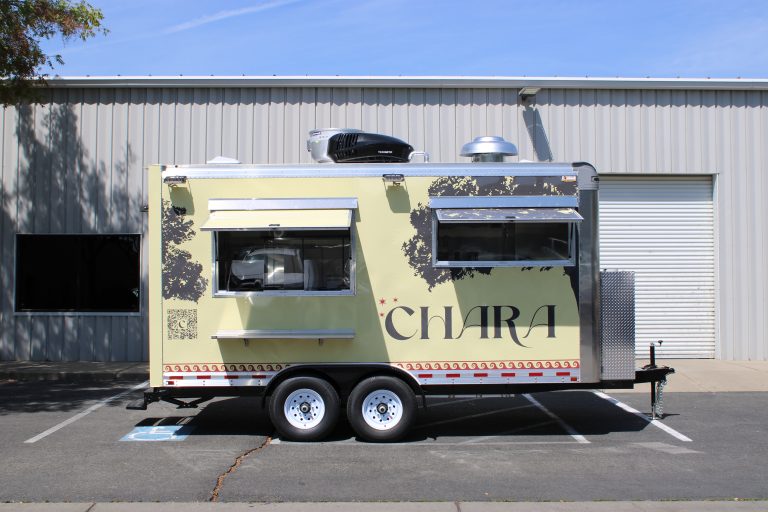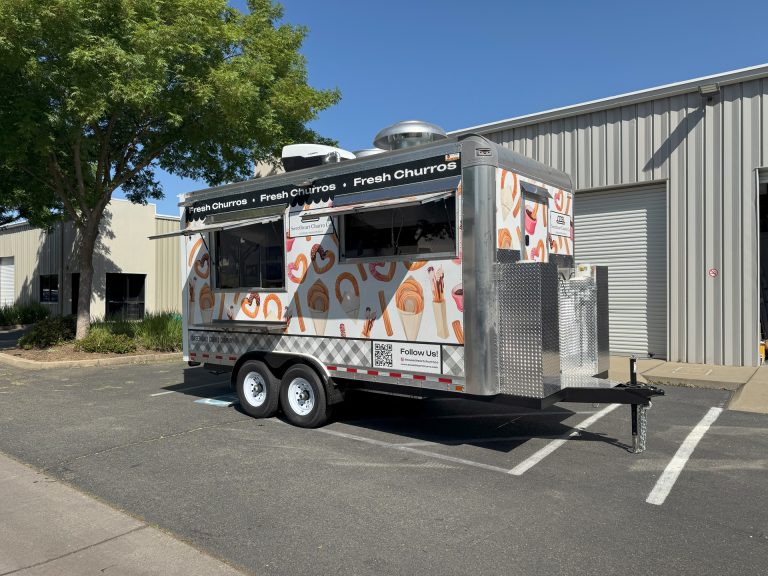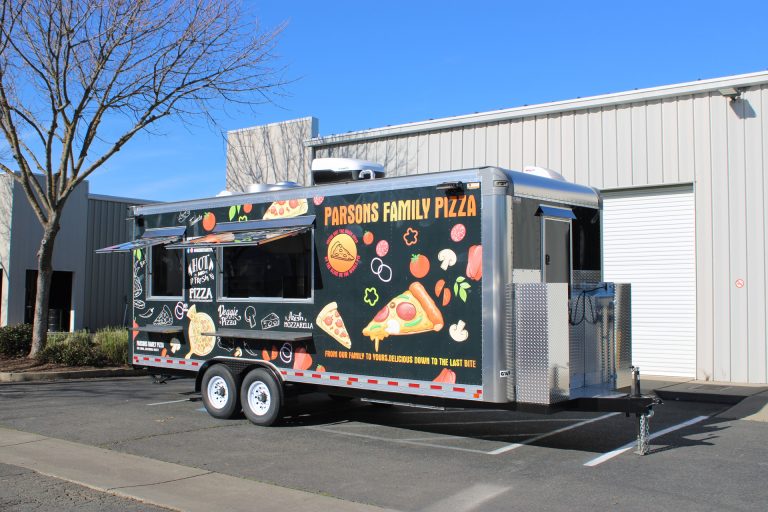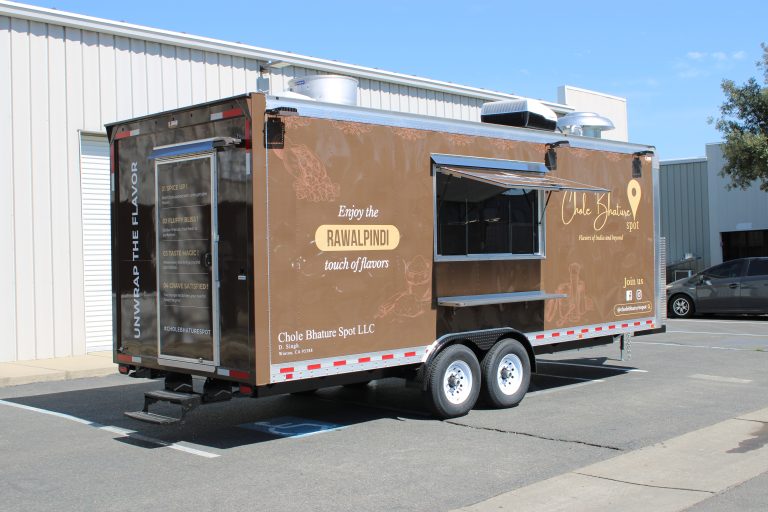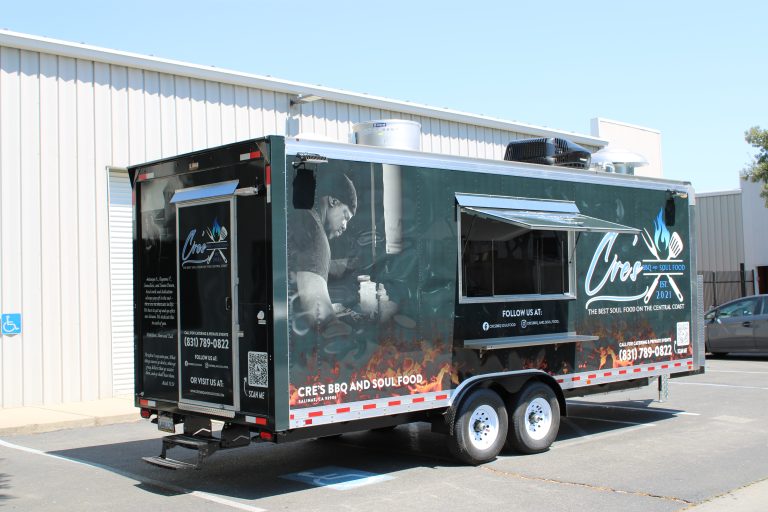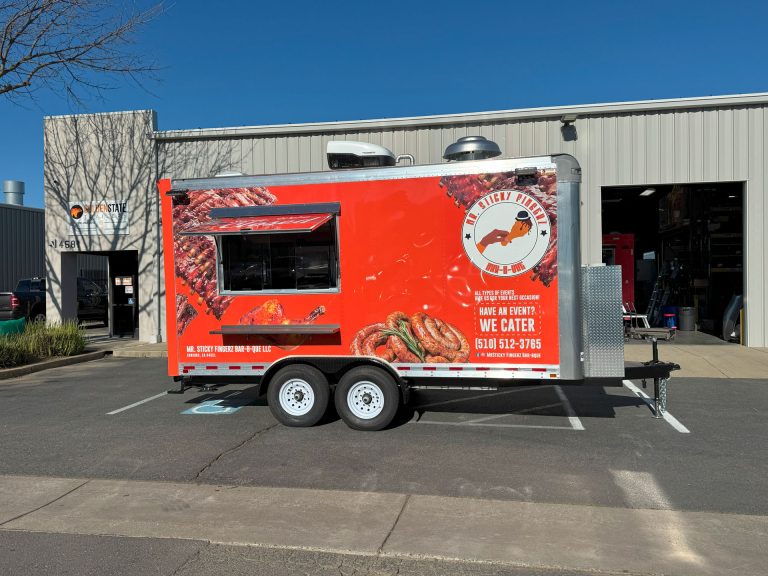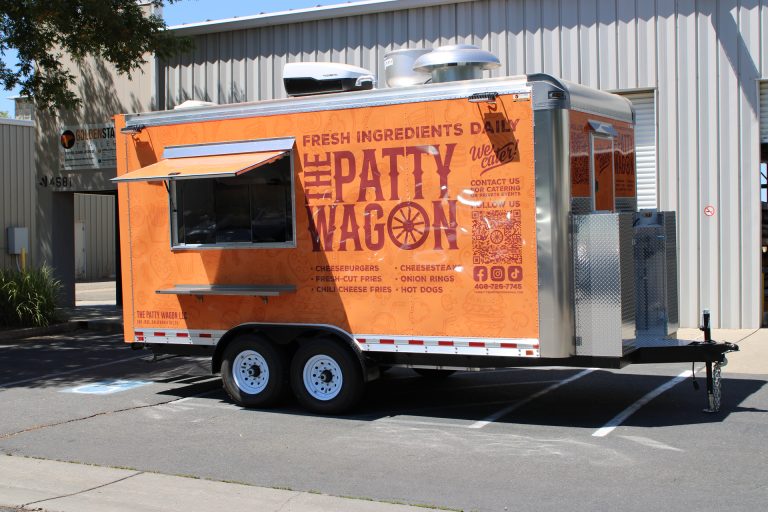


Your trailer is fabricated in our own Olivehurst, CA shop. You are welcome to visit by appointment and see any stage of the work. Once production ends, collect it there or have us deliver it to Baltimore. We deliver to all 50 states.
In Baltimore, the Office of the Fire Marshal inspects mobile food units at 410 East Lexington Street. Request that inspection through 311 after the Department of Transportation and Health Department inspections. Bring proof of both approvals with you.





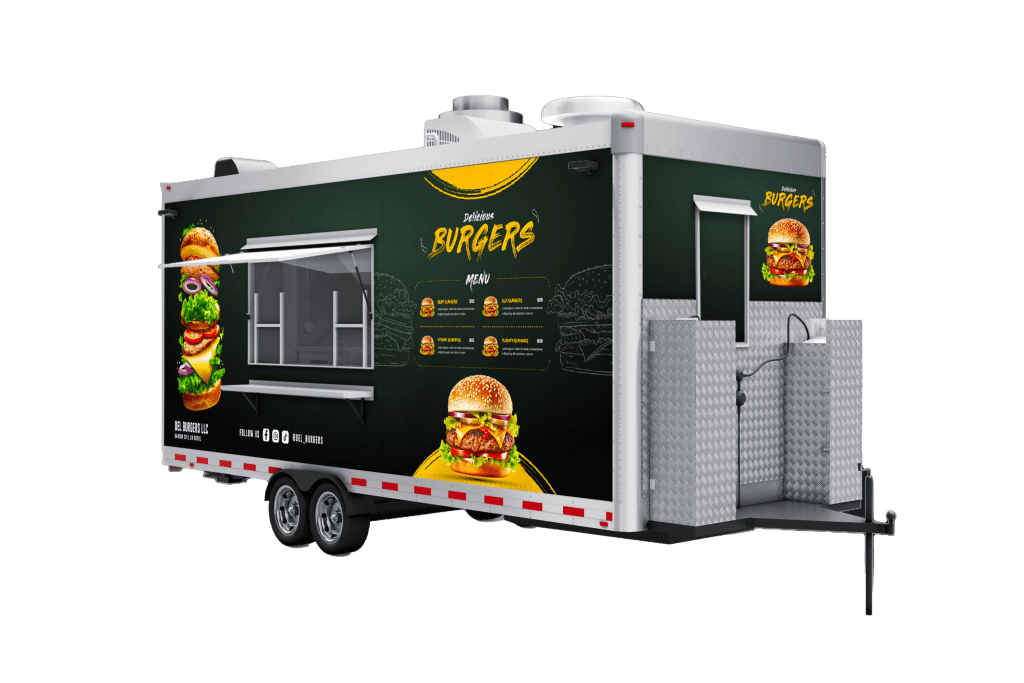



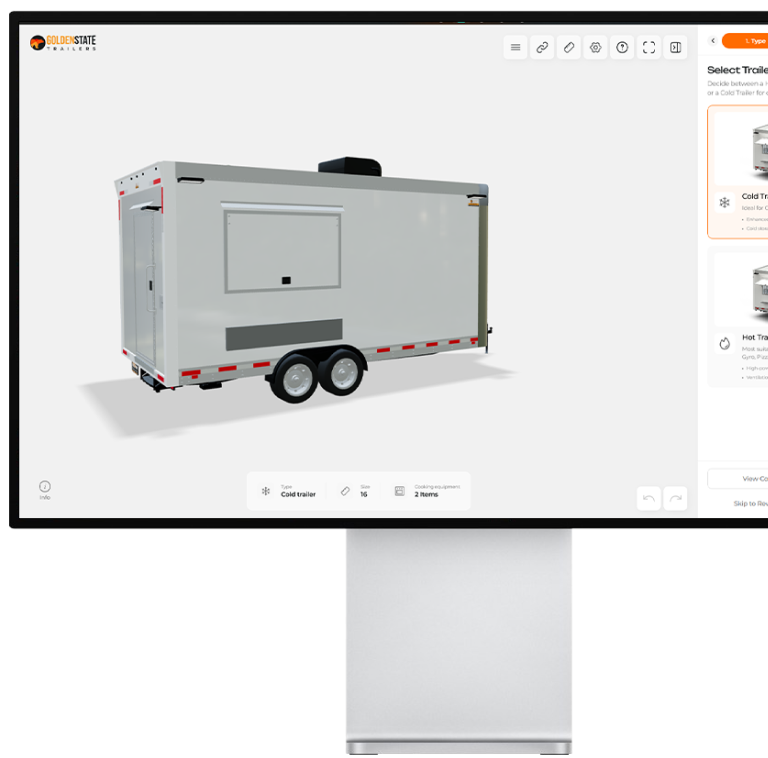
You can plan a Baltimore trailer in our 3D builder at no cost and without registering. Choose hot or cold and a length, fill the kitchen with equipment and add extras from awnings to generators. A saved design stays open 90 days for edits, or for sharing with a partner.
If you add a generator, settle where it mounts during design review, with Baltimore's fire checklist in mind. Its exhaust must stay at least 12 feet from openings, air intakes and every exit. A built-in generator compartment vents only to the outside.
We weld, wire and plumb every Baltimore order in our Olivehurst, California shop. Golden State Trailers plans each kitchen around one menu and its daily service, then delivers it to your site.
Start with what you cook. A fryer, a flattop or an espresso machine sets the wiring, the water, any hood and the axle load. That is why a fried-food menu gets a hot trailer and a coffee trailer a cold one.
We take on single kitchens and multi-unit programs, from franchises and schools to corporate food service. See starting configurations in our food trailers for sale catalog. Our custom food trailers begin from a blank floor plan, in eight lengths from 16 to 30 feet.
Every vendor selling food in the city needs a food license from the Baltimore City Health Department. For a new facility, the department first reviews its plans and holds an initial inspection, then approves the license.
Maryland’s food service regulations set what those plans contain: a scale drawing locating all equipment, its specifications and the menu. The 3D render you approve fixes each appliance’s place. Our engineering blueprints then map the wiring, plumbing and any gas lines.
We prepare that plan set and coordinate with the reviewer during plan review. For the license itself, bring the plan review approval notice and a menu and equipment list. The department also asks for a HACCP food safety plan and a Food Service Manager’s certificate.
Confirm with the Plan Review section at 410-396-4544 how it handles a trailer before you order.
A grill or fryer menu brings fire rules with it. Where cooking throws off grease vapors, the city’s fire checklist requires a Type 1 hood and an automatic extinguishing system. A licensed contractor tests that system every six months, and frying in oil adds a Class K extinguisher.
On our hot trailers, the exhaust hood complies with UL 710 and conforms to NFPA 96. Our build standards pair it with a commercial-grade 14×14 make-up air system. Our 20-foot model specifies UL 300 fire suppression, while a cold coffee or dessert trailer comes without them.
The checklist caps cooking propane at 200 pounds in total. A listed gas alarm must sit inside, near the propane components. Decide how many cylinders you carry during design review, with that limit in mind.
Our 400,000 BTU propane system keeps tanks in enclosed aluminum compartments and switches cylinders automatically. Every appliance gets its own shut-off valve. Gas leak detection with an audible alarm is part of our gas systems.
The Baltimore Farmers’ Market runs Sundays from April through December under the Jones Falls Expressway. A mobile unit there takes one and a half vendor spaces, and the market supplies no electricity. Our farmers market food trailers show market-focused layouts.
Recreation and Parks issues park vending permits for 1 to 29 consecutive days, April through October, from dawn to dusk. Charcoal and wood grills are banned in the parks, so a park menu runs on propane or electric equipment.
Public events of up to 14 days take a Temporary Food Service Facility License from the Health Department. Artscape, the city’s arts festival, gives mobile food vendors a parking space, and they bring their own generator. See our festival food trailers for layouts planned around event service.
Street selling takes a separate street vendor license. The City Code counts any trailer as a vendor vehicle. Confirm current street vending rules with the City of Baltimore, starting from its food permits page, before you order.
Baltimore’s July highs average about 89°F, and a grill or fryer pushes the cabin hotter still. To keep the cabin workable for crew and refrigeration, each build’s roof carries 15,000 BTU of air conditioning. The walls carry enhanced insulation with reinforced backing, specified as R13 for our 20-foot model.
January lows average about 25°F. Before a freeze, drain the tanks and lines of a trailer that sits unused, or keep it heated. Rain and snowmelt run off the crowned, one-piece aluminum roof of every build.
Your approval of the 3D render releases the trailer into fabrication. Our build process page covers each stage after that, and progress photos from Olivehurst show the work as it happens.
Brakes, structure, plumbing connections and electrical load are all tested before shipping. On a hot build, gas pressure, hood airflow and fire suppression go through the same testing. Nothing leaves the shop until every check passes.
At handoff, we run every system with you, from the cooking line and propane to the panel and tanks. Blueprints, appliance manuals and your warranty card travel with the trailer, so keep them on board with your city license.
To get a price, request a quote. Its dropdowns cover trailer size and timeline, and the project details box takes your menu notes.
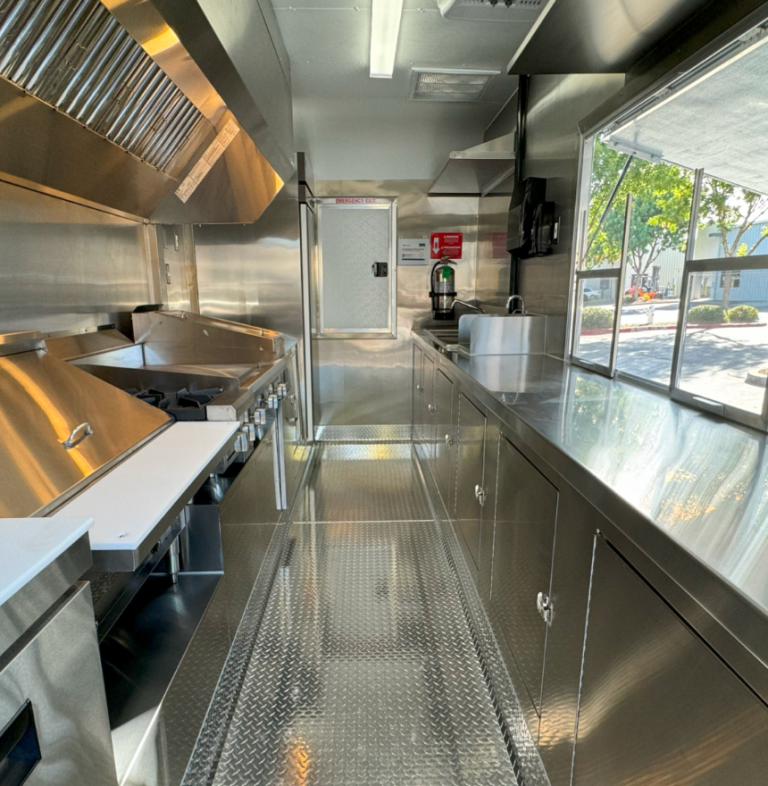
At Golden State Trailers, we build custom commercial food trailers around real operational needs. Every project is planned with equipment, workflow, systems, safety, and long-term reliability in mind. Our goal is to build food trailers that perform reliably in daily commercial use.