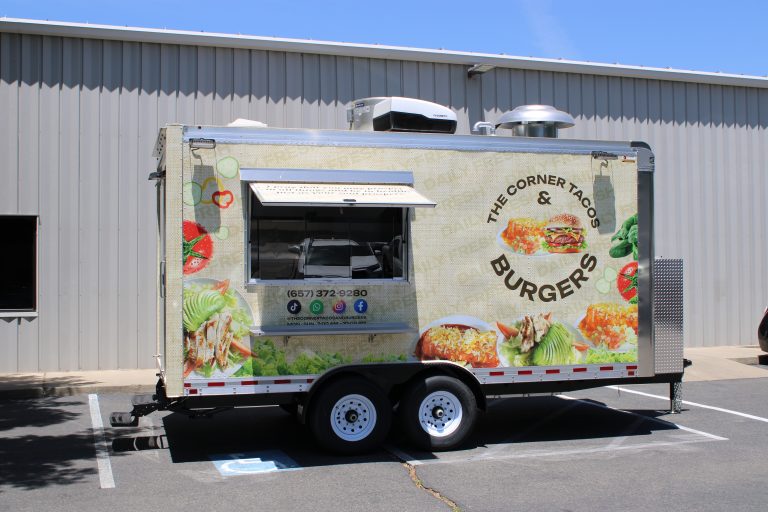
Our own crew fabricates your trailer at the Olivehurst, CA shop. Visits there are by appointment, and you may see the build at any stage. When it is done, collect it in person or have us ship it to Chicago. Delivery covers all 50 states.
In Chicago, the final vehicle inspection comes from the Chicago Department of Public Health. Request it by emailing food@cityofchicago.org after the license fee is paid. The city issues the license once every requirement is met.



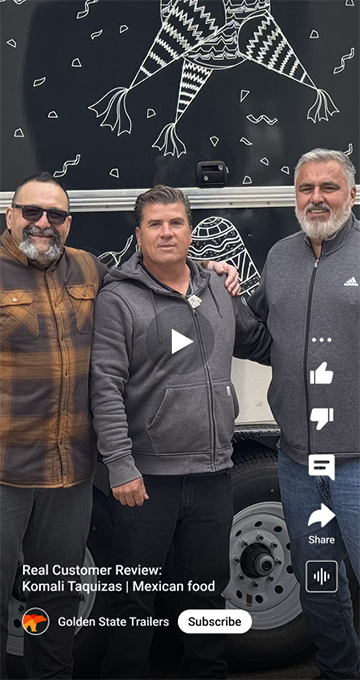
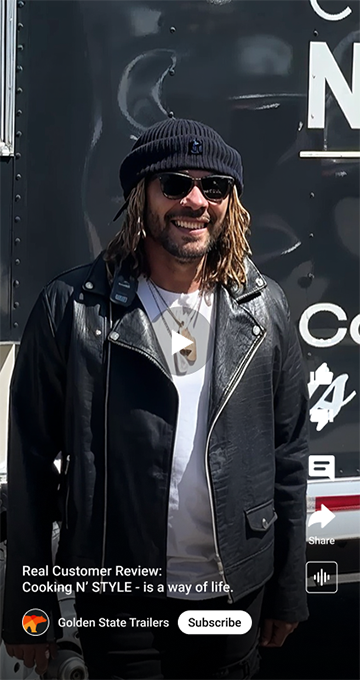
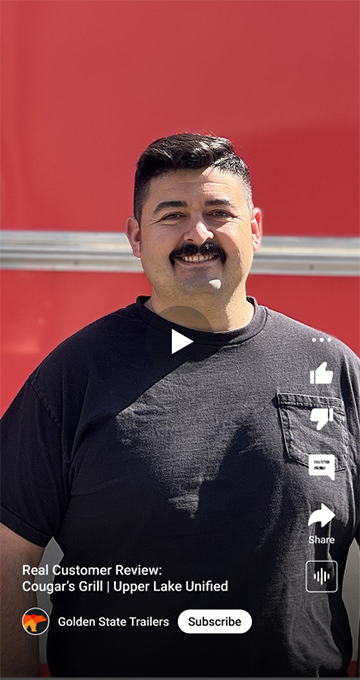
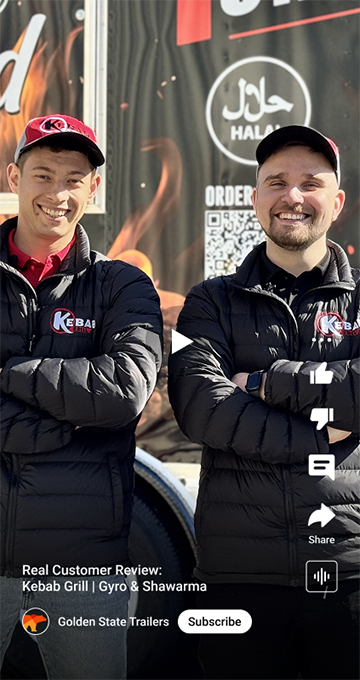
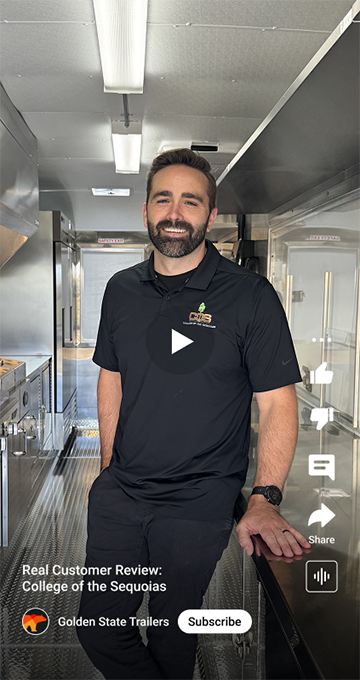


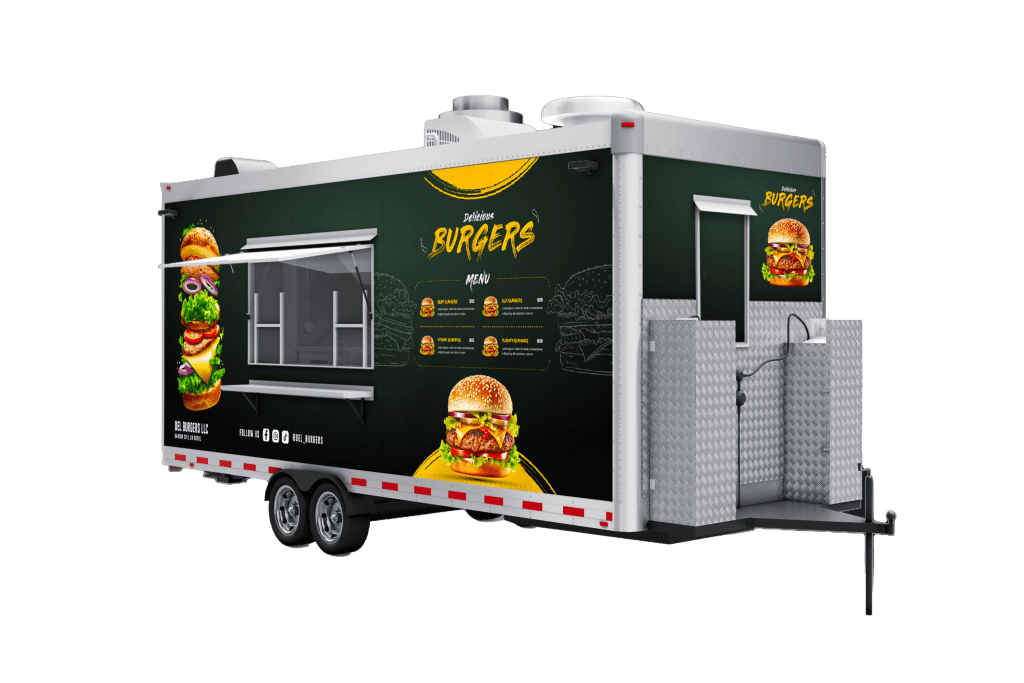


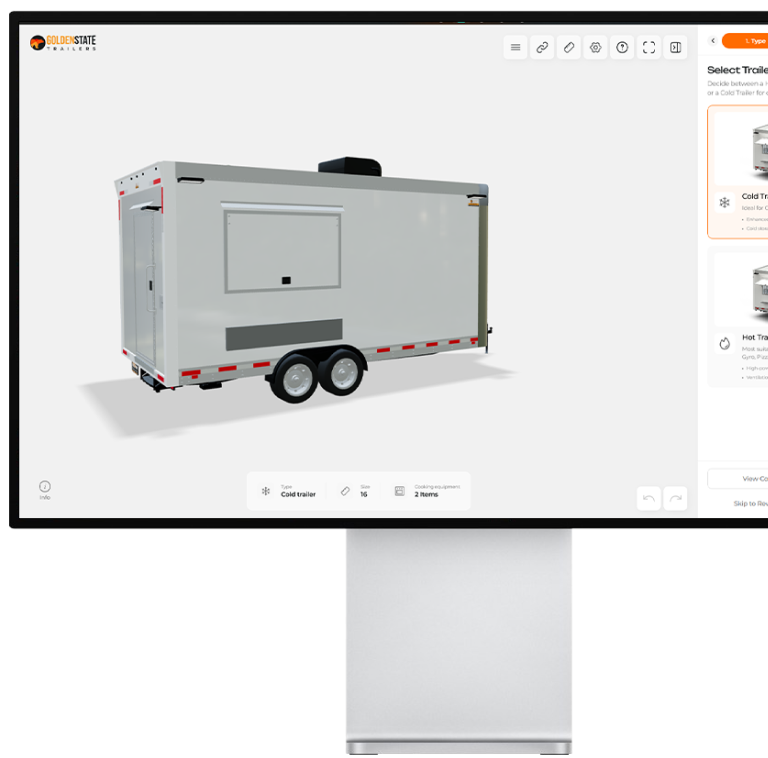
Our 3D builder is free, needs no registration and allows as many attempts as you like. Start with hot or cold and a length, then add kitchen equipment and extras. Saved designs stay open for 90 days, ready to revise or share.
Plan the exterior around one Chicago rule. The city requires the business name and license number, legibly painted, on each side of the vehicle. Leave space for that lettering on both sides as you plan the wrap.
Every food trailer for sale in Chicago from Golden State Trailers comes out of our own shop in Olivehurst, California. Then we deliver it to Chicago, where mobile vendors serve the Loop lunch crowd at Daley Plaza on Fridays.
The menu comes first, because it decides the equipment. The equipment then sets the layout, the power and water systems, and how weight sits over the axles.
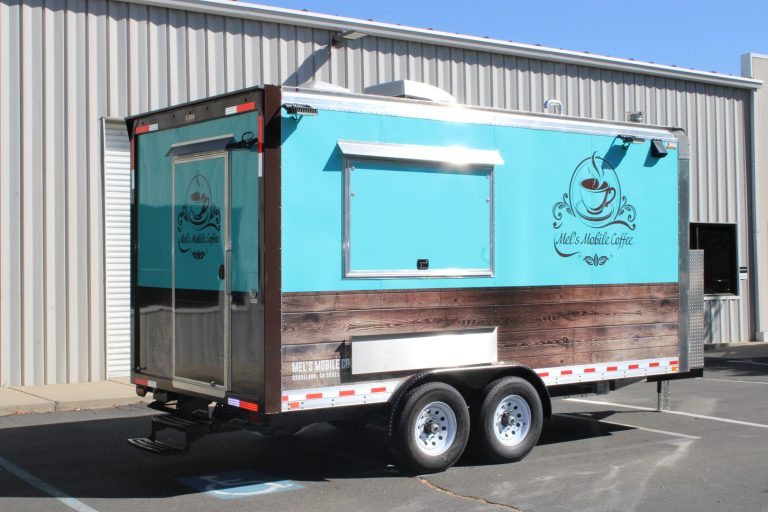
Grill and fryer menus need a hot trailer. A cold build serves coffee and ice cream, as our coffee trailer layouts show. Browse models in our food trailers for sale listing and among our custom food trailers. Then compare eight lengths from 16 to 30 feet.
BACP, the Department of Business Affairs and Consumer Protection, issues the City of Chicago Mobile Food License. Cooking on board calls for the Mobile Food Preparer license. Selling individual portions prepared and enclosed beforehand calls for the Mobile Food Dispenser license.
Confirm trailer rules with BACP at 312-74-GOBIZ (744-6249) before you order. The Chicago Department of Public Health (CDPH), Food Protection Division, reviews your equipment, sanitation and documents in a consultation. On request, CDPH and fire inspectors also assess the vehicle for free and give you an inspection report.
BACP’s equipment list for a licensed vehicle includes a hand wash sink, hot and cold water and a wastewater tank. Our builds include a hand wash sink and a three-compartment sink. Fresh water runs 56 to 80 gallons, with a 93-gallon gray tank.
BACP also asks for a certificate of insurance, plus a City of Chicago Food Service Manager Certificate from a Preparer. Every licensed vehicle must carry a working GPS device, and you name its data provider.
Chicago does not allow food to be prepared or stored at home. Everything sold from the vehicle must first be prepared or stored in a licensed kitchen, such as a commissary.
Each Mobile Food licensee must also hold a Shared Kitchen User license to service the vehicle there. Your application names the commissary where the vehicle is cleaned and serviced, plus any separate storage address. It includes the commissary’s signed letter of intent, dated within the last 30 days.
The right commissary has room to back a trailer in and a drain point near its gray water outlet. These applications can move while the trailer is in production.
Any generator, propane, compressed natural gas, exhaust hood or fire suppression on board brings a Chicago fire safety permit. The Chicago Fire Department’s Fire Prevention Bureau issues it after a Fire Safety Class and a vehicle inspection.
With suppression on board, the bureau first reviews the vehicle blueprint, on the company letterhead of its designer. Once the plans are approved, fire and health inspectors check the trailer together. We prepare the engineering blueprints and plan sets and support you through that review.
City rules allow no more than 40 pounds of propane on the vehicle at any time. The bureau also requires someone trained to handle and refill propane on board at all times. Size the cylinders to that cap while you review the 3D design.
Hot builds come with ventilation, fire suppression and gas lines, which cold builds leave out. Our build standards list a UL 710 exhaust hood built to NFPA 96 and 14×14 make-up air. The fire suppression system is UL 300.
The propane system is rated at 400,000 BTU. Each appliance has its own shut-off valve, and an automatic changeover regulator switches cylinders.
National Weather Service normals put Chicago’s July highs near 85°F and January lows near 19°F. Cooking pushes the cabin warmer still, and our standard roof air conditioner is rated at 15,000 BTU. Walls carry enhanced insulation, rated R13 on our 20 ft food trailer.
In freezing weather, drain the tanks and lines of an idle trailer or keep it in heated storage. Snowmelt and rain run off the crowned, single-piece aluminum roof.
A licensed mobile food vehicle may serve on private property with the owner’s written permission. The four-hour limit, zoning rules and the 200-foot buffer from street-level restaurant entrances still apply. Vacant lots, and lots with a vacant building, are off limits.
BACP hosts a Friday lunch fest at Daley Plaza from mid-May to early October, 11 a.m. to 3 p.m. Its vendors must hold a City of Chicago mobile food vehicle license. Taste of Chicago, the city’s food festival in Grant Park, features dozens of food vendors.
A single special event takes an application through its organizer, reviewed by CDPH Food Protection. For several events, one 180-day application goes to BACP, which passes it to CDPH. A Mobile Food Preparer vehicle needs its city license before applying.
Once the 3D render has your approval, we draw engineering blueprints for electrical and plumbing, plus gas on hot builds. Our build process follows those plans, with progress photos sent to you along the way.
Settle the full menu and equipment list before the blueprints are final. A later equipment swap changes the plans the city’s reviewers check.
We test the brakes, frame, plumbing and electrical load on every build. On hot builds, we also test gas pressure, hood airflow and fire suppression.
At handoff, our team shows you each system in operation and hands over your blueprints, appliance manuals and warranty card. We deliver to Chicago and anywhere else in Cook County.
For a price on your Chicago trailer, request a quote. The form asks for your size and timeline, and its project box takes your menu notes.

At Golden State Trailers, we build custom commercial food trailers around real operational needs. Every project is planned with equipment, workflow, systems, safety, and long-term reliability in mind. Our goal is to build food trailers that perform reliably in daily commercial use.